The coalition leader whose power gathers an army but cannot master entitlement, inherited violence, or the danger waiting at home.
- Achilles
- Artemis
- House of Atreus
- Mycenae
- Odysseus
- Trojan War
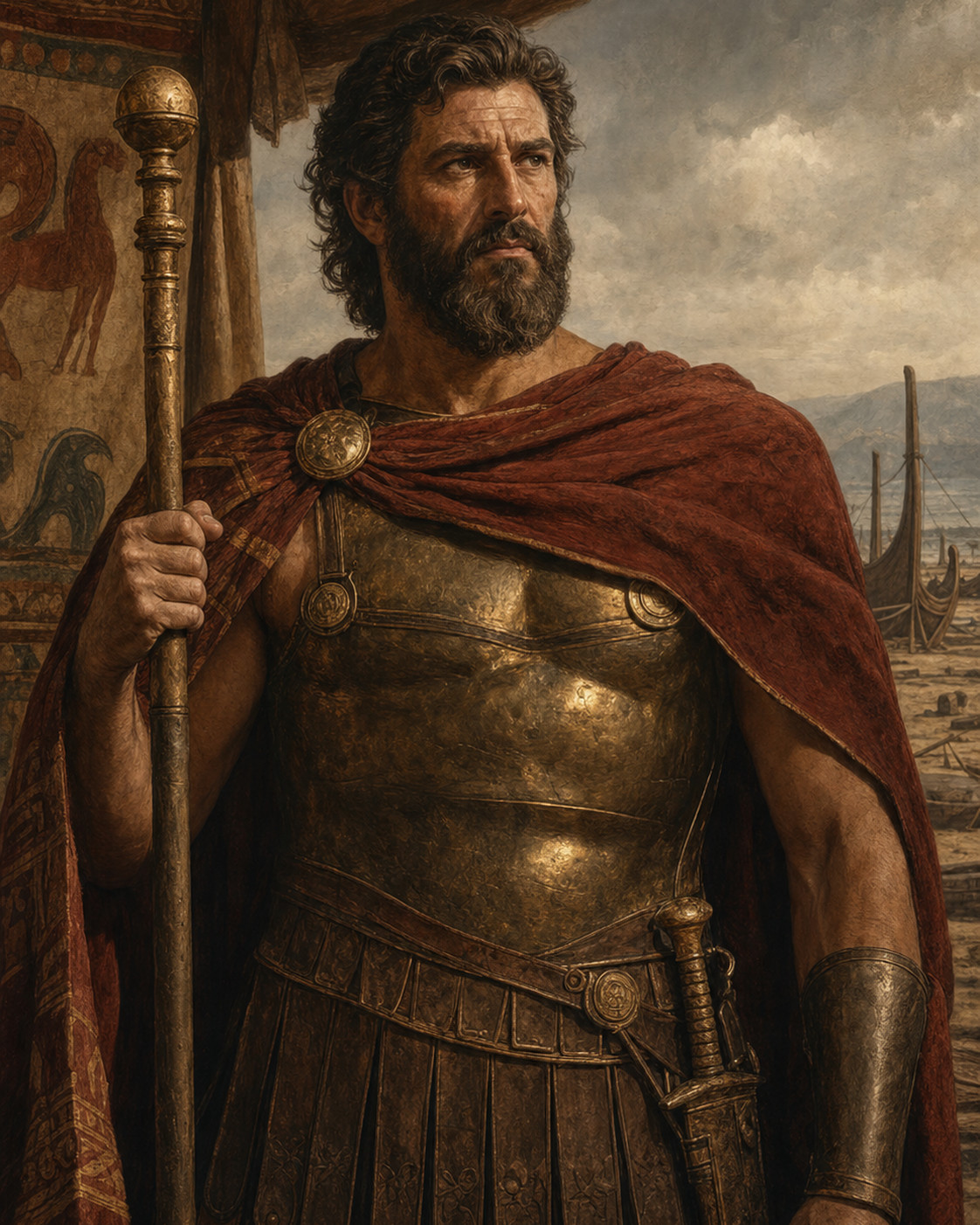
Agamemnon commands the expedition to Troy, sacrifices Iphigenia in major traditions, provokes Achilles by seizing Briseis, wins the war, and returns to a household where victory offers no protection.
Greek Mythology Timeline
Move through broad mythic ages and open the events that connect one story to the next. The sequence is a reading path, not an exact historical calendar.
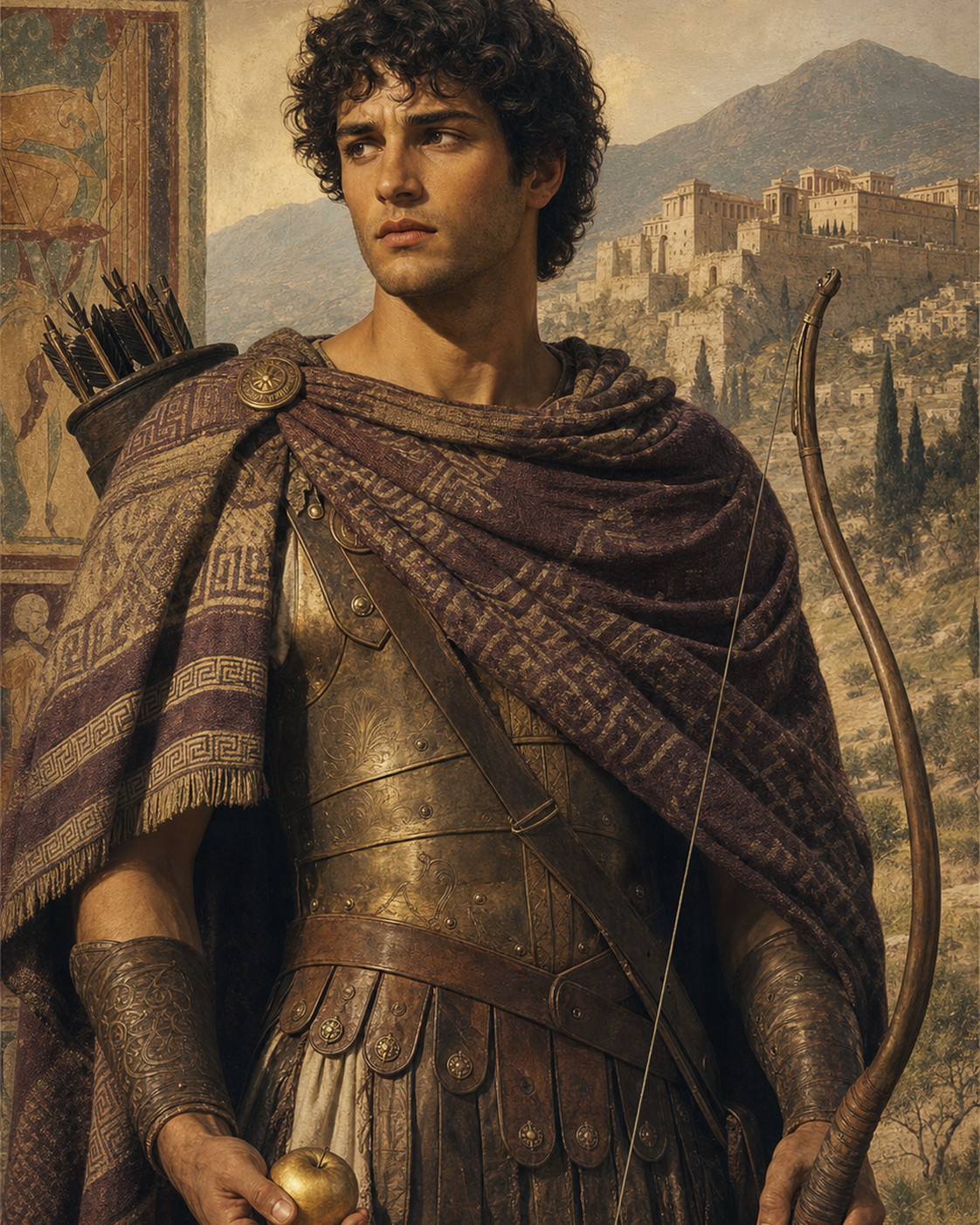
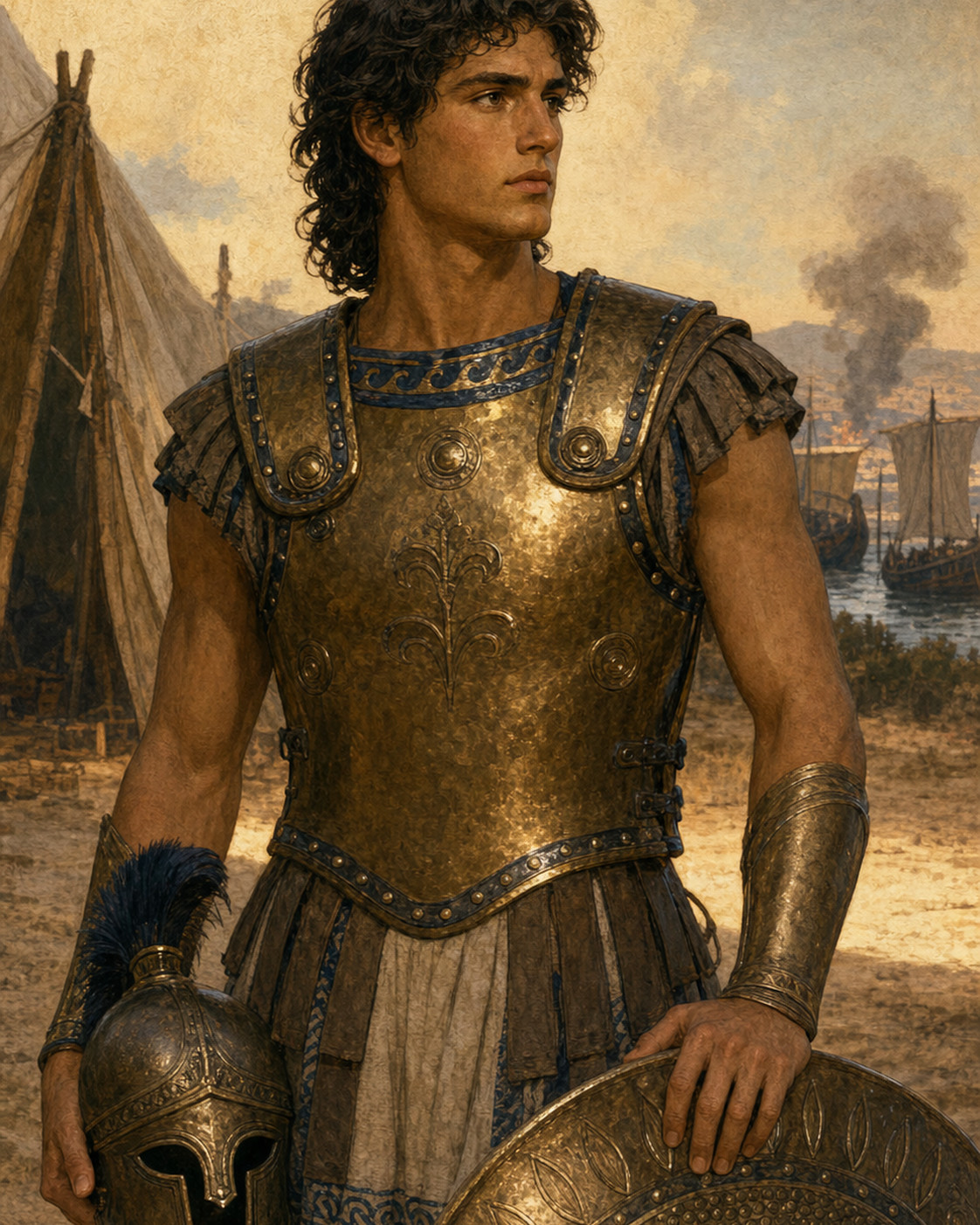
Agamemnon is king of Mycenae, brother of Menelaus, and commander of the Achaean coalition at Troy. His authority gathers a vast expedition but repeatedly fails to become moral leadership. The sacrifice of Iphigenia in major traditions, seizure of Briseis, quarrel with Achilles, destruction of Troy, and murder after returning home make his career a study of command, entitlement, inherited violence, and victory that cannot secure a household.
The House of Atreus
Agamemnon belongs to a dynasty marked by contested rule, betrayal, cannibal feast, exile, and revenge. His father Atreus and uncle Thyestes carry an older struggle that later tragedy makes essential to the king’s fate.
Inherited curse does not erase individual action. It provides a structure in which each generation receives damaged obligations and then chooses whether to repeat, redirect, or intensify them.
Brother, King, and Coalition Leader
When Paris leaves Sparta with Helen, Menelaus’ marriage and honor are the immediate claims. Agamemnon converts those claims and the former suitors’ oath into a coalition capable of sailing against Troy.
The Iliad calls him lord of men and gives him the greatest contingent, but command depends on persuasion, gifts, council, rank, and performance. A coalition of proud rulers is not a single obedient state.
Aulis and Iphigenia
Tragic and mythographic traditions hold the fleet at Aulis because Artemis is angered. Agamemnon is required to sacrifice his daughter Iphigenia, though causes and outcomes vary and some accounts substitute a deer.
The episode places public command against family obligation. Whether he acts willingly, under collective pressure, or through deception changes by source, but the expedition begins with a wound inside the commander’s own house.
Apollo’s Plague
The Iliad opens when Agamemnon refuses the ransom of Chryseis and insults her priestly father. Apollo answers with plague. Under assembly pressure, Agamemnon agrees to return her but demands another prize.
His response protects rank instead of repairing trust. He treats loss of a captive as loss of visible honor and transfers the cost to Achilles by taking Briseis, turning a crisis with a god into a crisis within the army.
The Quarrel with Achilles
Achilles withdraws after Briseis is seized. Agamemnon later tests the army with a disastrous suggestion to sail home, sends an embassy with gifts, and eventually reconciles with the hero when military collapse makes delay impossible.
The gifts acknowledge status but cannot restore Patroclus or erase the grievance. The conflict shows that formal supremacy without judgment can weaken the very coalition it is meant to govern.
Sacker of Troy
Agamemnon survives the siege and receives Cassandra among the captives. Later tradition remembers him as conqueror, but the sack includes killings, enslavement, sacrilege, and acts that anger gods who had supported the Achaeans.
Victory therefore carries its own instability. The coalition that crossed together scatters into separate returns, and command over an army does not guarantee control over wind, divine judgment, or home.
The Murder at Home
In the Odyssey, Agamemnon’s shade describes being killed by Aegisthus with Clytemnestra’s participation. Aeschylus stages a different and richer configuration: Clytemnestra receives the returning king, invokes Iphigenia and other crimes, and kills him with Cassandra.
The murder reverses the triumphant homecoming. The commander who destroyed another city enters his own palace unable to read its loyalties. Later revenge by Orestes and trial at Athens extend the house’s violence into a question of civic justice.
Reading the Traditions
The Iliad and Odyssey do not give the same Agamemnon as Aeschylus, even when they share events. Homer emphasizes coalition command, public honor, quarrel, apology, and the cautionary failed return. Tragedy places Iphigenia, Clytemnestra, Cassandra, inherited crimes, and the political language of Argos into a tightly structured house of reciprocal killing.
Later summaries also vary who kills the king, how the murder is staged, and what motives dominate. A responsible biography can connect war and homecoming without flattening those versions into police-report certainty. Agamemnon’s enduring importance lies in how different genres test authority: epic through the army, nostos through the household, and tragedy through memory, ritual, gender, and civic judgment. Even the familiar gold funerary mask found at Mycenae is archaeological, centuries older than the traditional war setting, and only conventionally named after him. It should not be used as proof of his face, reign, or historicity. Mythic king and excavated Bronze Age site illuminate different questions, and both deserve precise labels when presented together in any responsible account.
How to Read Agamemnon
Agamemnon should not be reduced to either necessary leader or simple tyrant. His role makes coordination possible, while his choices repeatedly expose how easily authority confuses possession, honor, and the common good.
Follow him toward Achilles for failed leadership, Artemis for Aulis, Odysseus for coalition strategy, Helen for the oath’s cause, the Underworld for his testimony after death, and the Trojan War for victory without safe return.
Trivia
- Agamemnon leads the largest Achaean contingent in the Iliad’s Catalogue of Ships.
- His conflict with Achilles begins over captive women and public honor, not a private battlefield disagreement.
- Aeschylus’ Agamemnon makes the king’s homecoming the opening tragedy of the Oresteia.