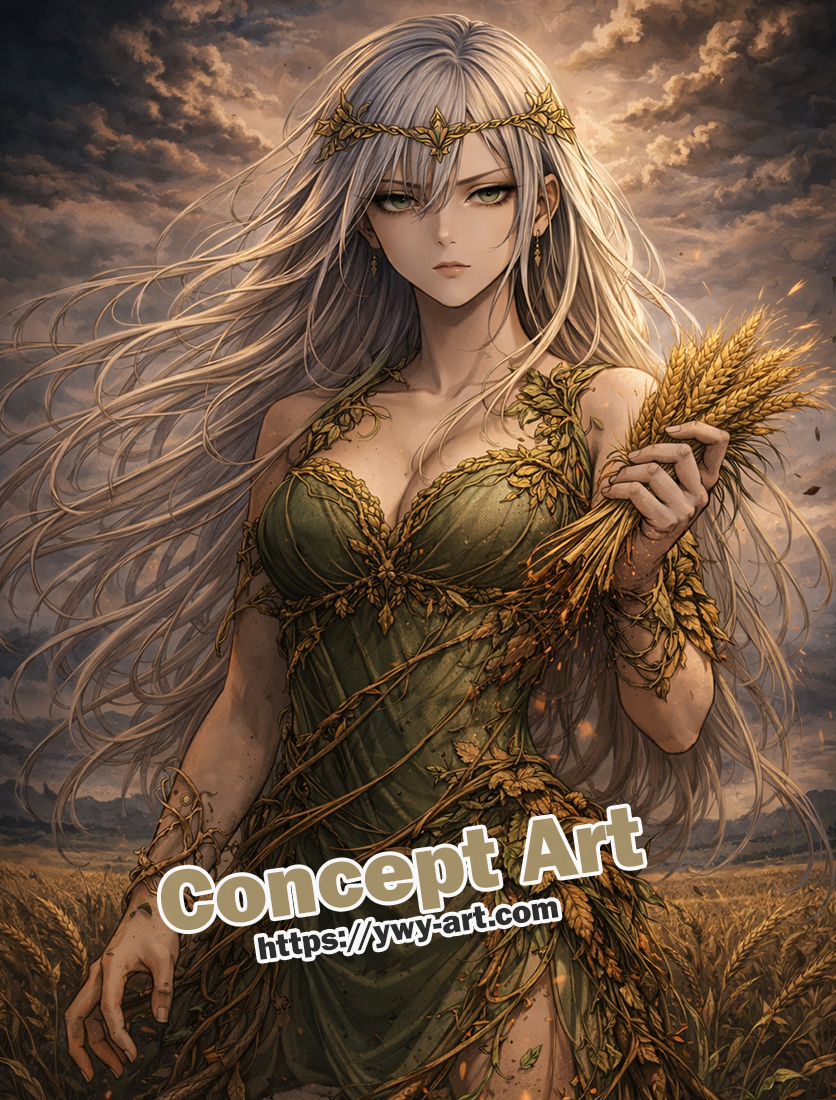
Demeter — Wrath of the Earth
She does not shout. She does not strike. She simply decides—and the earth obeys.
Basic Profile
| Name | Demeter |
|---|---|
| Mythology | Greek Mythology |
| Gender | Female |
| Region | Ancient Greece |
| Era | Pre-Olympian / Olympian Transition |
| Domain | Agriculture, Fertility, Earth, Harvest |
| Symbol | Wheat, Grain, Cornucopia, Torch |
| Culture / Religion | Ancient Greek Religion |
| Main Role | Goddess of Harvest and Sustenance |
| Rank | Olympian (Titan-born) |
| Position in Titanomachy | Aligned with Olympians against the Titans |
| Associated Deity | Persephone, Zeus, Hades |
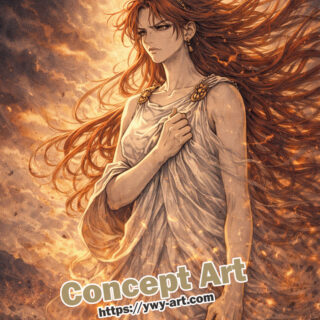
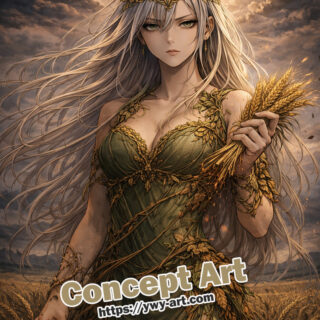
| Common Depiction | Woman holding wheat, calm yet solemn expression |
| Alignment | Neutral Good → Conditional Destructive Force |
| Creative Reference | Life-giving goddess turning into a restrained force of destruction |
Overview
Demeter is widely known as the gentle goddess of harvest, the one who nourishes humanity through the blessings of the earth. Fields grow under her will, seasons follow her rhythm, and life itself is sustained through her quiet presence. She is not a warrior, not a conqueror, but a foundation—something so essential that it is often overlooked until it disappears.
But this scene captures a different moment. Not rage unleashed, but something far more unsettling: restraint. As the Titanomachy approaches, Demeter stands not as a passive giver, but as a force preparing to withdraw life itself. In a war where gods clash with primordial beings, the control of the earth becomes a weapon. And Demeter, the one who decides whether the world feeds or starves, becomes one of the most quietly dangerous figures in the conflict.
Characteristics
- Calm and composed, even in moments of immense tension
- Embodies both life and the potential for its withdrawal
- Power expressed through control rather than aggression
- Deeply tied to cycles—growth, decay, and rebirth
- Represents inevitability rather than sudden force
Symbolism and Meaning
The wheat she holds is not merely a symbol of abundance—it is a decision point. In myth, Demeter’s grief once halted all growth, plunging the world into famine. This power to stop life itself is what makes her presence in the Titanomachy so significant. She does not need to fight directly. She can simply refuse to sustain.
In this artwork, the slightly withering fields and restrained cracks in the earth suggest a world on the edge. Not yet destroyed, but no longer safe. Demeter stands at that boundary. She represents a truth often ignored in mythological battles: wars are not only won by strength, but by who controls the conditions of survival.
Quick Creative Reference
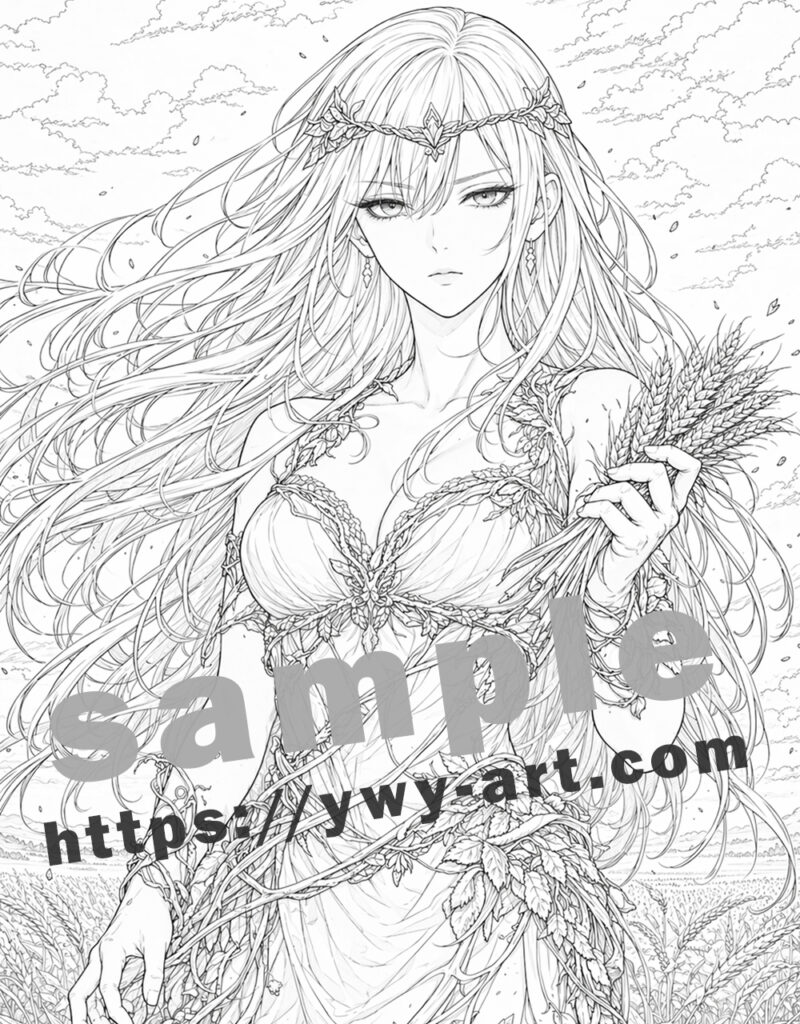
| Best For | Subtle tension, pre-war atmosphere, controlled power |
|---|---|
| Visual Keywords | wheat, cracked earth, flowing hair, restrained expression, fading fields |
| Mood | Quiet intensity, inevitability, restrained destruction |
| Useful Themes | war preparation, life vs destruction, control of nature |
Compare with Similar Deities
| Name | Mythology | Main Domains | Overall Image |
|---|---|---|---|
| Gaia | Greek | Primordial Earth | Origin of all life, overwhelming and absolute |
| Persephone | Greek | Underworld, Seasons | Duality of life and death, cyclical transformation |
| Ceres | Roman | Agriculture | Gentler counterpart, focused on nourishment |
The Power of Restraint
Unlike war gods who display their strength openly, Demeter’s power is quiet. She does not destroy instantly. Instead, she allows the world to weaken, to dry, to fade. This makes her influence slower but far more terrifying, because it cannot be easily stopped or reversed.
In the context of the Titanomachy, this restraint becomes strategic. By controlling the land itself, she determines how long the war can continue. Even gods must depend on the world beneath them.
The Earth as a Weapon
In many depictions, the earth is seen as passive, something to be shaped by gods. But Demeter reverses this idea. The ground cracks not from violence, but from withdrawal. Roots rise not to attack, but to reclaim. Nature does not fight—it simply changes the rules.
This interpretation aligns with the idea that true power lies not in destruction, but in control. Demeter does not need to oppose the Titans directly. She can reshape the battlefield itself.
Pre-War Atmosphere
The moment before a war is often more intense than the battle itself. This artwork captures that exact tension. The sky darkens, the fields begin to falter, and yet everything is still standing. It is the last moment of balance before collapse.
Demeter exists within that moment. She is not reacting. She is preparing. And that preparation is what makes her presence so heavy.
The Choice of Life or Ruin
Perhaps the most important aspect of Demeter is choice. She can give life, and she can take it away. This duality is not chaotic—it is deliberate. She decides when the world thrives and when it suffers.
In this scene, that choice is suspended. The wheat is still intact, but her grip suggests it may not remain so. It is this tension that defines her role in the Titanomachy.
Coloring Variations
- Natural Harmony: Green and gold tones emphasizing life, growth, and divine warmth
- Dark Withering: Red and black tones highlighting decay, tension, and impending destruction
- Balanced Duality: Half vibrant, half withered to represent choice and control
Coloring Tips
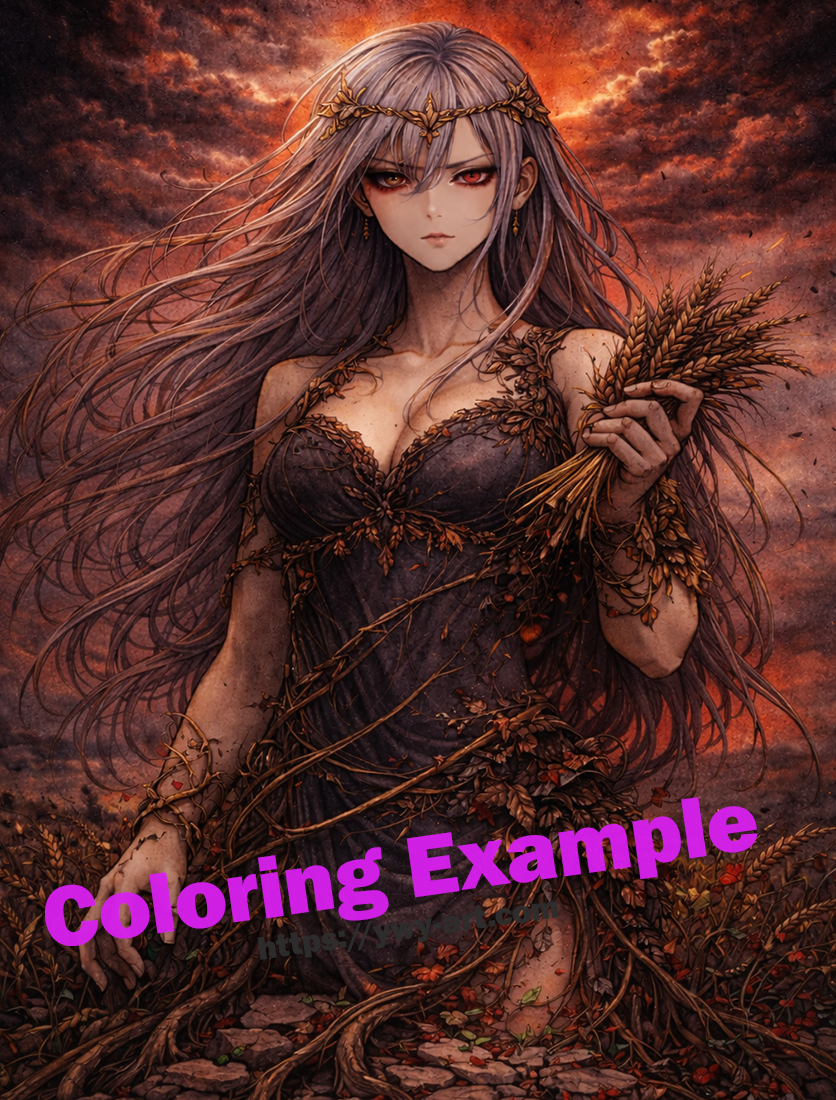
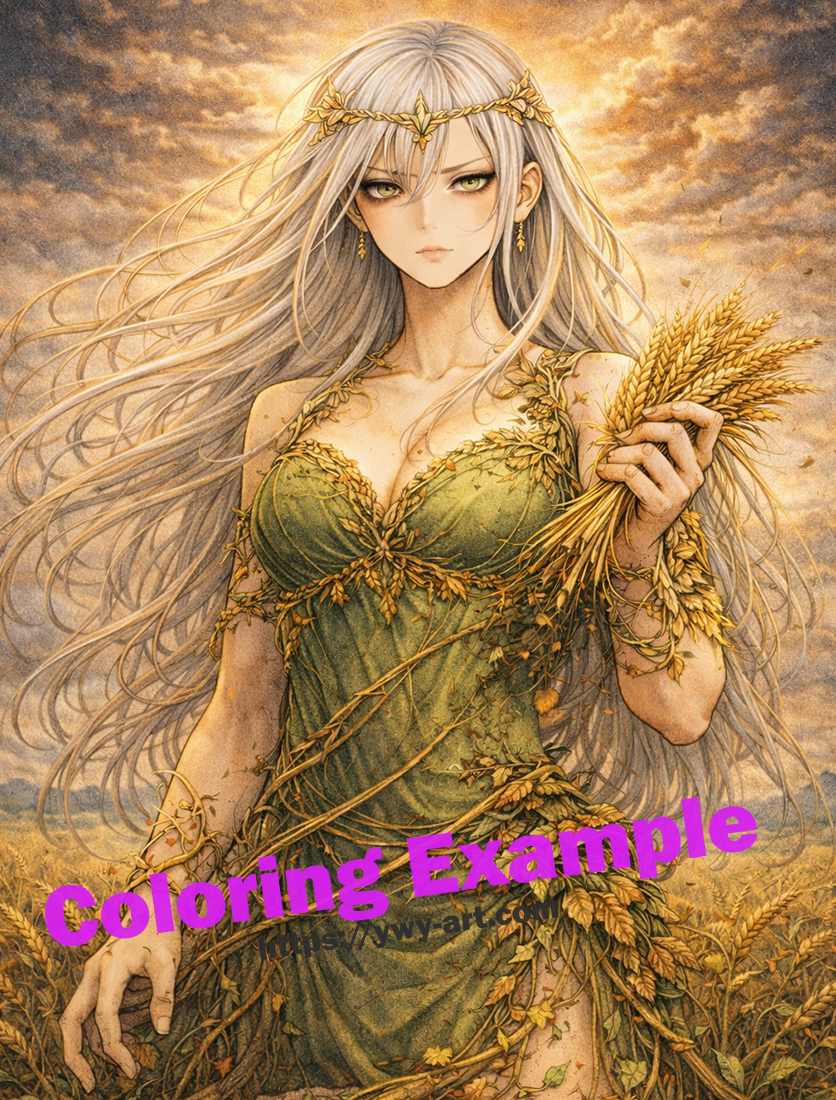
Focus on contrast between the character and the environment. Keeping the wheat slightly brighter than the rest of the scene naturally guides the viewer’s attention.
Use soft gradients for the sky to create depth without overpowering the figure. Circular light around the head can enhance the divine presence.
For the dress and roots, vary pressure in colored pencils to create texture. This helps distinguish between organic material and fabric.
Japanese Summary
デメテルは豊穣と大地を司る女神であり、本来は命を育む存在として知られている。しかしこのシーンでは、与える側ではなく「奪う側」に回る可能性を秘めた姿が描かれている。
ティタノマキアという神々の戦いにおいて、彼女の力は直接的な戦闘ではなく「大地そのものの支配」にある。食物が実らなければ、いかなる神であっても戦い続けることはできない。つまり彼女は、戦争の持続そのものを左右する存在となる。
静かな怒りの意味
デメテルは感情を爆発させない。だがそれは怒りがないわけではない。むしろ制御された怒りこそが最も強い力となる。
この抑えられた表情が、戦いの前夜という空気を強く印象づけている。
大地を支配するということ
戦いは力だけで決まるものではない。環境を支配する者が勝つ。この作品では、大地がわずかにひび割れ始めていることで、その兆しが表現されている。
完全な崩壊ではなく「始まり」であることが重要なポイントとなる。
生命と破壊の選択
デメテルは命を与える存在であると同時に、それを止めることもできる。その選択こそが彼女の本質であり、このシーンの核心でもある。
握られた麦は、その象徴として機能している。
塗りのポイント
ナチュラル系では緑と金を基調にし、光を意識して塗ることで神聖さを強調できる。
ダーク系では赤や黒を使い、空と地面のコントラストを強めることで緊張感を演出できる。
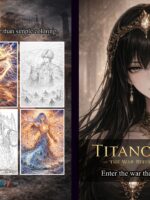
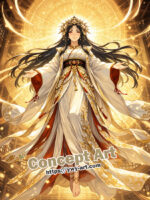
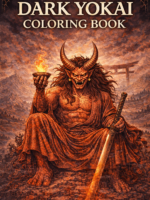
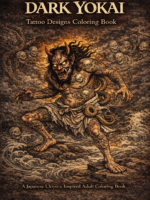
Explore Our Coloring Book Series
Step into a world where gods are not only powerful—but inevitable.
Discover more mythological figures shaped by tension, choice, and hidden forces.
Step into the world of mythology..
Available on Amazon Dark Ritual Goddesses of Mythology Coloring Book Open in a new tab
















コメント