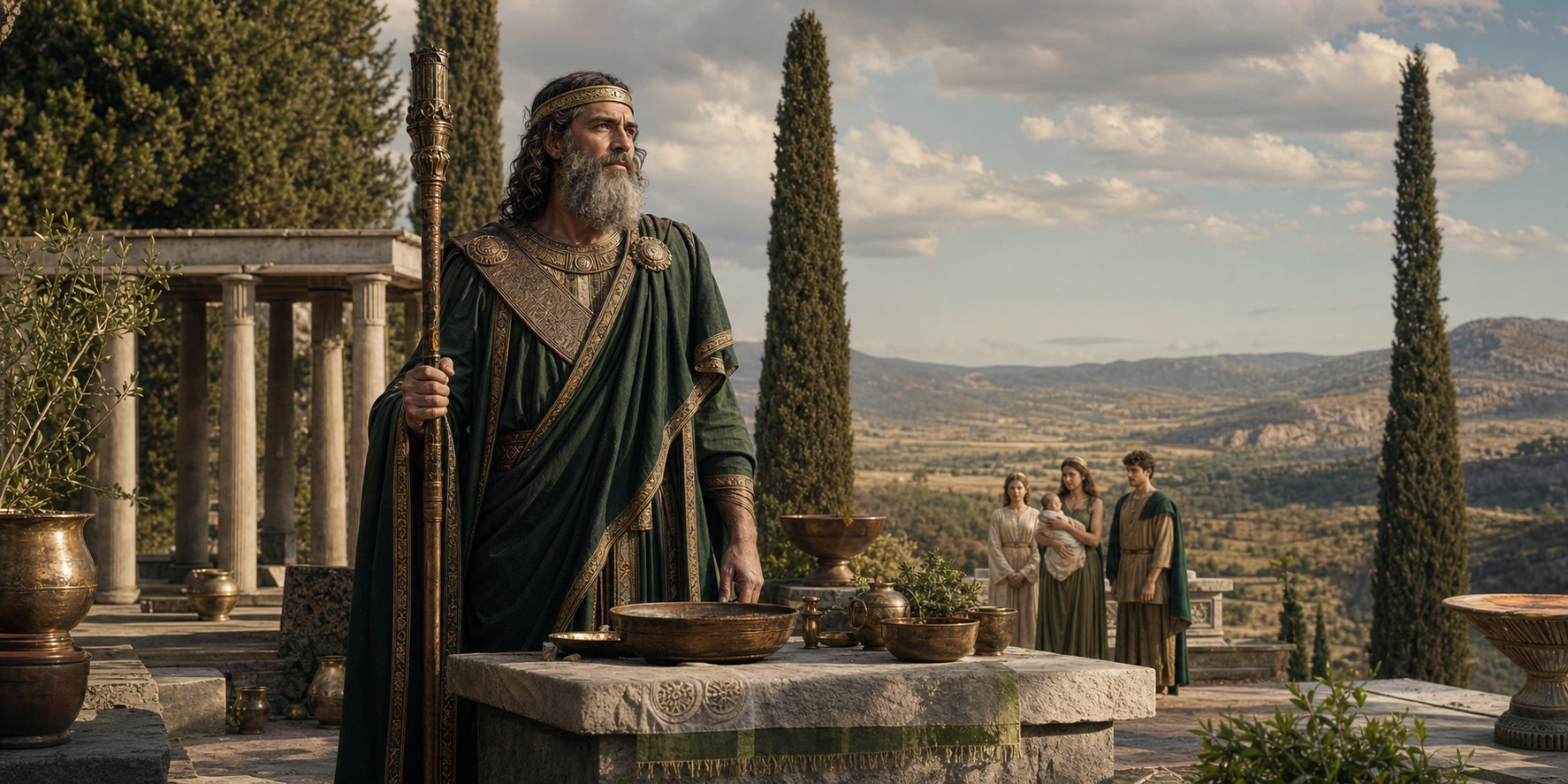
The ruler and bereaved father whose household loss becomes the ritual memory of a Panhellenic festival.
- Hypsipyle
- Nemea
- Nemean Games
- Opheltes
- Seven against Thebes
- Zeus
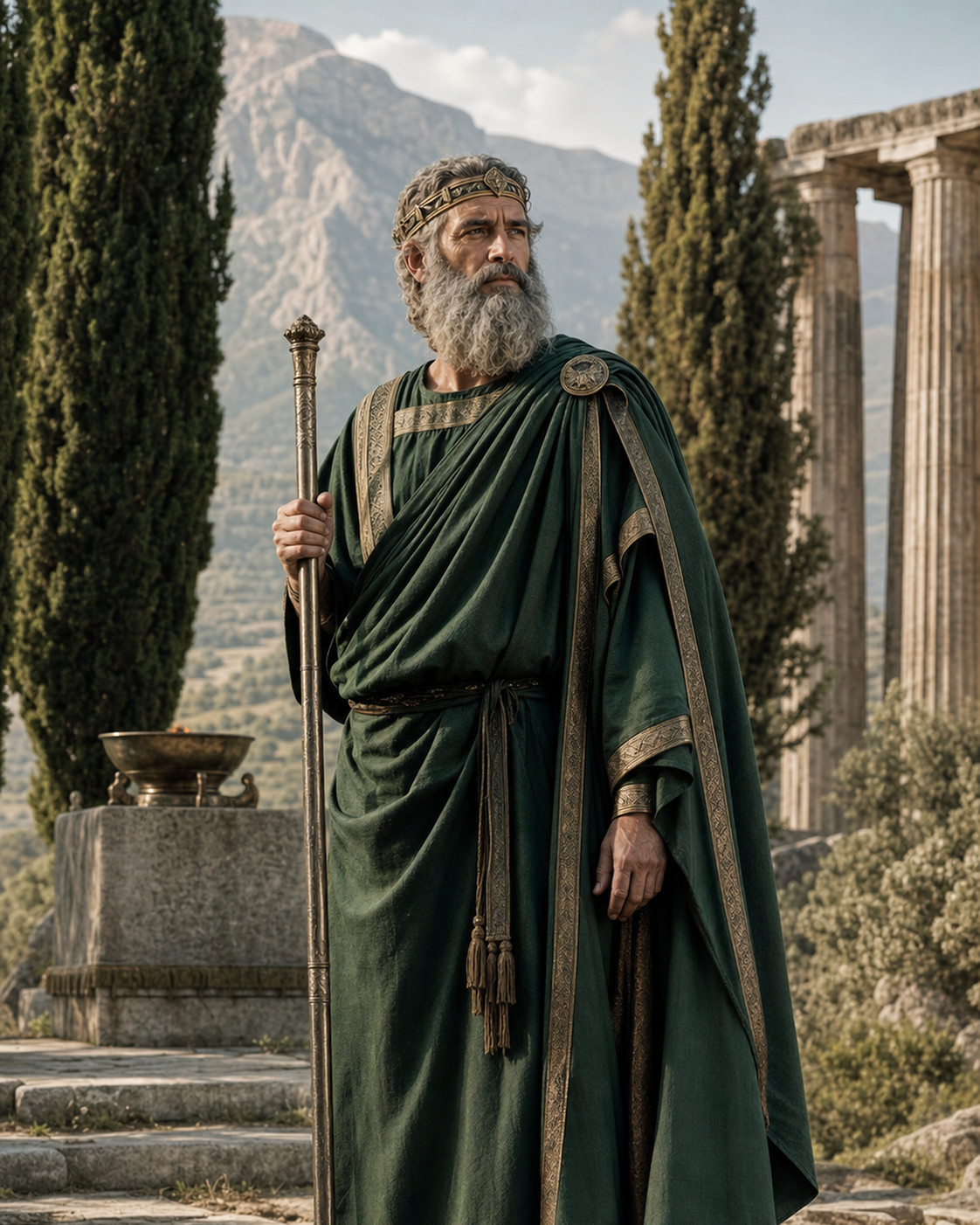
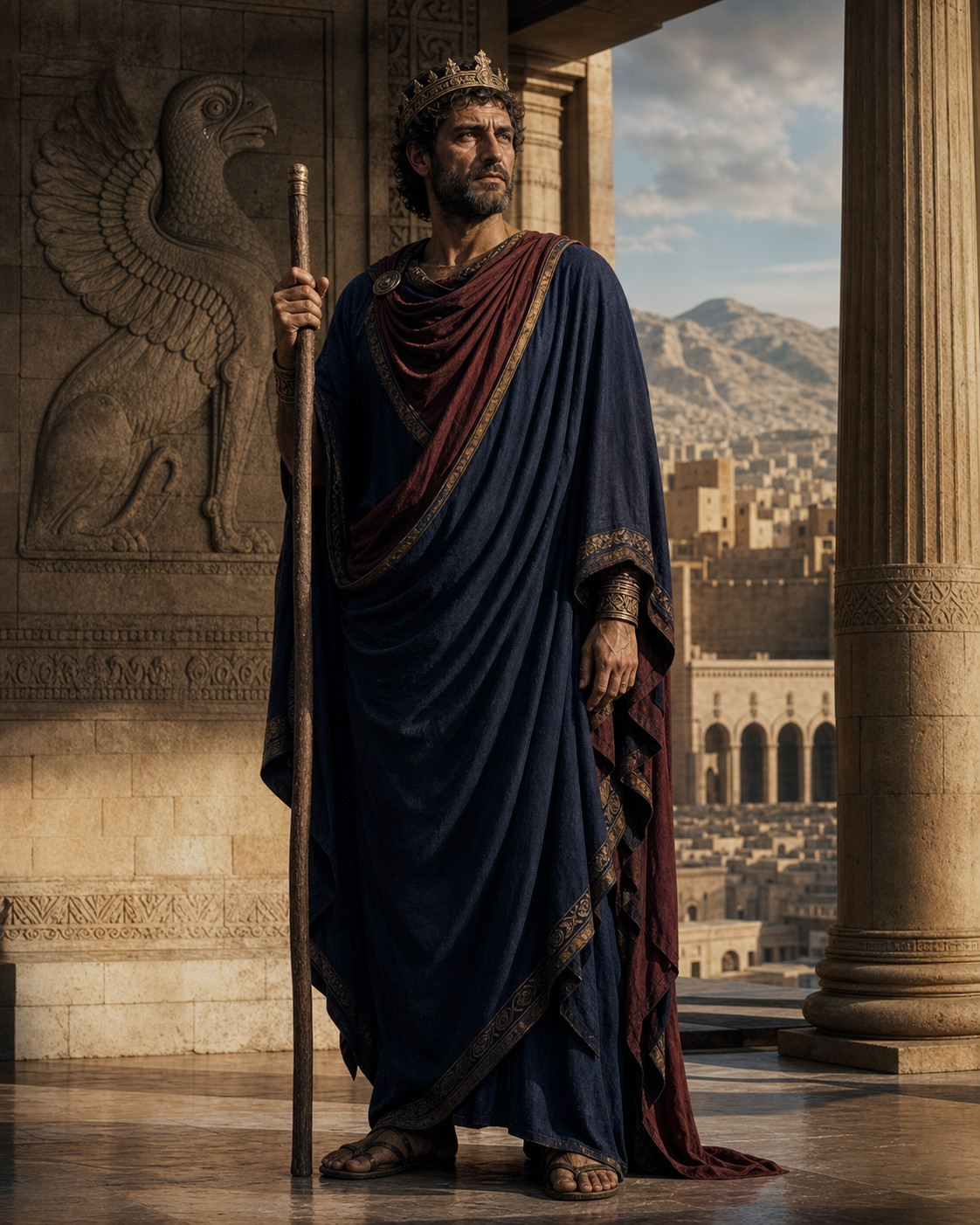
Lycurgus of Nemea is the ruler and father of Opheltes whose household receives Hypsipyle as nurse. The child's death during the passage of the Seven becomes an omen and a foundation story for the Nemean Games.
Greek Mythology Timeline
Move through broad mythic ages and open the events that connect one story to the next. The sequence is a reading path, not an exact historical calendar.
Lycurgus of Nemea is remembered chiefly as the father of Opheltes and the ruler or priestly guardian of the Nemean household encountered by the Seven against Thebes. He must be distinguished from other Greek mythic figures named Lycurgus, especially the Thracian king who attacks Dionysus and the Arcadian father of Ancaeus. Apollodorus places the Nemean Lycurgus within the family of Pheres and Admetus, while Pausanias records a local tomb for him beside the ritual landscape of Opheltes. His story is brief in early summaries but important: a ruler responsible for sacred order becomes a bereaved father whose loss is absorbed into a festival larger than his household.
A Name Shared by Many
Lycurgus is a common heroic name, and ancient genealogies do not always make identification easy. The Nemean ruler is not the hostile king of Thrace punished for opposing Dionysus. He is also distinct from the Arcadian Lycurgus whose son Ancaeus sails with the Argonauts. Project Mythos uses the full label Lycurgus of Nemea to keep these traditions separate.
This distinction matters because combining names would create false relationships. Nothing in the Opheltes story requires the Nemean father to participate in Dionysus’s Thracian conflict. His defining landscape is the sanctuary and valley of Nemea, not the wild persecution of Bacchic worship.
Family of Pheres
In Apollodorus, Pheres fathers Admetus and Lycurgus. Lycurgus settles in Nemea and marries Eurydice, or Amphithea in a variant, and they have Opheltes. This makes him part of a Thessalian-derived genealogy transplanted into the northeastern Peloponnese.
The alternate name of his wife shows why family data must preserve variants rather than silently choose one mother. Eurydice dominates the later Nemean narrative, especially in Statius, but Apollodorus explicitly acknowledges another tradition. The stable relationship is the parenthood of Opheltes.
Ruler and Sacred Guardian
Apollodorus says Lycurgus ruled at Nemea. Statius presents him with strong priestly associations around Zeus and sacrifice, and later summaries often call him a priest of Nemean Zeus. These descriptions can coexist if kingship and sanctuary authority overlap, but the evidence should not be reduced to a modern job title.
His household stands beside a sacred landscape of grove, spring, serpent, and altar. When an army enters searching for water, Lycurgus’s domestic world is already connected to public religion. Opheltes’s death therefore threatens family continuity and the order of a sanctuary at the same time.
The Warning over Opheltes
A prophecy warns that the infant Opheltes must not be placed on the earth before he can walk. Lycurgus and Eurydice entrust the child to Hypsipyle, a displaced queen serving as nurse. The warning gives the household knowledge of danger without providing an easy way to remove every risk.
Lycurgus is not present in every version of the fatal moment, but his authority shapes its conditions. He is father, ruler, and master within a hierarchy where Hypsipyle carries direct responsibility yet lacks equal power. The tragedy exposes the distance between commanding protection and performing care.
An Army at Nemea
The Seven against Thebes arrive in Nemea suffering from thirst. Hypsipyle leads them to water and leaves Opheltes resting among wild celery or grass. A serpent kills the child before she returns. The army’s need enters Lycurgus’s territory and changes the future of his family.
For the Seven, the death becomes an omen. For Lycurgus, it is the loss of his heir. The two meanings are not equal, even though later narrative often follows the famous expedition. His grief anchors the event locally and prevents Opheltes from becoming only a symbol of someone else’s war.
Anger and Restraint
Later versions describe Lycurgus reacting violently against Hypsipyle. Euripidean fragments and Statius preserve different shapes of the confrontation, while the Seven defend the guide who saved them from thirst. Amphiaraus interprets the death through prophecy and helps redirect anger toward ritual response.
The scene places royal grief against guest obligation. Lycurgus has reason to mourn and accuse, but the visiting champions owe Hypsipyle protection. Authority cannot restore the child, and armed retaliation would extend the loss. Restraint becomes the first condition for creating memory rather than another death.
From Funeral to Games
The leaders bury Opheltes, rename him Archemorus, and establish funeral contests that become one origin story of the Nemean Games. Lycurgus’s child enters Panhellenic memory, while customs such as the wild-celery crown and mournful associations are explained through the death.
Festival foundation does not cancel the parents’ grief. It changes the scale of remembrance. A household heir becomes a sacred child honored by competitors and visitors, and Nemea’s landscape gains a ritual history that joins Zeus, Opheltes, the Seven, and later Heracles traditions.
Tomb and Local Memory
Pausanias saw or was shown a mound identified as the tomb of Lycurgus near the grave enclosure of Opheltes, the temple of Zeus, and the Nemean grove. Whether every identification reflects Bronze Age memory is less important than the organized sacred geography encountered by ancient visitors.
The tomb keeps Lycurgus beside the son whose story eclipses him. Follow his entry toward Opheltes and Hypsipyle for the household tragedy, Nemea and Zeus for sacred place, and the Nemean Games and Seven against Thebes for the public future created from the loss.
Trivia
- Apollodorus gives Eurydice or Amphithea as the wife of Lycurgus.
- The Nemean Lycurgus is not the Thracian enemy of Dionysus.
- Pausanias records a mound identified as his tomb near the shrine of Opheltes.