The force of battle made divine: brave, volatile, wounded, restrained, and never identical with victory.
- Aphrodite
- Athena
- Hebe
- Hera
- Thebes
- War
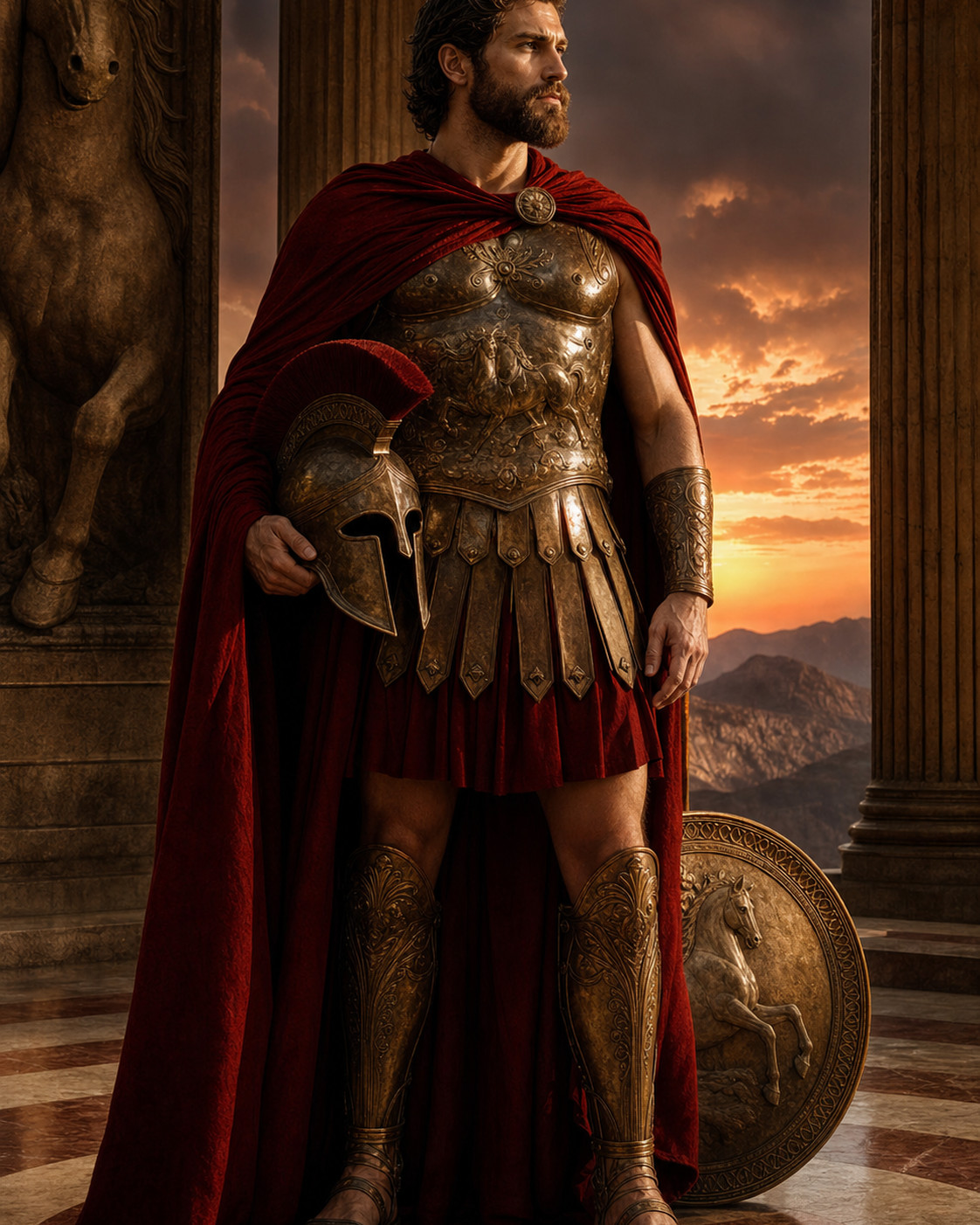
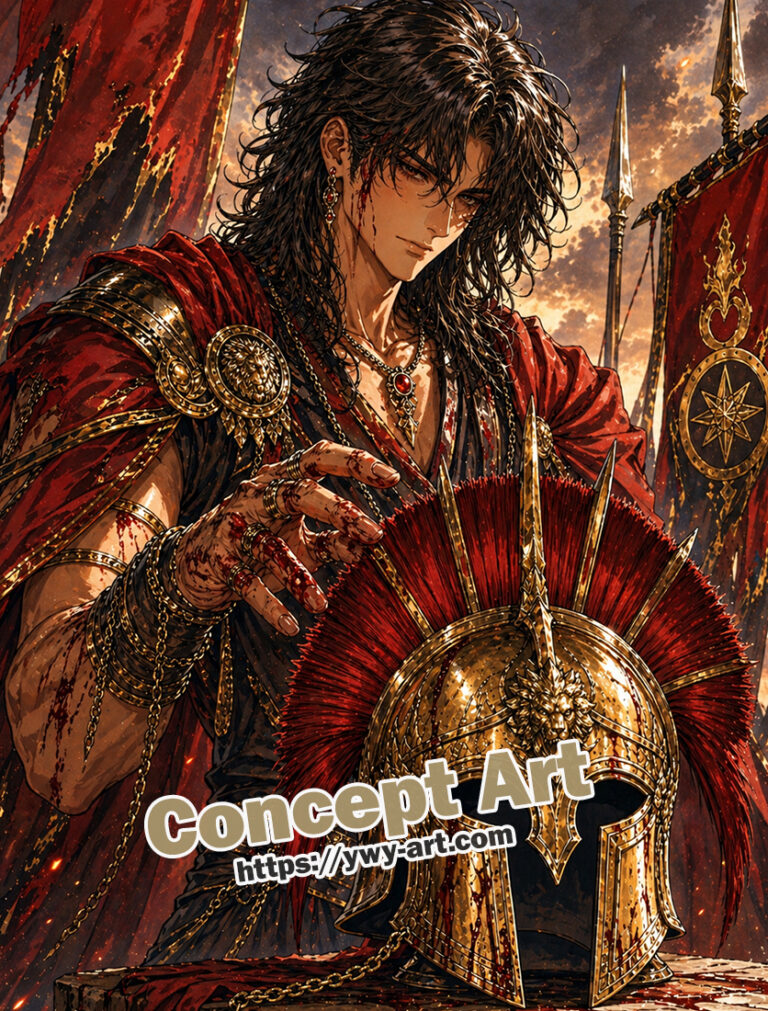
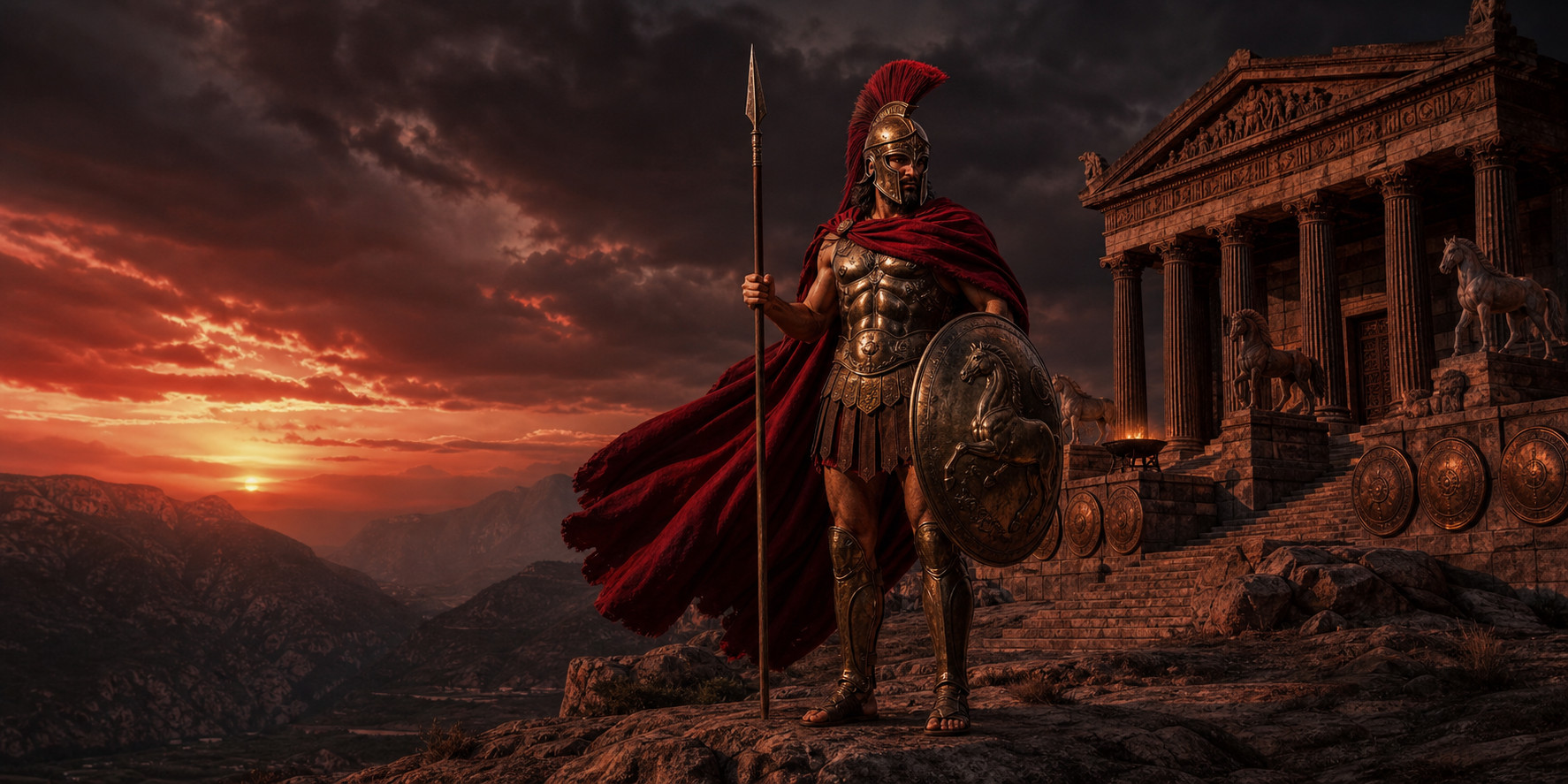
Ares is the Olympian son of Zeus and Hera who personifies the force, fear, and instability of battle. Homer shows him wounded by Diomedes with Athena's aid, while Theban tradition connects him with the dragon slain by Cadmus and with Harmonia.
Greek Mythology Timeline
Move through broad mythic ages and open the events that connect one story to the next. The sequence is a reading path, not an exact historical calendar.
Ares is the Olympian god who makes battle feel immediate: bronze striking bronze, ranks breaking, courage becoming fury, and victory refusing to remain clean. Greek poetry does not present him as a calm strategist. Athena more often represents disciplined intelligence in war, while Ares embodies its force, noise, fear, and unstable appetite. Yet he is not merely a villain. He is a son, brother, lover, father, wounded combatant, and locally honored god whose stories reveal that even divine violence can be restrained, humiliated, or made to answer for itself.
Son of Zeus and Hera
Hesiod names Ares as a child of Zeus and Hera, alongside Hebe and Eileithyia. This places war inside the central Olympian household. Conflict is not an alien power attacking divine order from outside; it is born within the family that rules it. Ares can sit among the gods and still disrupt the balance they claim to maintain.
His siblings frame different conditions of mortal and divine life. Eileithyia governs childbirth, Hebe embodies youth, and Ares embodies the violence that can consume the young. The family grouping does not create a simple allegory, but it makes his link to Hebe more than a side note: youth and battle occupy the same generation of Olympus.
The Sound and Pressure of Battle
In Homer, the name Ares can mean the god himself or battle as an active condition. Warriors enter the grind of Ares; weapons and blood appear to feed his sphere. He is accompanied by figures such as Fear, Rout, and Strife, turning emotions and battlefield effects into a moving divine company.
This language explains why Ares often feels larger than one armored person. He is present when order collapses into impact. The god can choose a side, but his deeper identity belongs to the dangerous process both sides unleash. His favor does not guarantee wise command, justice, or even victory.
Ares in the Iliad
During the Trojan War Ares supports the Trojans, although divine loyalties shift and overlap. In Iliad Book 5, Athena guides Diomedes against him, and the mortal hero wounds the god. Ares cries out and withdraws to Olympus, where Zeus rebukes his divided, quarrelsome nature even while arranging his treatment.
The episode denies war an image of invulnerability. Ares can intensify human violence but can also be hurt, complain, and leave the field. Athena’s intervention shows controlled intelligence overcoming raw force. The contrast is dramatic rather than absolute: both deities belong to war, but they represent different ways power enters it.
The Affair with Aphrodite
In the Odyssey, the singer Demodocus tells how Ares and Aphrodite meet secretly while she is married to Hephaestus. The smith god constructs an invisible trap that catches the lovers and exposes them before the gods. The scene turns martial confidence into comic helplessness.
The tale joins desire, craftsmanship, and public shame. Ares cannot break the bonds made by the god of skilled work. His physical power is defeated by design, just as Athena’s planning defeats him in battle. The myth repeatedly asks what force can and cannot solve.
Father of Fear and Harmony
Ares and Aphrodite are parents of Phobos and Deimos, Fear and Terror, natural companions for the war god. Other traditions also make them parents of Harmonia, whose name means harmony or concord. The same union can therefore produce both battlefield panic and the possibility of ordered relationship.
Harmonia marries Cadmus, founder of Thebes, drawing Ares into the city’s earliest genealogy. Cadmus had killed a dragon sacred to Ares and served the god before receiving Harmonia. Theban order emerges not by erasing conflict but through repayment, marriage, and a settlement built after violence.
The Dragon and Thebes
A dragon guarding Ares’s spring kills the companions Cadmus sends for water. Cadmus slays it and sows its teeth, producing armed earth-born warriors. Because the serpent belonged to Ares, the foundation of Thebes begins with an offense against the god and a period of service required from its founder.
This connection makes Ares part of Thebes before the later siege of the Seven. The city’s warriors, gates, and dynastic troubles grow from ground already marked by his sacred creature. The war god is therefore both ancestor by marriage and dangerous claimant within the landscape.
Imprisoned by the Aloadae
Ares is not always free to move through battle. The giant brothers Otus and Ephialtes, known as the Aloadae, imprison him in a bronze jar for thirteen months. Hermes eventually rescues the exhausted god after their stepmother reveals his location.
The story is an extraordinary limit on divine force. The personification of war can be contained, hidden, and nearly depleted. Bronze, normally his armor and weapon material, becomes a prison. The reversal makes Ares dependent on information and rescue rather than strength.
Cult and Local Honor
Literary mockery does not mean Ares lacked worship. Greek communities honored him under local titles connected with courage, protection, restraint, and civic defense. At Athens, the Areopagus or Hill of Ares carried legal and mythic associations that made his name part of public judgment.
Local cult can differ from epic personality. A community facing danger may honor the power it needs controlled, not celebrate uncontrolled bloodlust. Worship acknowledges that violence exists within political life and must be directed, bounded, or answered through institutions.
Ares and Roman Mars
The Romans identified Ares with Mars, but the two gods are not interchangeable in every respect. Mars held a more central civic and ancestral role in Rome, including fatherhood of Romulus and Remus. Greek Ares carries a stronger poetic reputation for unstable battle fury.
Using the Roman name can help readers recognize the figure, but it should not flatten the Greek evidence. Project Mythos keeps Ares rooted in Homeric conflict, Theban genealogy, Olympian family, and Greek cult before following later reinterpretations.
What Ares Means
Ares personifies power without a guarantee of purpose. He can be brave, necessary, loyal, reckless, wounded, trapped, desired, or ridiculed. The stories around him repeatedly give craft, intelligence, law, and relationship the ability to check force.
Follow Ares toward Hebe and Hera for his Olympian family, Aphrodite and Hephaestus for the net story, Athena for competing modes of war, and Thebes for the dragon, Harmonia, and a city whose foundations remain entangled with conflict.
Trivia
- Ares can mean both the god and the condition of battle in Greek poetry.
- Diomedes wounds Ares with Athena’s help in the Iliad.
- The Aloadae imprison the war god in a bronze jar for thirteen months.
YWY Artwork Connection
Explore coloring pages and studio articles connected to this mythology entry.