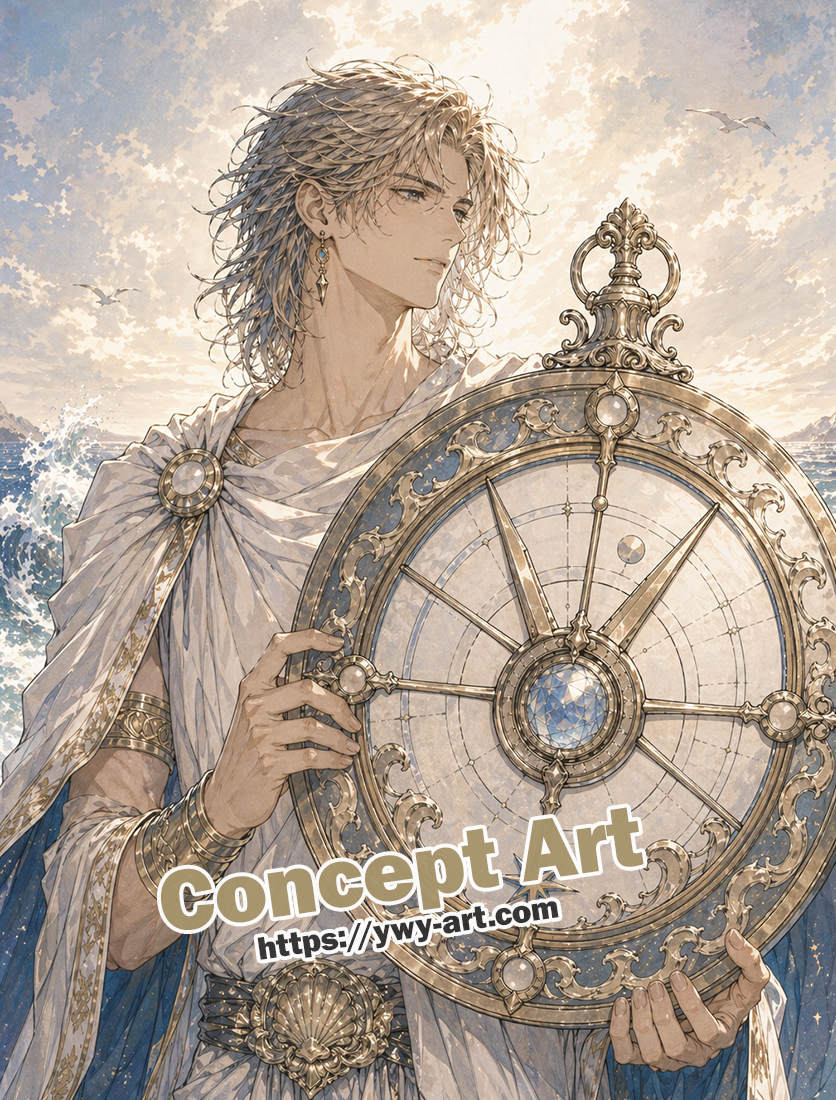
Oceanus World-Circling Ring
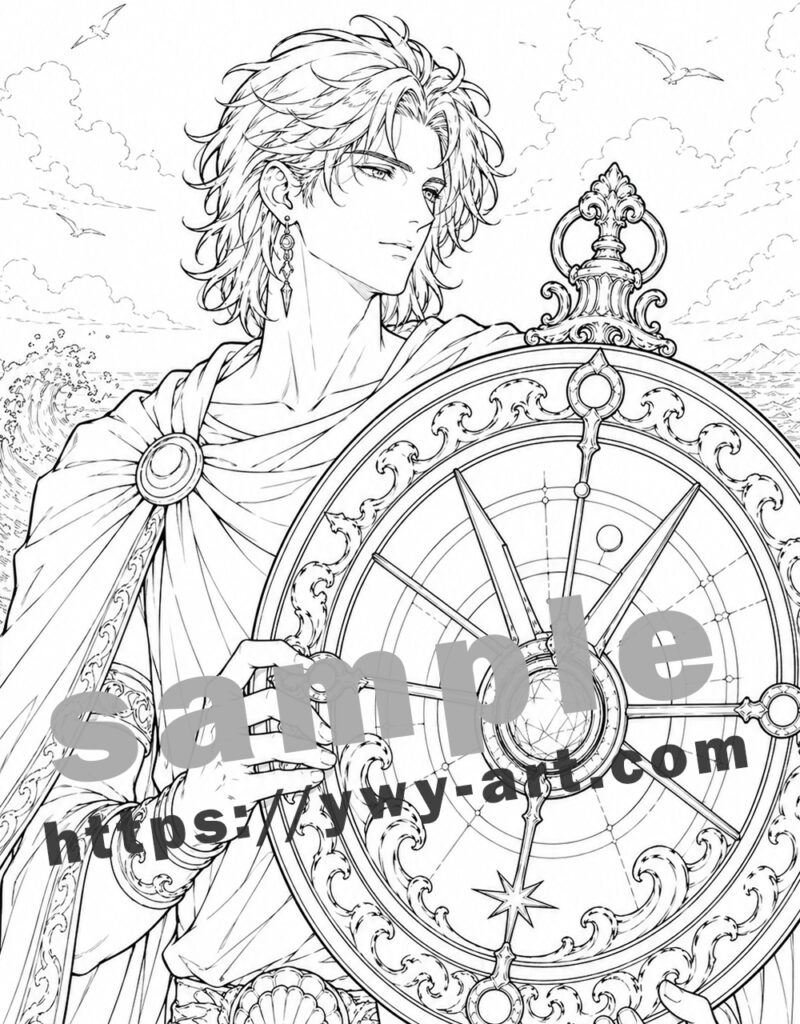
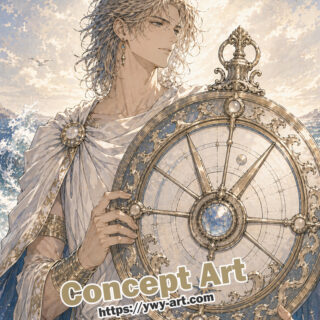
Oceanus is not just another sea god. He belongs to an older layer of Greek mythology, where the world itself was imagined as something surrounded by a vast cosmic river. In this illustration, the World-Circling Ring becomes the central artifact, held like a sacred map of waters, borders, stars, and endless return. It feels calm at first, but honestly, there is something huge behind that calm. Oceanus does not feel like a storm. He feels like the boundary of the world quietly holding everything in place.
Basic Profile
| Name | Oceanus |
|---|---|
| Mythology | Greek Mythology |
| Gender | Male |
| Region | Primordial Greek cosmos, especially the world-encircling river beyond the known lands |
| Era | Age of the Titans and early Greek cosmological tradition |
| Domain | World-encircling waters, rivers, cosmic boundaries, origin of flowing water, outer limits of the earth |
| Symbol | River ring, waves, ocean current, celestial circle, water boundary, shells, flowing patterns |
| Culture / Religion | Ancient Greek myth and cosmology |
| Main Role | Titan god of the great river believed to encircle the world |
| Associated Deity | Tethys, the Oceanids, the Potamoi, Helios, Gaia, Cronus |
| Common Depiction | An ancient water deity, sometimes shown with flowing hair, horns, serpentine features, waves, or a river-like form |
| Alignment | Ancient, vast, calm, boundary-like, generative, and deeply connected to cosmic order |
Overview
Oceanus is one of the Titans, born from Uranus and Gaia. Unlike Poseidon, who rules the sea as an Olympian god, Oceanus belongs to an older worldview. He is not mainly the god of crashing waves, storms, or ships. He is the great stream that surrounds the world itself, the outer water that marks the edge of known existence.
That difference is important. Poseidon feels active and forceful. He shakes the earth, raises storms, and strikes with the trident. Oceanus feels wider and older. His power is not about sudden violence. It is about enclosure, flow, origin, and the quiet structure of the cosmos. He is less like a king shouting commands and more like the circular border that everything else depends on.
In early Greek imagination, Oceanus could be understood as the vast river surrounding the earth. The sun, moon, and stars were sometimes imagined as rising from or sinking into this outer stream. That makes Oceanus more than a body of water. He becomes part of the daily movement of the heavens, the rhythm of light and darkness, and the map of the world before modern geography.
In this artwork, the World-Circling Ring captures that cosmic idea very clearly. The artifact looks like a navigational instrument, a sacred wheel, and an oceanic boundary all at once. The waves around the rim, the radial points, and the central gemstone make it feel like a map of motion rather than a simple ornament.
The Artifact: World-Circling Ring
The World-Circling Ring is a creative artifact based on Oceanus’ role as the river that encircles the world. A ring is the perfect shape for him because it has no obvious beginning or end. It suggests return, boundary, protection, and endless flow. Water travels, circles, evaporates, returns, and moves again. Oceanus is mythic water imagined on the largest possible scale.
The artifact in this illustration resembles both a ring and a celestial compass. That combination works especially well for Oceanus. The outer rim suggests the edge of the world, while the inner lines suggest direction, navigation, and cosmic order. It feels like something a god would use not to travel across the sea, but to understand where the sea ends and the universe begins.
The wave patterns along the rim are especially important. They prevent the artifact from feeling too mechanical. This is not a cold mathematical device. It is a living boundary made of water. The curves, shell-like details, and sea-blue accents connect the ring back to rivers, currents, and the ancient belief that all waters somehow return to a greater source.
The central gemstone can be read as the still point at the heart of circulation. Everything turns around it. It may represent the earth, the axis of the world, or the hidden source from which waters flow. That gives the World-Circling Ring a powerful symbolic structure: movement around stillness, boundary around center, water around land.
Mythological Background
Oceanus is traditionally paired with Tethys, another Titan associated with fresh water and generative flow. Together, they are the parents of the Oceanids and the river gods, known as the Potamoi. This makes Oceanus a father of waters in a broad mythological sense. Rivers, springs, streams, and water nymphs all connect back to this older aquatic lineage.
In Homeric and Hesiodic tradition, Oceanus is often treated as a remote, ancient force. He does not usually behave like the more dramatic Olympian gods. He is not constantly descending into human affairs. His importance is more cosmic. He represents a fundamental part of how the world is arranged.
During the Titanomachy, many Titans fight against Zeus and the Olympians. Oceanus is often presented differently from the more rebellious or violent Titans. He does not always stand at the center of open conflict. That makes him interesting. He feels less like a warlord and more like an older boundary power, somewhat removed from the chaos of succession.
Oceanus also appears in relation to the journey of Helios, the sun. In some ancient imagery and poetic imagination, the sun travels across the sky and returns by way of the great outer waters. This connects Oceanus to cosmic travel, time, and the daily cycle of the world. He is not simply “water below.” He is the surrounding route through which celestial order continues.
Symbolism and Meaning
The World-Circling Ring represents the boundary of existence. It is the line between the known and the unknown, the mapped and the unmapped, the safe shore and the deep outer current. Oceanus stands at that edge, not as a destroyer, but as the force that defines where the world ends.
The ring shape also suggests continuity. Unlike a blade, spear, or hammer, this artifact does not point in one aggressive direction. It returns to itself. That makes it a strong symbol for cycles: water cycles, day and night, celestial motion, generations, and the repeating patterns of nature.
The oceanic details around the rim can be read as protection as well as limitation. A boundary can trap, but it can also hold. Oceanus surrounds the world, keeping it shaped. Without a border, the world would lose form. That gives the artifact a quiet but enormous meaning.
The pale sky and sea background make the image feel open, not oppressive. This is important. Oceanus is not shown as a dark abyssal god here. He feels luminous and ancient, closer to the horizon than the storm. The artifact becomes a calm cosmic instrument, one that measures the world through water and light.
Coloring Notes
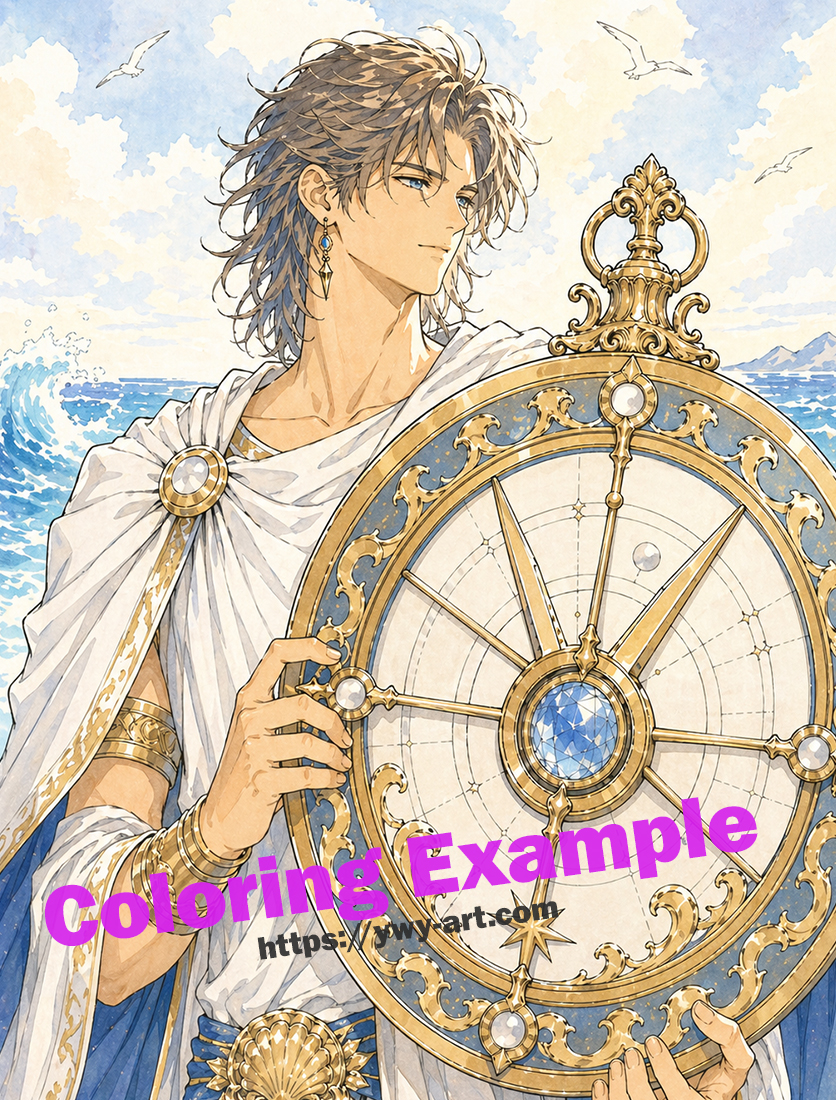
This page works beautifully with soft marine and celestial colors. Pale blue, sea blue, ivory, muted gold, pearl gray, sand beige, and soft silver can create a calm ancient-ocean atmosphere. The World-Circling Ring should stay the visual center, so its outer rim and inner radial lines need clear contrast.
For the ring itself, antique gold or aged brass will work well. The wave-like decorations can be shaded with blue-gray or sea-green shadows to connect the metal to water. Keeping the highest highlights on the outer rim will help the circular shape remain strong.
The central gemstone can be colored like aquamarine, pale sapphire, moonstone, or clear blue crystal. It should be bright enough to draw the eye, but not so bright that it overwhelms the whole artifact. A clean highlight at the center can make the ring feel sacred and precise.
Oceanus’ clothing can stay in white, pearl gray, and soft blue. These colors will support the sea and sky setting without becoming too heavy. Small gold accents on the belt, jewelry, and cloak edges can connect him visually to the artifact.
The background ocean and sky should remain airy. Pale clouds, soft sunlight, and gentle sea tones will keep the image from feeling too dark. If you want more drama, you can deepen the blues around the lower waves, but the overall mood works best when it feels spacious and ancient rather than stormy.
Quick Creative Reference
| Element | Creative Direction |
|---|---|
| Best For | Titan mythology, cosmic ocean themes, ancient maps, boundary symbolism, calm divine portraits |
| Visual Keywords | Oceanus, World-Circling Ring, cosmic river, waves, compass, horizon, outer sea |
| Mood | Ancient, calm, vast, luminous, boundary-like, contemplative |
| Recommended Colors | Pale blue, sea blue, ivory, antique gold, pearl gray, sand beige, soft silver |
| Main Focus | The ring as a symbol of the world-encircling river, cosmic boundary, and endless flow |
| Coloring Tip | Keep the circular rim clearly highlighted and use soft blue shadows inside the ring so the artifact remains readable against the pale background. |
Compare with Similar Deities
| Name | Mythology | Main Domains | Overall Image |
|---|---|---|---|
| Oceanus | Greek | World-encircling river, cosmic waters, boundaries, origin of rivers | An ancient Titan of the outer waters who surrounds the world and marks the edge of existence |
| Poseidon | Greek | Sea, storms, earthquakes, horses | A powerful Olympian sea god whose authority is active, stormy, and often forceful |
| Tethys | Greek | Fresh water, nursing, rivers, flowing life | A Titaness of generative waters and mother of many river gods and Oceanids |
| Nun | Egyptian | Primordial waters, chaos before creation | A vast primeval water force representing the deep waters from which creation emerges |
Closing
Oceanus World-Circling Ring is a strong artifact piece because it makes water feel cosmic rather than merely scenic. The ring is not just a decorative circle. It is the edge of the world, the path of return, the surrounding river that ancient imagination placed beyond the known lands. Oceanus does not need to raise a storm to feel powerful. He holds the boundary, and sometimes that is the greatest power of all.
Step into the world of mythology..
Available on Amazon Mythology Artifacts Series: Symbols of Power Coloring Book Open in a new tab

コメント