Hephaestus Forge Hammer
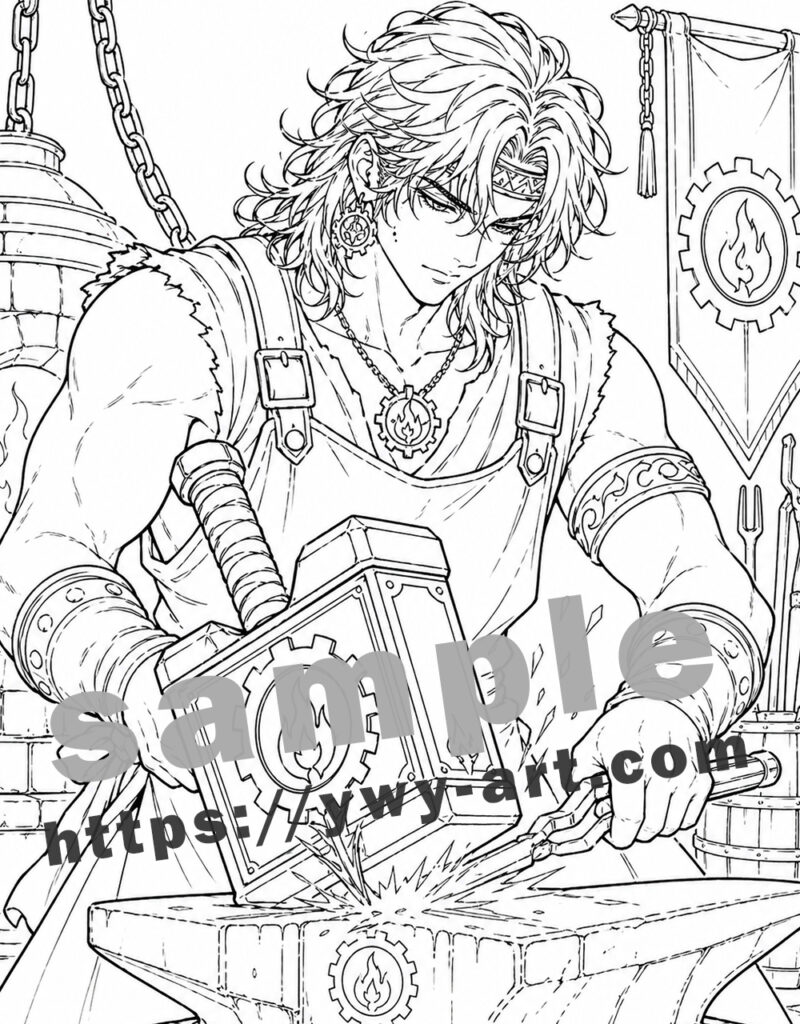
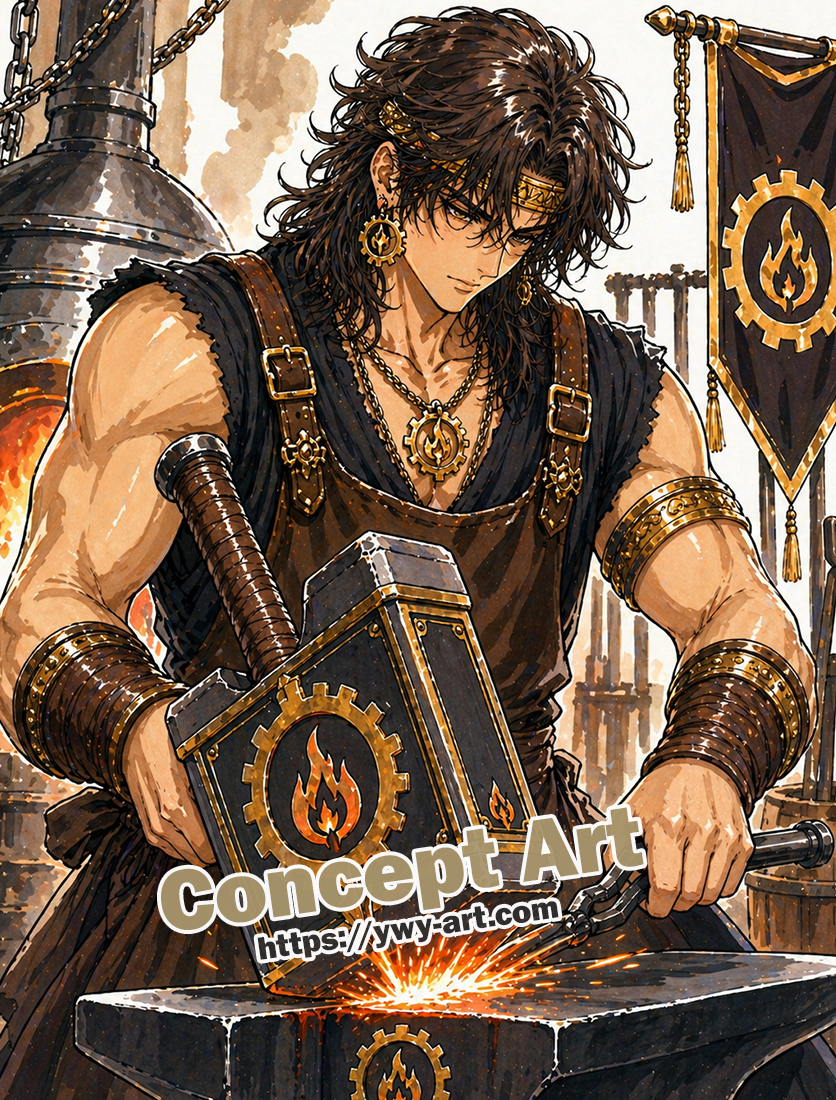
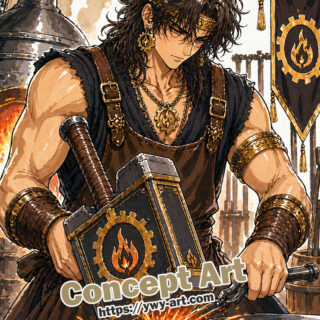
Hephaestus does not need a shining throne or a perfect heroic pose to feel powerful. His power comes from heat, iron, patience, and the sound of a hammer striking metal again and again. In this illustration, the Forge Hammer becomes the central artifact, pressed against the anvil while sparks burst from the point of impact. It feels grounded, heavy, and honestly, I really like that. This is not the clean beauty of Olympus. This is divine work with sweat, fire, and weight behind it.
Basic Profile
| Name | Hephaestus |
|---|---|
| Mythology | Greek Mythology |
| Gender | Male |
| Region | Ancient Greece, especially volcanic places, workshops, and sacred craft traditions |
| Era | Ancient Greek mythic age |
| Domain | Fire, metalworking, blacksmithing, craftsmanship, invention, technology, divine weapons |
| Symbol | Hammer, anvil, tongs, forge, fire, volcano, crafted armor |
| Culture / Religion | Ancient Greek religion |
| Main Role | God of the forge and divine craftsman of Olympus |
| Associated Deity | Hera, Zeus, Aphrodite, Athena, Ares, Thetis, Achilles |
| Common Depiction | A strong craftsman god with hammer and tools, often shown near a forge or anvil |
| Alignment | Creative, wounded, patient, clever, practical, intense, and quietly formidable |
Overview
Hephaestus is one of the most fascinating gods in Greek mythology because his strength is not presented in the usual heroic way. He is not the fastest, the most beautiful, or the loudest. He is the maker. He builds the weapons, armor, thrones, chains, automatons, and impossible objects that other gods and heroes depend on.
His myths often describe him as physically imperfect or injured, and that makes his place among the Olympians feel different. He is divine, but not polished in the same way Apollo or Athena might appear. He belongs to the forge, where beauty is not born clean. It is shaped through pressure, heat, correction, and repeated impact.
That gives Hephaestus a very human kind of power. He represents skill earned through labor. A sword does not become sharp because someone wishes it to be sharp. Armor does not protect because it looks impressive. It takes technique, patience, and the willingness to keep working when the metal resists. Hephaestus is the god of that process.
In this artwork, the Forge Hammer is not just a tool held in the background. It is the emotional center of the image. The hammer meets the anvil, sparks burst outward, and the whole scene feels like a single moment of creation. The artifact is heavy, direct, and practical, but it still carries divine authority.
The Artifact: Forge Hammer
The Forge Hammer is the most natural artifact for Hephaestus. It represents creation through force, but not random violence. A hammer strike must be controlled. Too weak, and the metal does not move. Too careless, and the work is ruined. That balance makes the hammer a strong symbol of disciplined power.
Unlike a sword or spear, a forge hammer is not made mainly to destroy an enemy. It is made to transform material. Iron becomes armor. Bronze becomes ornament. Gold becomes sacred detail. Raw matter becomes meaning. In that sense, Hephaestus’ hammer is one of the most important divine tools in mythology because it creates the objects that shape the stories of other gods.
The hammer in this illustration carries a bold emblem of fire and gear-like design. That combination works well for Hephaestus because he stands between ancient myth and the idea of technology. He is not only a blacksmith in a simple workshop. He is an inventor. Some myths describe him creating moving golden servants, self-operating devices, and miraculous objects that feel almost mechanical.
The forge setting gives the artifact its proper atmosphere. Chains, banners, fire, tools, and the anvil all reinforce the same idea: this is a place where divine things are made by hand. The hammer is sacred because it works. It does not need decoration to prove itself, though the gold and black details make it feel worthy of a god.
Mythological Background
Hephaestus’ birth story varies by tradition, but many versions emphasize rejection, injury, or a fall from Olympus. In some stories, Hera casts him away because of his physical appearance. In others, Zeus throws him from the heavens after he takes Hera’s side. Either way, Hephaestus is marked by descent. He does not simply inherit glory. He survives humiliation and turns it into mastery.
That is one reason his myths feel emotionally different from many Olympian stories. Hephaestus is often underestimated, but he repeatedly proves that craft can outwit status. He creates a magical throne that traps Hera, forcing the gods to bring him back. He forges objects that even the greatest gods cannot casually dismiss. His revenge is not always loud. Sometimes it is built into the mechanism itself.
Hephaestus is also famous for crafting divine weapons and armor. In the Iliad, Thetis asks him to make new armor for Achilles after Patroclus is killed and Achilles’ original armor is taken by Hector. Hephaestus creates a magnificent shield filled with scenes of human life: cities, fields, dances, conflict, stars, and the ocean. This is one of the most powerful examples of craft in Greek literature. A shield becomes not just protection, but a whole world made in metal.
His workshop is sometimes imagined beneath volcanic regions, especially places associated with fire and underground heat. That makes sense symbolically. Hephaestus works where the earth itself burns. His power comes from below the surface, from hidden pressure and molten transformation.
Symbolism and Meaning
The Forge Hammer represents transformation through effort. That is the core idea. It does not create instantly. It creates through rhythm: heat, strike, turn, strike again. There is something deeply satisfying about that. The hammer makes progress visible, one controlled impact at a time.
It can also symbolize turning pain into skill. Hephaestus’ myths often begin with rejection or injury, but they do not end there. He becomes indispensable. The gods may be beautiful, powerful, or proud, but they still need what he makes. That gives the hammer a strong emotional meaning. It is not just a tool of craft. It is proof that being overlooked does not mean being powerless.
The fire emblem on the hammer suggests energy, invention, and danger. Fire can destroy, but in the forge it becomes useful. It softens metal. It reveals color. It allows transformation. Hephaestus’ genius lies in controlling that dangerous element long enough to make something lasting.
The anvil is also important. A hammer needs resistance. Without the anvil, the strike has no shape. That creates a strong visual metaphor: creation often requires pressure from both sides. The force of the hammer and the firmness of the anvil work together. One moves, one holds, and the metal changes between them.
Coloring Notes
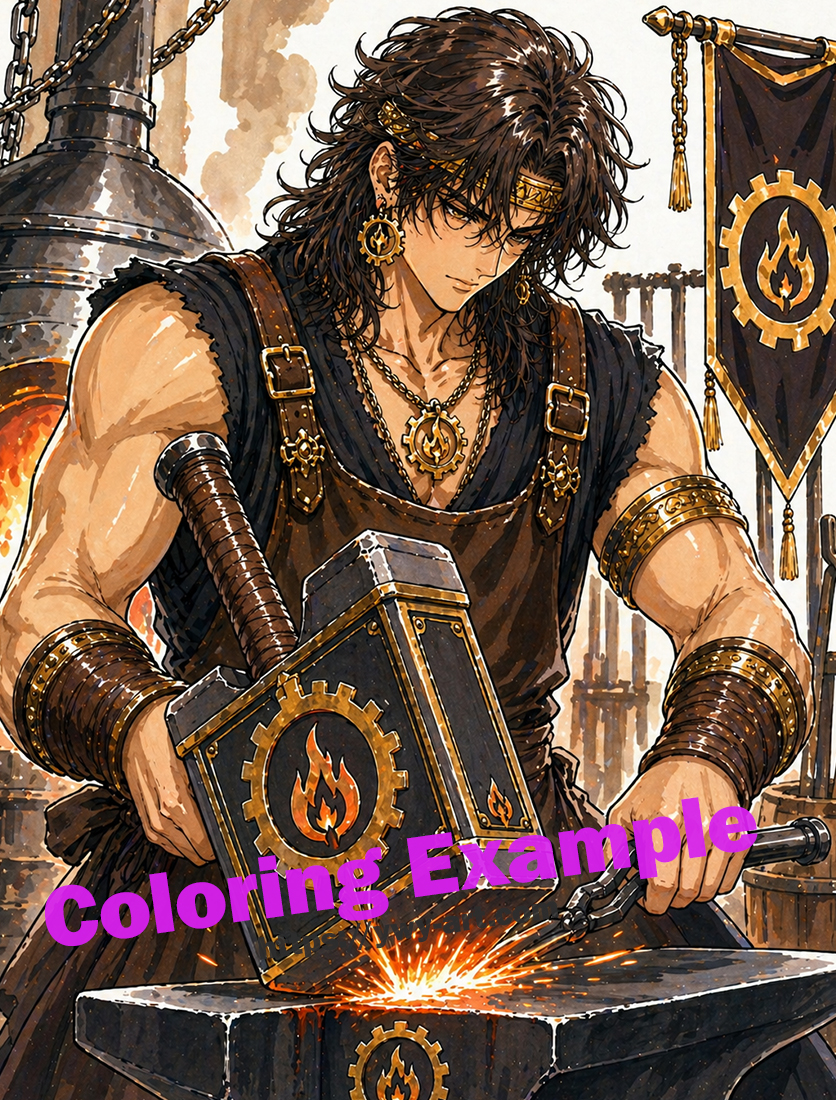
This page works well with a warm forge palette. Black, dark brown, bronze, antique gold, orange, burnt red, and smoky gray can create a strong workshop mood. The sparks at the anvil should probably be the brightest point, because they show the exact moment where the hammer’s power becomes visible.
For the hammer, dark metal with gold trim will make it feel heavy and divine. The fire emblem can use orange, red, and yellow accents, but it does not need to become too bright everywhere. Keeping the strongest glow near the point of impact will help the composition stay focused.
Hephaestus’ clothing can be colored in practical dark tones: black, charcoal, leather brown, and deep warm gray. Small gold accessories can connect him visually to the hammer without making him look too decorative. He should feel like a craftsman first, not a palace noble.
The skin tones can be warmer than usual because of the forge light. Adding orange or reddish shadows near the arms and face can make the fire feel present. The highlights on the shoulders and hands are especially useful, since this image is all about physical work and controlled strength.
The background furnace can stay rough and smoky. It should support the scene, not steal attention from the hammer. Darker grays around the forge, with brighter fire only in selected areas, will make the sparks and metal glow stand out more clearly.
Quick Creative Reference
| Element | Creative Direction |
|---|---|
| Best For | Forge mythology, divine craftsmanship, fire themes, weapon creation scenes |
| Visual Keywords | Forge hammer, Hephaestus, anvil, sparks, fire, metal, workshop, divine craft |
| Mood | Heavy, warm, practical, intense, creative, grounded |
| Recommended Colors | Antique gold, bronze, black, charcoal, burnt orange, dark brown, smoky gray |
| Main Focus | The hammer as a symbol of craft, transformation, and divine invention |
| Coloring Tip | Keep the brightest glow around the sparks and hammer impact so the act of forging becomes the visual center. |
Compare with Similar Deities
| Name | Mythology | Main Domains | Overall Image |
|---|---|---|---|
| Hephaestus | Greek | Fire, forge, metalworking, invention, divine craft | A wounded but brilliant craftsman god who creates the tools and weapons of divine power |
| Vulcan | Roman | Fire, volcanoes, forge, metalworking | The Roman counterpart of Hephaestus, strongly connected with destructive and creative fire |
| Wayland | Germanic | Smithing, magical craftsmanship, revenge, weapons | A legendary smith associated with suffering, skill, and extraordinary crafted objects |
| Ptah | Egyptian | Craftsmanship, creation, artisans, divine design | A creator god linked to making, shaping, and bringing forms into existence through divine craft |
Closing
Hephaestus Forge Hammer is a strong artifact piece because it shows divine power as work, not display. The hammer is heavy, the anvil is solid, and the sparks tell us that something is being made through force and control. It is not glamorous in the usual Olympian way, and that is exactly what makes it powerful. Hephaestus reminds us that creation is not always clean or graceful. Sometimes it is fire, pressure, scars, and one more strike.
Step into the world of mythology..
Available on Amazon Mythology Artifacts Series: Symbols of Power Coloring Book Open in a new tab
コメント