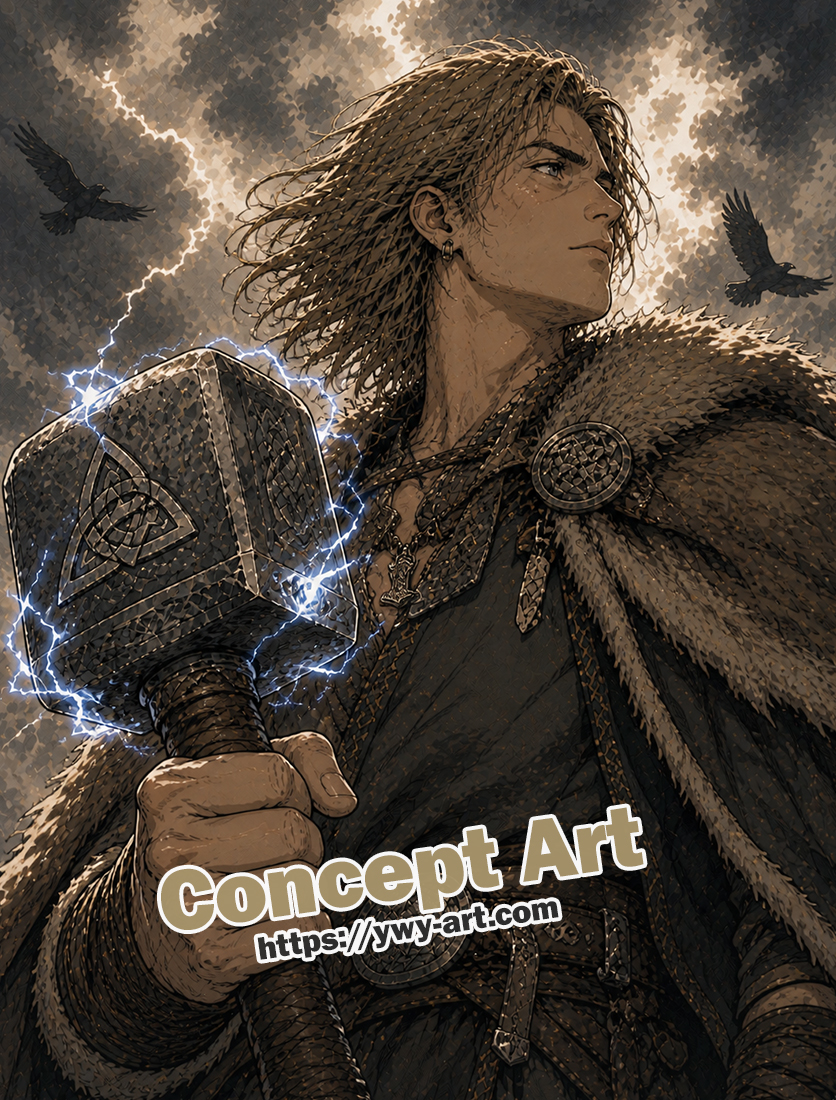
Thor Mjölnir Hammer
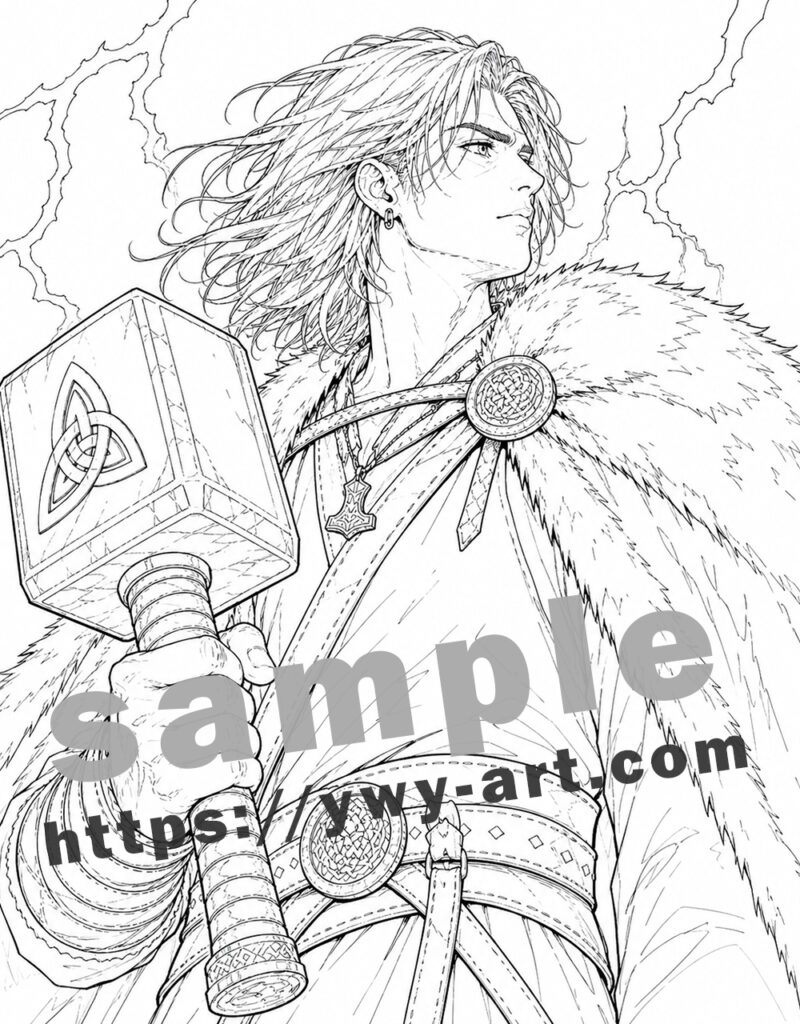
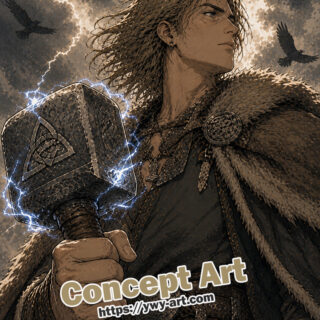
Thor is not a distant, delicate god of quiet symbols. He is thunder in the mountains, strength in the storm, and the protector who stands between the gods and the forces that want to break the world open. In this illustration, Mjölnir becomes the central artifact, gripped tightly while lightning cracks around its head. It feels heavy, rough, and honest. Honestly, this one has that “the storm is already here” energy, and I really like it. Thor does not need to explain his power. The hammer does it for him.
Basic Profile
| Name | Thor |
|---|---|
| Mythology | Norse Mythology |
| Gender | Male |
| Region | Norse and Germanic mythic world, especially Asgard, Midgard, mountains, storms, and battlefields |
| Era | Viking Age mythic tradition and earlier Germanic belief |
| Domain | Thunder, lightning, storms, strength, protection, fertility, battle, sacred defense |
| Symbol | Mjölnir, thunderbolt, goat chariot, belt of strength, iron gloves, oak, storm clouds |
| Culture / Religion | Norse mythology and pre-Christian Germanic religion |
| Main Role | God of thunder and protector of gods and humans against giants and destructive forces |
| Associated Deity | Odin, Loki, Sif, Jörmungandr, Týr, Freyja, the Giants |
| Common Depiction | A powerful warrior god carrying a hammer, often surrounded by storms, lightning, or giant-slaying imagery |
| Alignment | Protective, forceful, direct, loyal, fierce, storm-born, and deeply tied to physical power |
Overview
Thor is one of the most beloved and powerful gods in Norse mythology. While Odin is often linked with wisdom, kingship, magic, and sacrifice, Thor feels closer to the ground. He is the god people call on for protection, strength, weather, fertility, and survival. He is not always subtle, and that is part of his appeal. Thor meets danger head-on.
His role as protector is central. The Norse cosmos is full of tension between order and chaos. Asgard, the realm of the gods, and Midgard, the world of humans, are constantly threatened by giants, monsters, and destructive forces. Thor stands at the edge of that danger with Mjölnir in hand. He is not simply a warrior looking for glory. He is a divine defender holding the line.
That makes him different from a war god like Ares. Thor is violent when he needs to be, yes, but his violence is usually framed as protective. He strikes because something must be stopped. He travels into giant territory, faces monsters, and keeps cosmic threats from swallowing the world too early.
In this artwork, Thor’s hammer is placed close and heavy in the foreground, which works perfectly. The viewer feels the weight of it before anything else. The storm clouds, lightning, ravens, and rough fur cloak all reinforce the same idea: this is not polished palace power. This is storm power, mountain power, and the strength of someone who has fought too many times to look decorative.
The Artifact: Mjölnir Hammer
Mjölnir is one of the most famous weapons in world mythology. It is Thor’s hammer, forged by dwarves, and it has the ability to return to his hand after being thrown. That returning quality is important. Mjölnir is not only a crushing weapon. It is loyalty made physical. No matter how far it flies, it comes back to Thor.
The hammer is often described as devastatingly powerful, capable of smashing mountains and killing giants. But it also has a sacred role. Mjölnir is used to bless marriages, births, funerals, and important rites. That dual nature makes it much more interesting than a simple war tool. It destroys, but it also consecrates.
In Norse tradition, hammer amulets became symbols of protection. People wore them not only because Thor was strong, but because his strength was useful against danger. The hammer meant: something powerful stands with you. That protective meaning gives Mjölnir a very direct emotional force.
In this illustration, the hammer feels old, carved, and almost stone-like, with lightning crawling around it. The design does not make it look elegant in a delicate way. It looks functional, brutal, and sacred. That is exactly right. Mjölnir should feel like an object that has struck giants, blessed halls, and survived storms older than kingdoms.
Mythological Background
The story of Mjölnir’s creation begins with Loki causing trouble, as he often does. After Loki cuts off Sif’s golden hair, he must make amends by securing treasures from the dwarves. Among the items created are Sif’s new hair, Odin’s spear Gungnir, Freyr’s ship Skíðblaðnir, and eventually Mjölnir. Because of Loki’s interference during the forging, the hammer’s handle ends up shorter than intended. Even with that flaw, it becomes the greatest weapon of Thor.
Thor’s battles with giants are some of the strongest parts of his mythology. Giants are not only large enemies. They often represent wildness, threat, and forces outside the ordered world of gods and humans. Thor’s hammer is the tool that pushes those forces back. It is the sound of thunder translated into action.
One of Thor’s greatest enemies is Jörmungandr, the World Serpent. Their conflict is cosmic. In the myths of Ragnarök, Thor finally kills the serpent, but he walks only nine steps before dying from its venom. This ending gives Thor a heroic but tragic shape. He wins the fight, but the cost is fatal. That makes his strength feel more meaningful, because even the thunder god has a limit.
There is also the famous tale of the stolen hammer, where the giant Þrymr takes Mjölnir and demands Freyja as his bride. Thor eventually disguises himself as the bride to retrieve it. The story is funny, strange, and dramatic, but it also shows how essential the hammer is. Without Mjölnir, the gods are vulnerable. Once Thor gets it back, the balance of power changes immediately.
Symbolism and Meaning
Mjölnir represents protective force. It is not refined intellectual power. It is the kind of power that stands in front of the door when danger arrives. That makes the hammer deeply reassuring, even though it is violent. Its purpose is not only to crush enemies, but to keep the world from being overrun.
The lightning around the hammer makes that meaning visible. Thunder is sudden, loud, and impossible to ignore. It comes from the sky, but it shakes the ground. Thor’s hammer has the same feeling. It connects heaven, storm, earth, and impact in one object.
The short handle of Mjölnir can also be read symbolically. The hammer is not perfect in form, but it is still unmatched in power. That gives the artifact a rough honesty. It does not need perfect beauty to be sacred. It works. It returns. It protects. That is enough.
The ravens and storm clouds in the artwork create a darker atmosphere around Thor. They suggest battle, prophecy, and the presence of the wider Norse world. Even when Thor is the focus, he is still part of a mythic system where fate is always moving. Ragnarök waits somewhere ahead, and every strike of the hammer feels like a delay against that ending.
Coloring Notes
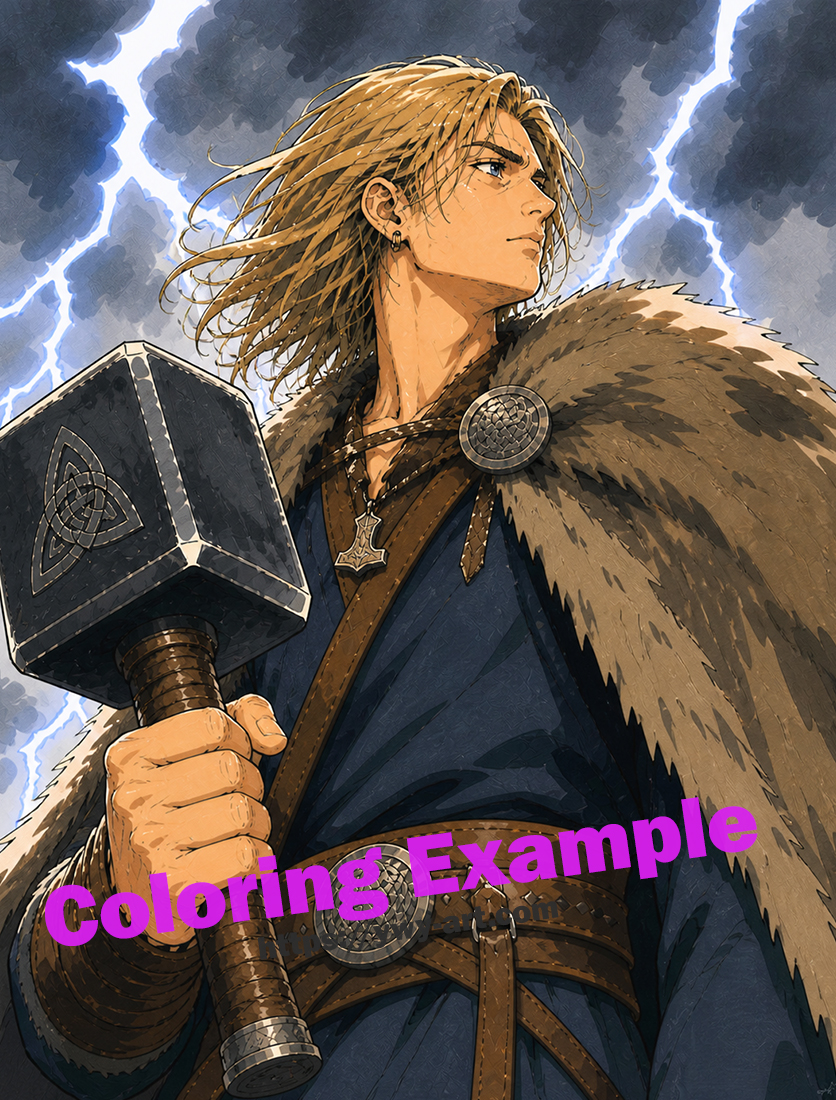
This page works well with a storm-heavy palette. Charcoal, dark brown, iron gray, muted gold, storm blue, bone beige, and small lightning-white highlights can create a strong Norse atmosphere. The hammer should stay the visual anchor, so its edges and lightning effects need clear contrast.
For Mjölnir, dark iron, weathered steel, or stone-gray metal will work beautifully. The carved details can be shaded with darker gray or brown, while the top edges can receive pale highlights. If lightning is included, using white at the center and pale blue around it can make the electricity feel sharp.
Thor’s clothing can use natural, rugged colors: dark leather brown, black, muted gray, and fur tones. The fur cloak can be shaded with layered beige, brown, and charcoal to create texture. It should feel heavy and practical, not smooth or decorative.
The sky can be colored with storm gray, blue-gray, and smoky black. Bright lightning behind the figure will help separate Thor from the background. Be careful not to make the entire sky equally dark, though. Some pale cloud breaks will make the storm feel deeper.
Thor’s skin can use warm shadows against the cool storm setting. A little reflected blue-white light near the hand and hammer will connect his body to the lightning. The strongest highlights should sit on the hammer, fist, and face, because those are the areas that carry the main force of the image.
Quick Creative Reference
| Element | Creative Direction |
|---|---|
| Best For | Norse mythology, storm scenes, protective warrior themes, thunder and giant-slaying imagery |
| Visual Keywords | Thor, Mjölnir, hammer, lightning, storm clouds, ravens, fur cloak, mountain |
| Mood | Heavy, stormy, protective, rugged, heroic, intense |
| Recommended Colors | Charcoal, iron gray, storm blue, dark brown, muted gold, bone beige, lightning white |
| Main Focus | Mjölnir as a symbol of thunder, protection, sacred force, and the defense of the world |
| Coloring Tip | Keep the hammer and lightning as the brightest contrast points, then use darker storm tones around Thor to make the artifact feel powerful. |
Compare with Similar Deities
| Name | Mythology | Main Domains | Overall Image |
|---|---|---|---|
| Thor | Norse | Thunder, lightning, strength, protection, storms, giants | A powerful storm god and protector who uses Mjölnir to defend gods and humans from destructive forces |
| Zeus | Greek | Sky, thunder, kingship, law, divine authority | A ruler of the gods whose thunderbolt represents command, judgment, and sovereign power |
| Perun | Slavic | Thunder, storms, war, oak, weapons | A thunder god associated with lightning, battle, and the sacred force of the storm |
| Indra | Vedic / Hindu | Storms, thunder, rain, battle, kingship | A heroic storm god who wields the thunderbolt-like Vajra and defeats serpent-like cosmic enemies |
Closing
Thor Mjölnir Hammer is a strong artifact piece because it makes protection feel physical. The hammer is not a distant symbol or a delicate divine ornament. It is weight, thunder, impact, and sacred defense in one brutal shape. Thor stands with the storm around him, but the real center is Mjölnir itself — the weapon that returns, the tool that blesses, and the force that keeps the giants from taking the world too soon.
Step into the world of mythology..
Available on Amazon Mythology Artifacts Series: Symbols of Power Coloring Book Open in a new tab
コメント