Isis Throne Amulet
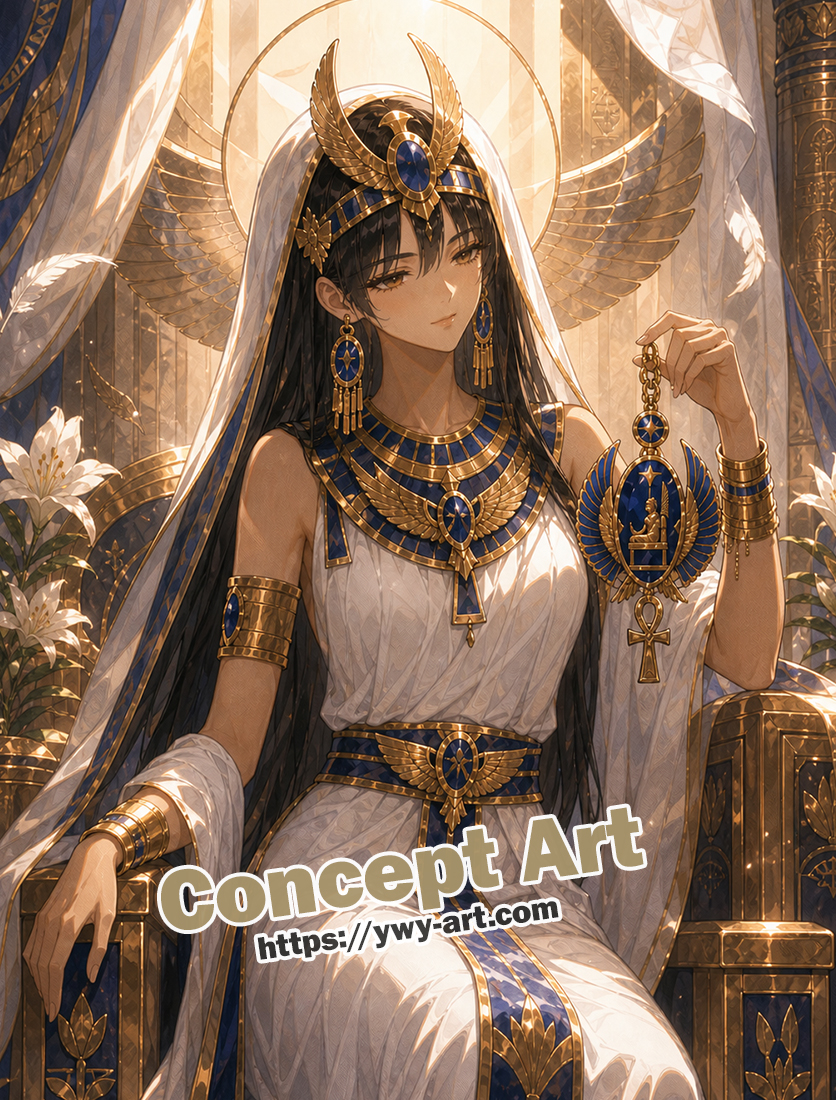
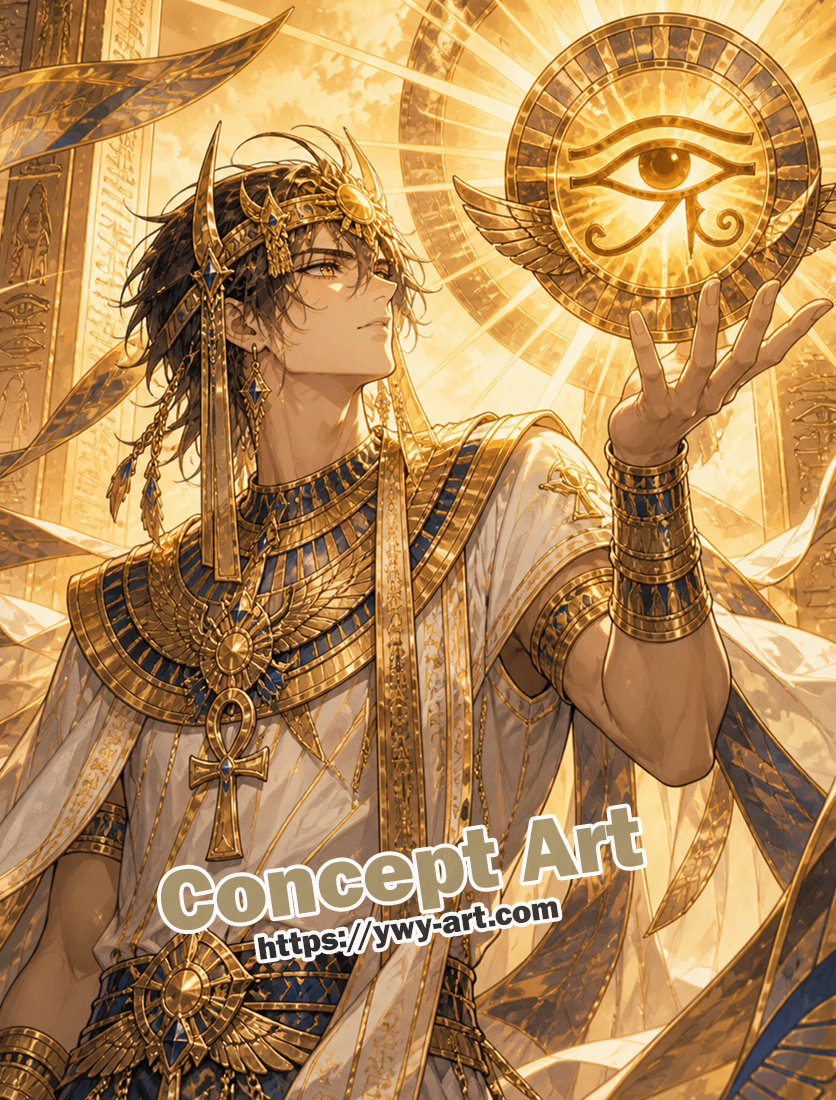
Isis is one of the most powerful goddesses in Egyptian mythology because her strength does not come from one single role. She is mother, queen, magician, mourner, healer, protector, and the one who helps restore what has been broken. In this illustration, the Throne Amulet becomes the central artifact, held like a sacred emblem of royal power and divine protection. It feels elegant and calm, but honestly, there is a deep emotional force underneath it. Isis does not only sit beside the throne. In many ways, she makes kingship possible.
Basic Profile
| Name | Isis |
|---|---|
| Mythology | Egyptian Mythology |
| Gender | Female |
| Region | Ancient Egypt, later worshiped widely across the Mediterranean world |
| Era | Ancient Egyptian religious tradition, especially prominent from the Old Kingdom through the Greco-Roman period |
| Domain | Magic, motherhood, queenship, protection, healing, mourning, resurrection, royal legitimacy |
| Symbol | Throne, amulet, wings, ankh, knot of Isis, sistrum, cow horns, solar disk |
| Culture / Religion | Ancient Egyptian religion |
| Main Role | Great goddess of magic, protection, motherhood, and royal continuity |
| Associated Deity | Osiris, Horus, Nephthys, Seth, Ra, Hathor, Anubis |
| Common Depiction | A regal goddess wearing a throne-shaped crown, sometimes shown with wings, an ankh, or the infant Horus |
| Alignment | Protective, magical, maternal, royal, strategic, compassionate, and deeply resilient |
Overview
Isis is one of the great central figures of Egyptian mythology. She is best known as the wife of Osiris and the mother of Horus, but reducing her to family roles would miss most of her power. Isis is active. She searches, protects, heals, deceives when needed, gathers what has been scattered, and uses magic to restore life from ruin.
Her role in the Osiris myth is especially important. When Osiris is murdered by his brother Seth and his body is hidden or dismembered, Isis does not remain still in grief. She searches for him, mourns him, protects his remains, and helps bring about his restoration. Her mourning is emotional, but it is also creative. She turns loss into action.
Through Isis, Horus is born and protected. Horus later becomes the rightful heir who challenges Seth and restores royal order. This makes Isis essential to Egyptian ideas of kingship. She is not only a grieving wife or devoted mother. She is the divine force that keeps the royal line alive when violence tries to destroy it.
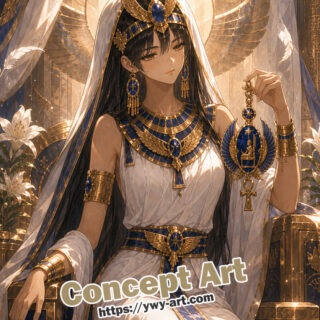
In this artwork, the Throne Amulet captures that royal and protective side beautifully. The artifact is small enough to be held, but symbolically it carries a whole kingdom. The blue and gold colors, winged form, ankh, and seated throne imagery all suggest sacred legitimacy. It is a jewel, yes, but it feels more like a royal spell.
The Artifact: Throne Amulet
The Throne Amulet is based on one of Isis’ most important symbols: the throne. In Egyptian writing and iconography, Isis’ name is closely associated with the throne sign, and she is often shown wearing a throne-shaped crown. This detail is not just decorative. It links her directly to kingship, authority, and the seat of power.
A throne is different from a crown. A crown marks the ruler, but a throne is the place where rulership becomes established. It is the seat of recognized authority. By being connected with the throne, Isis becomes the goddess who supports, protects, and legitimizes divine kingship.
The amulet form adds another layer. Amulets in ancient Egypt were not simply ornaments. They carried protective and magical power. They were worn by the living, placed with the dead, and used as sacred objects to guard the body, spirit, and journey into the afterlife. A Throne Amulet connected to Isis therefore becomes a symbol of protected authority and magical continuity.
In this illustration, the amulet includes wing-like forms and an ankh below, which strengthens its meaning. The wings suggest Isis as a protective goddess who shelters Osiris, Horus, and the dead. The ankh represents life. Together, they make the artifact feel like a charm of royal survival: the throne guarded, the life force preserved, the lineage carried forward.
Mythological Background
The myth of Isis and Osiris is one of the most important stories in Egyptian religion. Osiris is killed by Seth, a god associated with violence, disorder, and desert force. Isis searches for Osiris and recovers him, showing extraordinary devotion and magical skill. In some versions, she and Nephthys mourn over Osiris together, and their grief becomes part of the sacred pattern of funerary lamentation.
Isis then conceives Horus, who becomes the child of restoration and future kingship. But Horus is vulnerable as an infant, so Isis hides and protects him. Many Egyptian magical texts and healing traditions call on Isis as the mother who knows how to protect a child from danger, venom, illness, and hostile forces.
This protective motherhood is not weak or passive. Isis is clever and powerful. In one famous myth, she learns the secret name of Ra by creating a poisonous serpent and forcing the sun god to reveal his hidden name in exchange for healing. That story shows her as a master of magic and strategy. She understands that knowledge itself can be power.
Isis’ worship eventually spread far beyond Egypt, especially in the Greco-Roman world. She became a widely honored goddess of protection, salvation, motherhood, sea travel, and universal power. This later expansion shows how adaptable and emotionally powerful her image became. People saw in Isis a goddess who could cross borders, protect the vulnerable, and answer suffering with presence.
Symbolism and Meaning
The Throne Amulet represents protected legitimacy. It is not only about ruling. It is about the right to rule being preserved through danger. In the Osiris-Horus cycle, kingship is attacked, hidden, wounded, and then restored. Isis is the force that keeps that restoration possible.
The throne also symbolizes support. A ruler sits on a throne, but the throne holds the ruler. That is a powerful image for Isis. She is often behind the continuation of power, not always through visible conquest, but through protection, magic, and endurance.
The amulet format makes the symbol more intimate. A throne can be monumental, but an amulet can be carried close to the body. That shift changes the meaning. Royal power becomes personal protection. Cosmic order becomes something worn, held, and trusted.
The blue and gold colors in the artwork fit Isis beautifully. Blue can suggest the Nile, sky, lapis lazuli, and sacred depth. Gold suggests divinity, immortality, and solar power. Together, they create a strong Egyptian sacred atmosphere without making the artifact feel purely decorative.
The seated figure inside the amulet can be read as the royal presence itself, protected inside the wings and frame. It feels like a small shrine. That makes the artifact more than jewelry. It becomes a portable temple of kingship, life, and protection.
Coloring Notes
This page works beautifully with an Egyptian royal palette. Lapis blue, antique gold, ivory, warm sand, white, black, and soft amber can create a strong Isis atmosphere. The Throne Amulet should remain the main focus, so the blue and gold details need clean contrast.
For the amulet, use deep blue for the central panels and rich gold for the wings, frame, and ankh. Small white highlights on the gemstones will help the artifact feel polished and sacred. If the seated throne figure is included, keeping it slightly darker or more saturated can make it readable inside the amulet.
Isis’ clothing can stay in white or ivory with gold trim. This will allow the blue jewelry and amulet to stand out clearly. Soft cream shadows in the fabric will keep it warm without making the whole image too yellow.
Her hair can be black, blue-black, or very dark brown. Adding subtle blue highlights will connect it with the lapis elements. The gold headdress and wing ornaments should catch more light than the hair, so the upper silhouette remains regal.
The background can use pale gold, sand, and soft temple-light tones. White lilies and bright cloth can remain gentle so they do not compete with the amulet. The strongest accents should gather around the held artifact, the collar, and the throne-like headpiece.
Quick Creative Reference
| Element | Creative Direction |
|---|---|
| Best For | Egyptian goddess themes, royal protection, motherhood, resurrection symbolism, sacred jewelry |
| Visual Keywords | Isis, Throne Amulet, wings, ankh, lapis blue, gold, royal seat, protection |
| Mood | Regal, protective, luminous, maternal, sacred, quietly powerful |
| Recommended Colors | Lapis blue, antique gold, ivory, warm sand, white, black, soft amber, pearl highlights |
| Main Focus | The amulet as a symbol of protected kingship, magical continuity, and Isis’ royal authority |
| Coloring Tip | Keep the amulet’s blue and gold more saturated than the surrounding fabric so it remains the symbolic center of the image. |
Compare with Similar Deities
| Name | Mythology | Main Domains | Overall Image |
|---|---|---|---|
| Isis | Egyptian | Magic, motherhood, queenship, protection, resurrection, royal legitimacy | A powerful goddess who protects life, restores the broken, and safeguards divine kingship |
| Hathor | Egyptian | Love, joy, music, motherhood, beauty, sky | A warmer and more celebratory goddess of love, beauty, and maternal nourishment |
| Nephthys | Egyptian | Mourning, funerary protection, night, liminal spaces | A protective funerary goddess often paired with Isis in mourning and guarding the dead |
| Hera | Greek | Marriage, queenship, legitimacy, royal authority | A queenly goddess of lawful union and authority, more severe and political in tone than Isis |
Closing
Isis Throne Amulet is a strong artifact piece because it turns royal power into something protective and deeply personal. The amulet is not just a beautiful Egyptian charm. It carries the throne, the ankh, the wings, and the promise that life and kingship can survive even after violence and loss. Isis’ strength is quiet here, but it is not small. She holds the symbol of continuity in her hand, and the whole scene feels guarded by her magic.
Step into the world of mythology..
Available on Amazon Mythology Artifacts Series: Symbols of Power Coloring Book Open in a new tab
コメント