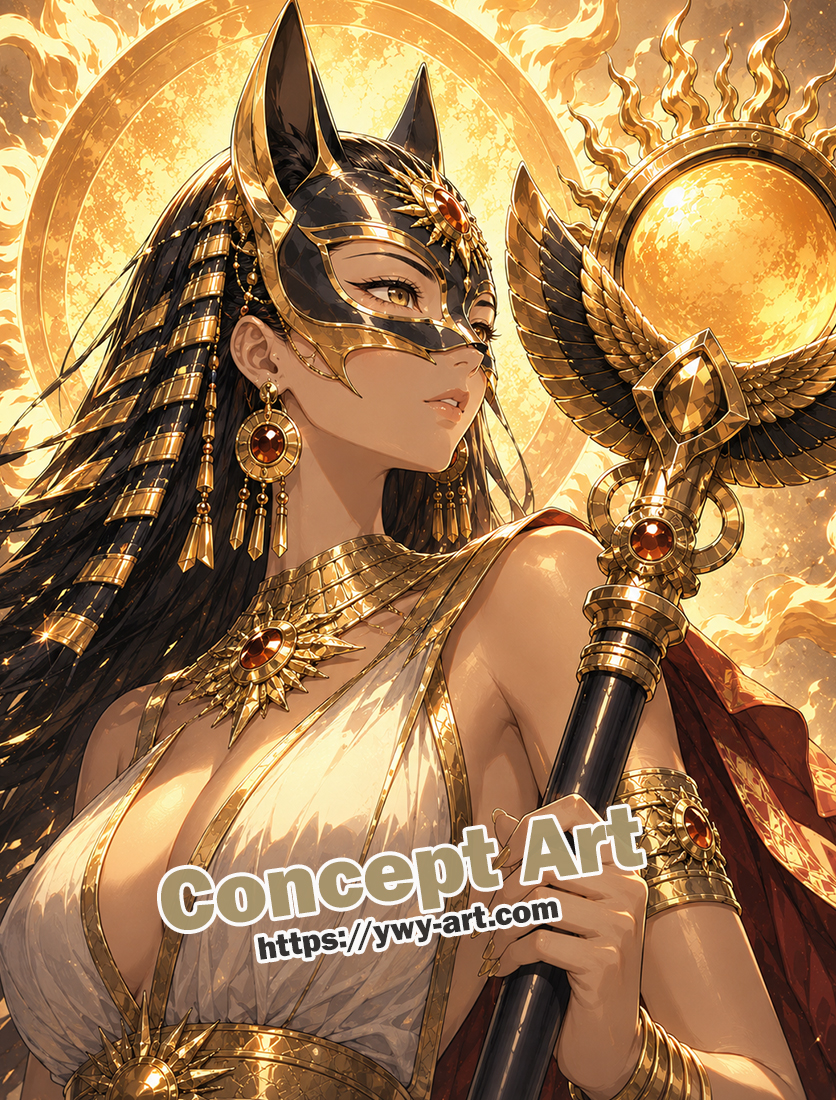
Sekhmet Solar War Scepter
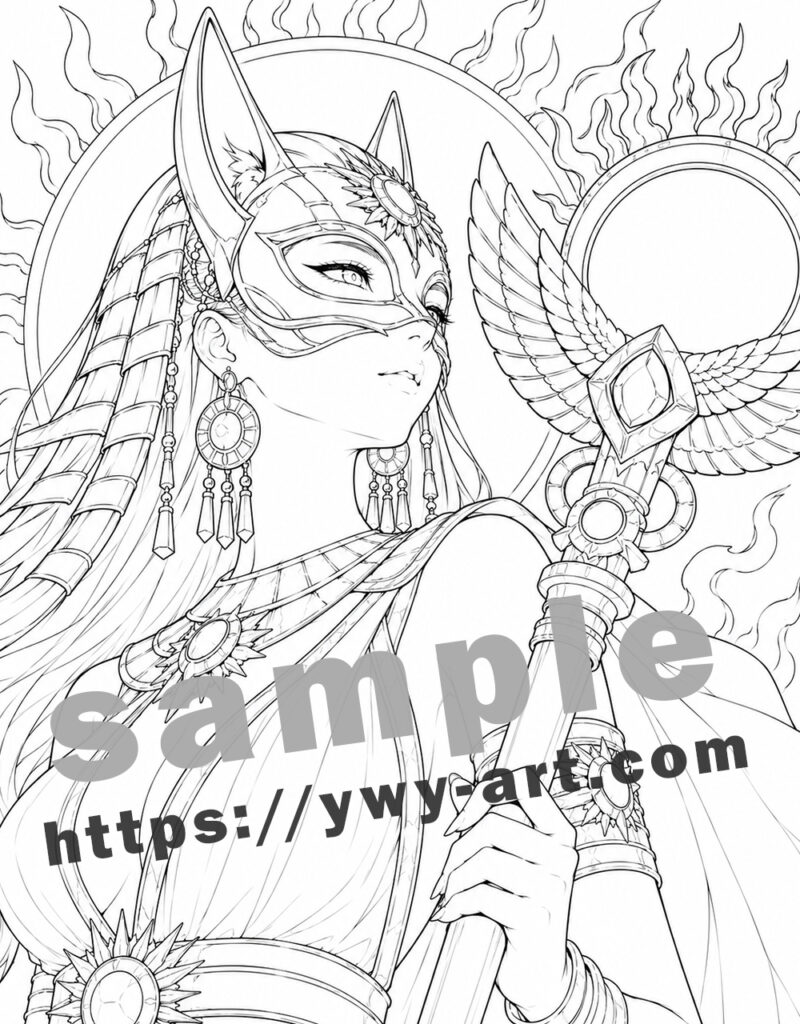
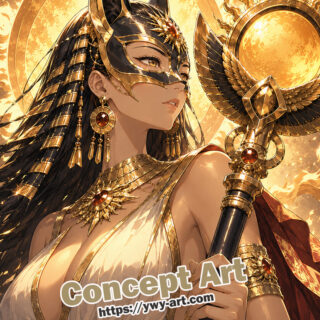
Sekhmet is not a gentle solar goddess. She is the burning edge of the sun, the roar of divine wrath, and the power that appears when order has to be defended by force. In this illustration, the Solar War Scepter becomes the central artifact, blazing with a golden disk, wings, flame, and royal Egyptian symbols. It is beautiful, but honestly, it feels almost too hot to touch. Sekhmet’s power is not just light. It is sunlight sharpened into judgment.
Basic Profile
| Name | Sekhmet |
|---|---|
| Mythology | Egyptian Mythology |
| Gender | Female |
| Region | Ancient Egypt, especially Memphis, royal temples, desert edges, and solar cult traditions |
| Era | Ancient Egyptian religious tradition, from early royal theology through later temple worship |
| Domain | War, plague, healing, solar wrath, royal protection, destruction of enemies, divine punishment |
| Symbol | Lioness, solar disk, uraeus, flame, scepter, ankh, red stone, desert heat |
| Culture / Religion | Ancient Egyptian religion |
| Main Role | Lioness goddess of solar fury, war, plague, healing, and royal defense |
| Associated Deity | Ra, Ptah, Nefertem, Hathor, Bastet, Ma’at, Pharaoh |
| Common Depiction | A lioness-headed goddess wearing the solar disk, often holding a scepter and ankh |
| Alignment | Fierce, protective, destructive, healing, royal, solar, and terrifyingly sacred |
Overview
Sekhmet is one of the most intense goddesses in Egyptian mythology. Her name is often connected with power, and that fits her perfectly. She is not only strong in a physical or martial sense. She represents the dangerous force of divine authority when it becomes active, hot, and unstoppable.
She is closely tied to Ra, the sun god, and is often understood as a form of the Eye of Ra. That connection gives her a special role. The Eye of Ra is not simply an eye that watches. It can leave the sun god, act on his behalf, punish rebellion, protect cosmic order, and burn away threats. Sekhmet is one of the most fearsome expressions of that solar force.
Her mythology holds a sharp contradiction. Sekhmet can bring plague and destruction, but she is also connected with healing. That may seem strange at first, but it makes sense in an Egyptian religious framework. The deity who controls a dangerous force can also protect people from it. If Sekhmet can send disease, she can also turn it away. If she burns, she can also purify.
In this artwork, the Solar War Scepter concentrates that dual power into one artifact. The disk blazes like the sun, the wings spread like divine protection, and the red stones bring in the feeling of blood, heat, and sacred aggression. Sekhmet does not look chaotic here. She looks controlled. That makes the image stronger. This is not random violence. This is royal wrath with a purpose.
The Artifact: Solar War Scepter
The Solar War Scepter is a creative artifact built from Sekhmet’s strongest symbols: the sun disk, lioness power, royal authority, fire, war, and the Eye of Ra. A scepter is not just a weapon. It is a sign of command. In Egyptian imagery, divine and royal figures often hold staffs, scepters, and symbols that show authority over life, power, and order.
For Sekhmet, the scepter becomes more aggressive. It is not only a ceremonial staff. It feels like a weaponized solar emblem, something that can command flame, punish enemies, and defend the throne. The solar disk at the top suggests Ra’s power, while the winged form turns the artifact into a protective and sacred object.
The red gemstones are important visually. Red in Sekhmet’s world can suggest blood, desert heat, rage, life force, and danger. It also connects to the myth where humanity is nearly destroyed by the wrath of the Eye of Ra. The color is beautiful, but it is not innocent.
The black handle gives the scepter weight. It grounds the golden solar disk and keeps the artifact from feeling too delicate. That contrast works well for Sekhmet. Her power is radiant, but it is also heavy. It comes from the sun, yet it lands like a weapon.
Mythological Background
Sekhmet’s most famous myth is connected to the destruction of humanity. In one version, Ra becomes angry because humans rebel against him. He sends his Eye to punish them, and the goddess appears as Sekhmet. She slaughters so fiercely that the destruction threatens to go too far. Her rage becomes almost impossible to stop.
To save what remains of humanity, the gods prepare beer dyed red to look like blood. Sekhmet drinks it, becomes intoxicated, and her fury is calmed. This myth is powerful because it shows both the terror and vulnerability of divine wrath. Once unleashed, destruction can exceed its original purpose. Even a god’s weapon needs to be contained.
Sekhmet is also associated with the pharaoh’s protection in battle. As a lioness goddess, she embodies ferocity, speed, and lethal force. Her presence beside kingship is not decorative. It means the ruler is defended by the burning violence of the sun itself. Enemies of order are not merely defeated. They are consumed.
At the same time, Sekhmet had a major healing role. Priests of Sekhmet were connected with medicine and ritual healing. This gives her worship a practical seriousness. People feared her power, but they also turned to her for protection from disease. She was dangerous precisely because she mattered.
Sekhmet is sometimes linked or contrasted with Hathor and Bastet. These goddesses can share solar, feminine, feline, or Eye of Ra qualities, but their emotional tones differ. Hathor is more strongly connected with joy, music, beauty, and maternal love. Bastet often carries a gentler feline protection. Sekhmet is the lioness at full heat.
Symbolism and Meaning
The Solar War Scepter represents controlled wrath. That is the key idea. Anger by itself can destroy blindly, but Sekhmet’s divine function is tied to defending order. The scepter gives shape to that force. It turns fury into command.
The sun disk symbolizes life-giving radiance, but in Sekhmet’s hands it also becomes a warning. The sun grows crops and gives light, yet desert sun can kill. Egyptian solar symbolism often carries both sides. Sekhmet stands at the dangerous edge of that truth.
The wings around the disk suggest protection. This is important because Sekhmet’s destruction is not meaningless. She protects Ra, the king, sacred order, and the world against forces that threaten collapse. Her violence is frightening, but it is not empty chaos.
The lioness imagery gives the artifact a predatory feeling. A lioness does not waste movement. She watches, waits, and strikes with precision. That matches the visual mood of the image. Sekhmet appears calm and proud, while the scepter burns beside her. The danger is present, but disciplined.
The mask-like headpiece also adds to the power of the scene. It turns Sekhmet into a figure between human beauty and divine animal force. She is not simply a woman holding a weapon. She is the face of solar judgment wearing a royal body.
Coloring Notes
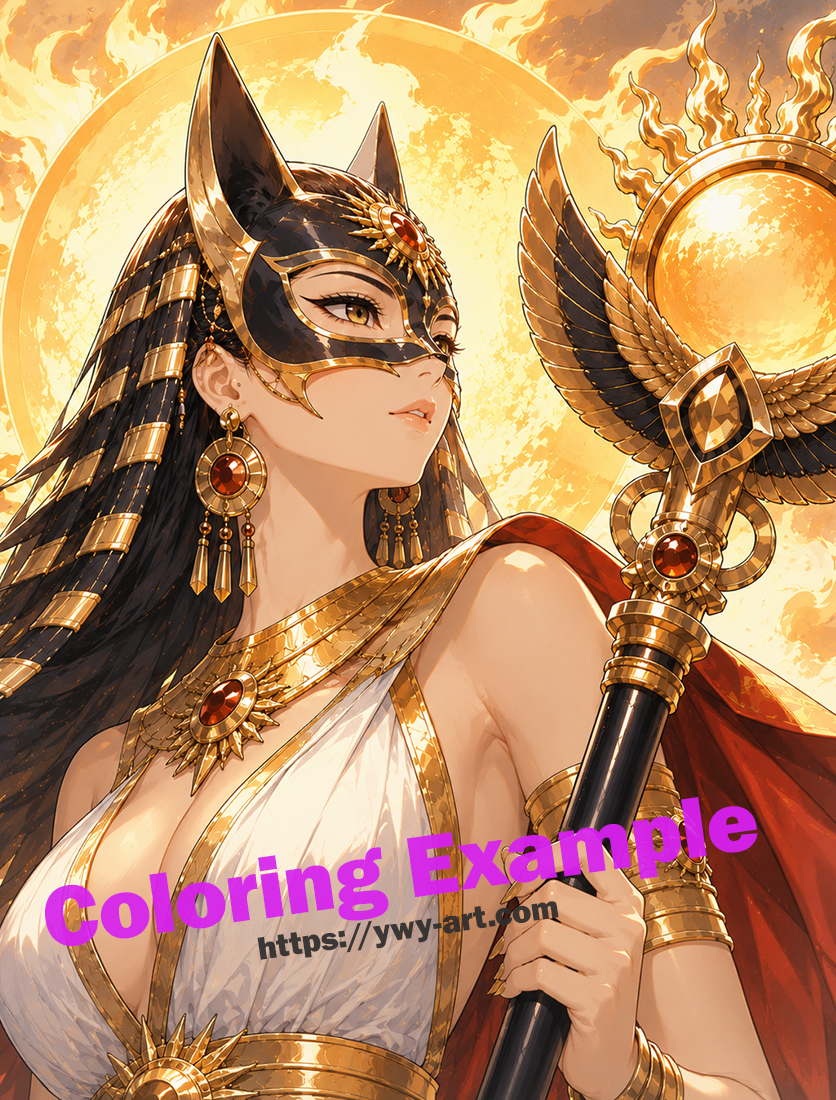
This page works best with a blazing Egyptian solar palette. Gold, amber, burnt orange, crimson, black, ivory, warm sand, and deep red can create a strong Sekhmet atmosphere. The Solar War Scepter should be the brightest focus, especially the disk and flame-like edges.
For the scepter, use layered gold rather than flat yellow. Pale yellow highlights can sit near the center of the disk, while deeper gold, orange, and bronze can define the outer rings and wings. The red gemstone can be colored ruby, garnet, or fiery orange-red to make it feel like stored heat.
Sekhmet’s clothing can use white, cream, black, and gold, with red accents for stronger intensity. Her cape or background cloth can lean deep crimson or dark red to connect with the war aspect. Keeping the main fabric lighter will make the gold armor and scepter stand out.
The headpiece should feel sharp and royal. Black and gold work very well here, especially if the gold edges catch strong highlights. A red jewel at the forehead can echo the scepter and create a visual line between Sekhmet’s gaze and the artifact.
The background flames and sunlight should support the artifact without swallowing it. Use brighter yellows around the disk, then shift toward orange and darker gold at the edges. If everything becomes equally bright, the scepter may lose its impact. Let the strongest light gather around the solar disk and Sekhmet’s face.
Quick Creative Reference
| Element | Creative Direction |
|---|---|
| Best For | Egyptian war goddess themes, solar wrath, royal protection, flame imagery, divine punishment |
| Visual Keywords | Sekhmet, Solar War Scepter, lioness, sun disk, fire, Eye of Ra, red gemstone, wings |
| Mood | Fierce, radiant, royal, dangerous, protective, sacred, overwhelming |
| Recommended Colors | Gold, amber, burnt orange, crimson, black, ivory, warm sand, ruby red |
| Main Focus | The scepter as a symbol of solar wrath, royal defense, divine punishment, and controlled destruction |
| Coloring Tip | Keep the strongest glow around the solar disk and use deep red accents to make Sekhmet’s war aspect feel intense without overwhelming the whole page. |
Compare with Similar Deities
| Name | Mythology | Main Domains | Overall Image |
|---|---|---|---|
| Sekhmet | Egyptian | War, plague, healing, solar wrath, royal protection | A lioness goddess whose burning power destroys enemies, protects order, and can also heal what she controls |
| Ra | Egyptian | Sun, creation, kingship, cosmic order, daily renewal | A supreme solar god whose light sustains the world and sends the Eye to defend divine order |
| Hathor | Egyptian | Love, joy, music, motherhood, beauty, solar power | A warmer and more celebratory goddess who can still share the dangerous Eye of Ra aspect in certain myths |
| Durga | Hindu | War, protection, divine feminine power, demon-slaying | A powerful warrior goddess who protects cosmic order through fierce and righteous battle |
Closing
Sekhmet Solar War Scepter is a strong artifact piece because it makes sunlight feel dangerous. The scepter is not just a royal ornament. It is flame, command, punishment, protection, and divine heat gathered into one blazing symbol. Sekhmet’s power is beautiful, but it is not soft. She reminds us that the same sun that gives life can also burn away anything that threatens the order of the world.
Step into the world of mythology..
Available on Amazon Mythology Artifacts Series: Symbols of Power Coloring Book Open in a new tab
コメント