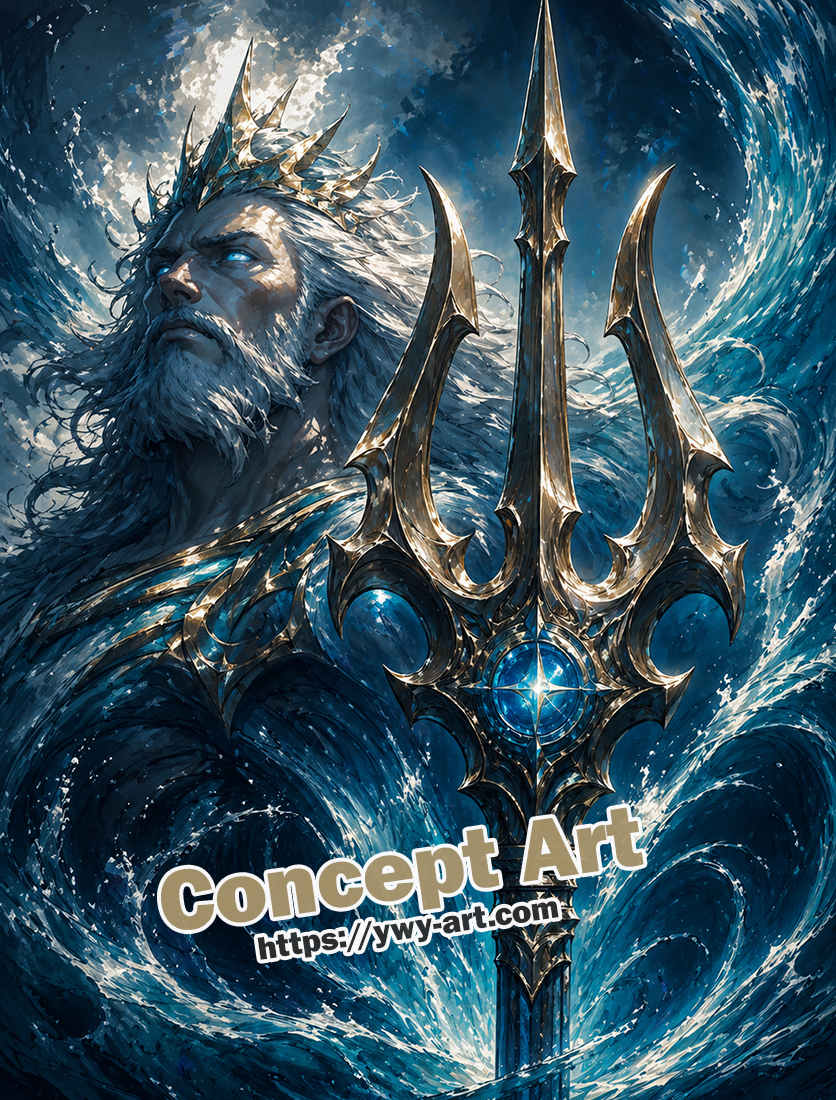
Poseidon Abyssal Trident
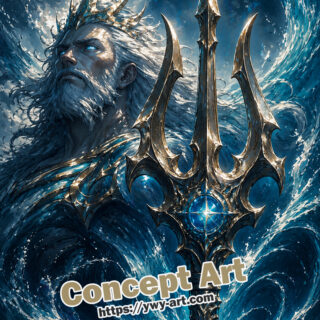
The sea is never just water in Greek myth. It is distance, danger, wealth, fear, and a force that refuses to be fully controlled. In this illustration, Poseidon rises with the Abyssal Trident at the center, surrounded by waves that feel almost alive. Honestly, this one has that heavy “do not challenge him” energy, and I like that. The trident is not treated as a small accessory here. It becomes the main symbol of command, pressure, and ancient power from the deepest part of the sea.
Basic Profile
| Name | Poseidon |
|---|---|
| Mythology | Greek Mythology |
| Gender | Male |
| Region | Ancient Greece, the Mediterranean world, and the sea routes connected to it |
| Era | Ancient Greek mythic age |
| Domain | Sea, storms, earthquakes, horses, rivers, and raw natural force |
| Symbol | Trident, waves, horses, dolphins, sea storms |
| Culture / Religion | Ancient Greek religion |
| Main Role | God of the sea and one of the great Olympian rulers |
| Associated Deity | Zeus, Hades, Amphitrite, Triton, Athena |
| Common Depiction | A powerful bearded god holding a trident, often surrounded by waves, sea creatures, or storm clouds |
| Alignment | Majestic, volatile, protective, destructive, and deeply tied to the untamed sea |
Overview
Poseidon is one of the most important gods in Greek mythology. He is the brother of Zeus and Hades, and after the defeat of the Titans, the three brothers divided the great realms of the cosmos. Zeus received the sky, Hades received the underworld, and Poseidon became lord of the sea. That division matters because the sea was not a quiet background to ancient life. It was a road, a border, a grave, and a source of food and wealth. To rule the sea was to rule something people needed, feared, and respected every day.
His trident is the clearest sign of that authority. In myth, Poseidon uses it to strike the earth, stir the ocean, create springs, and unleash earthquakes. This is why he is not only a sea god. He is also known as the “Earth-Shaker.” That title gives him a much heavier presence. He does not simply stand on the shore and control waves from a distance. His power reaches under the ground, under cities, under ships, and under human confidence itself.
There is also a strong emotional tension in Poseidon’s myths. He can protect sailors, bless cities, and bring life through water. But he can also destroy ships, flood lands, and punish arrogance with terrifying force. That dual nature makes him perfect for a coloring page built around a powerful artifact. The Abyssal Trident is not only a weapon. It is a symbol of a god whose favor can feel like salvation, and whose anger can feel like the whole world has turned against you.
In this artwork, the trident stands almost like a vertical pillar between Poseidon and the crashing sea. The composition makes the artifact feel sacred and dangerous at the same time. The waves curl around it, but they do not swallow it. Instead, they seem to answer it. That is an important visual idea: the sea is wild, but Poseidon’s trident gives that wildness a direction.
The Artifact: Abyssal Trident
The trident is traditionally Poseidon’s most famous attribute. In ancient imagery, it marks him immediately, the same way Zeus is recognized by the thunderbolt or Hades by the helm and the underworld. A trident is also a practical shape connected to fishing and the sea, but in myth it becomes much more than a tool. It becomes a divine instrument that can pierce water, land, and fate itself.
The word “abyssal” gives this version of the trident a darker and deeper feeling. It suggests not just the surface of the ocean, but the hidden world below it: trenches, silence, pressure, ancient creatures, and places light never reaches. That makes the artifact feel less like a royal spear and more like a key to the deepest parts of the sea. It belongs to a god who does not need to shout to be feared. The ocean already speaks for him.
For a coloring book illustration, this is a strong motif because the trident can carry many layers of meaning. Metallic gold or bronze can make it feel royal and ancient. Cold blue tones can connect it to deep water. Dark shadows around the lower shaft can give it the weight of the abyss. A bright central gem or light point can suggest divine command, as if the weapon is gathering pressure before releasing it into the sea.
Mythological Background
Poseidon appears in many important Greek myths, and he is rarely passive. In the contest for Athens, he strikes the ground with his trident and offers the city a spring or a sign of sea power, while Athena offers the olive tree. Athena wins the city, but the story still shows Poseidon’s nature clearly. His gift is forceful, dramatic, and tied to raw natural power.
In the story of Odysseus, Poseidon becomes a terrifying obstacle. After Odysseus blinds Polyphemus, Poseidon’s son, the god makes his journey home almost impossible. Storms, delays, shipwrecks, and wandering all become expressions of Poseidon’s anger. This is one reason the sea in Greek myth often feels personal. It is not just bad weather. It can feel like a god has decided you are not going home yet.
Poseidon is also connected to horses, which may seem strange at first, but it fits his character. Horses in ancient imagination carried speed, power, and danger. They are beautiful, but not harmless. Like waves, they move with force and can overwhelm the person who thinks they are fully in control. That connection makes Poseidon less like a simple ocean ruler and more like a god of violent motion itself.
Symbolism and Meaning
The Abyssal Trident can be read as a symbol of authority over the uncontrollable. The ocean is too large for human hands, too deep for easy understanding, and too unpredictable to be trusted completely. Poseidon’s trident represents the one force that can command it. That gives the image a strong psychological feeling: power is not always loud. Sometimes it is the calm center standing still while everything around it breaks apart.
The waves around Poseidon also suggest emotional intensity. Anger, grief, pride, and divine command can all be read through the sea. A calm sea can feel merciful. A storming sea can feel like judgment. In this piece, the movement is dramatic, but Poseidon himself feels controlled. That contrast makes the artwork more interesting. He is not being thrown around by the ocean. He is the reason the ocean is moving.
The blue gem at the center of the trident can be interpreted as the eye of the abyss, a concentrated point of sea power. It gives the artifact a magical focus. Instead of being only a sharp weapon, the trident becomes a vessel that stores pressure, memory, and command from the deep.
Coloring Notes
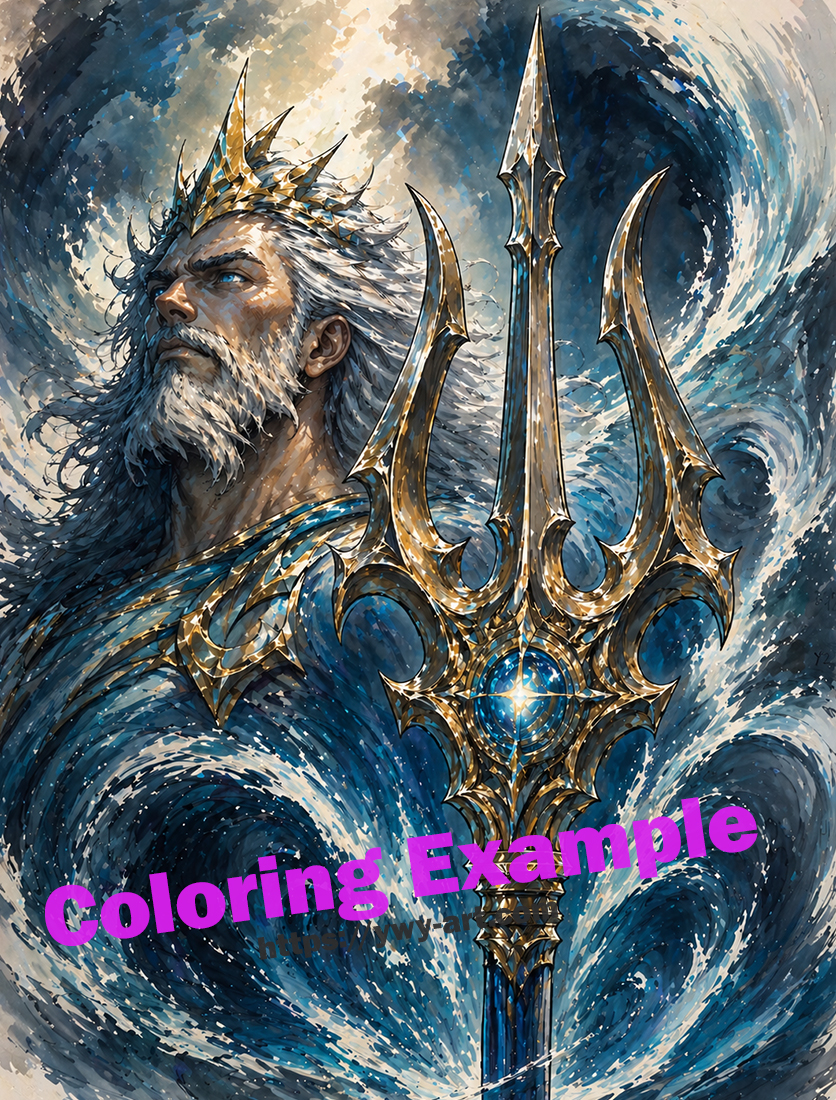
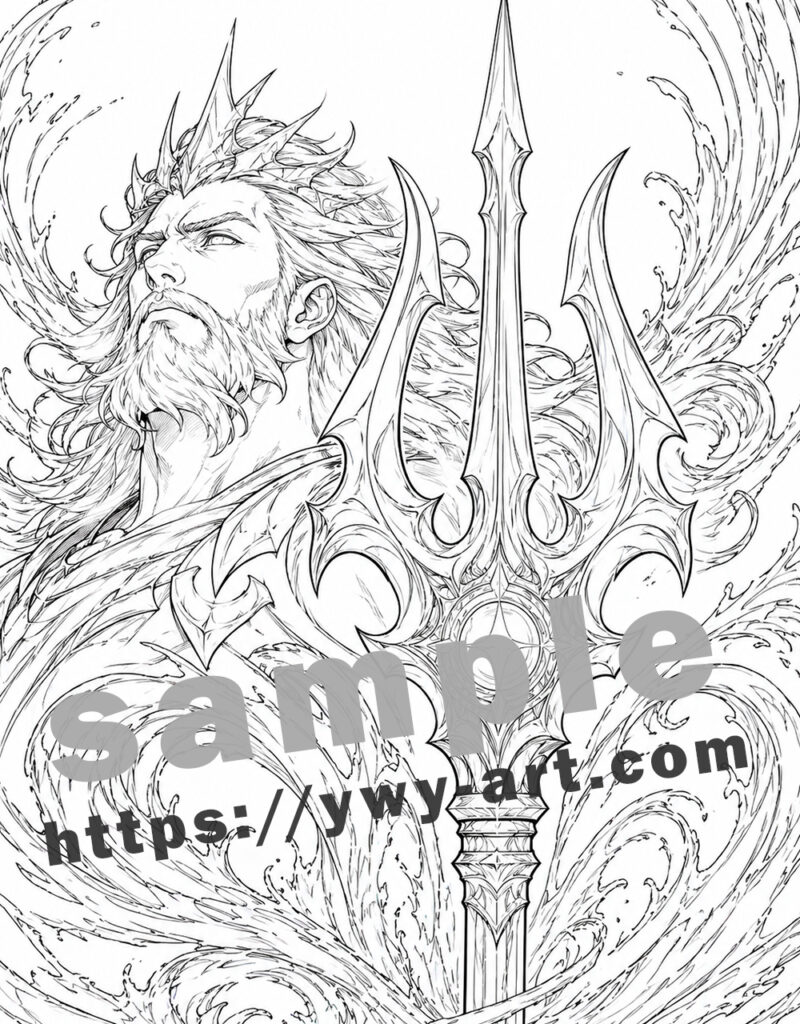
This page works especially well with deep ocean colors. Dark blue, blue-green, gray-blue, and muted teal can create a strong underwater mood. For the trident, bronze, antique gold, or silver can all work, depending on the atmosphere you want. Gold makes Poseidon feel more royal. Silver makes the scene colder and more divine. A darker bronze can make the artifact feel older, heavier, and more mythic.
The waves do not need to be colored evenly. Leaving some white areas as foam can make the water feel powerful without overworking the page. Around the trident, slightly brighter highlights can help guide the eye toward the artifact. Poseidon’s face and hair can stay cooler and more muted, allowing the trident and the water movement to carry the main drama.
For a more dramatic finish, try making the background darker than the wave highlights. This creates contrast and gives the feeling that Poseidon is rising from a deep storm rather than standing in ordinary water. The key is not to color every detail with the same strength. Let the trident, the face, and the biggest wave shapes become the main visual anchors.
Quick Creative Reference
| Element | Creative Direction |
|---|---|
| Best For | Dark ocean fantasy, mythological power, divine weapon scenes |
| Visual Keywords | Trident, abyss, storm waves, sea god, pressure, command |
| Mood | Majestic, dangerous, cold, overwhelming, ancient |
| Recommended Colors | Deep blue, teal, storm gray, antique gold, bronze, pale foam white |
| Main Focus | The trident as the center of Poseidon’s authority |
| Coloring Tip | Keep the strongest contrast around the trident and wave foam to preserve the impact of the composition. |
Compare with Similar Deities
| Name | Mythology | Main Domains | Overall Image |
|---|---|---|---|
| Poseidon | Greek | Sea, storms, earthquakes, horses | A powerful and volatile sea god whose trident commands the ocean and shakes the earth |
| Neptune | Roman | Sea, water, horses | The Roman counterpart of Poseidon, often shown with similar oceanic authority and a trident |
| Oceanus | Greek | World-encircling river, cosmic waters | A more ancient and cosmic water figure, connected to the boundary of the world rather than stormy command |
| Njord | Norse | Sea, wind, wealth, seafaring | A calmer sea-related deity associated with prosperity, ships, and coastal abundance |
Closing
Poseidon’s Abyssal Trident is a strong subject because it combines weapon, symbol, and divine authority in one clear image. The sea around him is chaotic, but the trident gives the chaos a center. That is what makes the piece work. It does not just show a god holding a weapon. It shows the moment where the ocean itself seems to recognize its ruler.
I Tried Coloring This Artifact Page
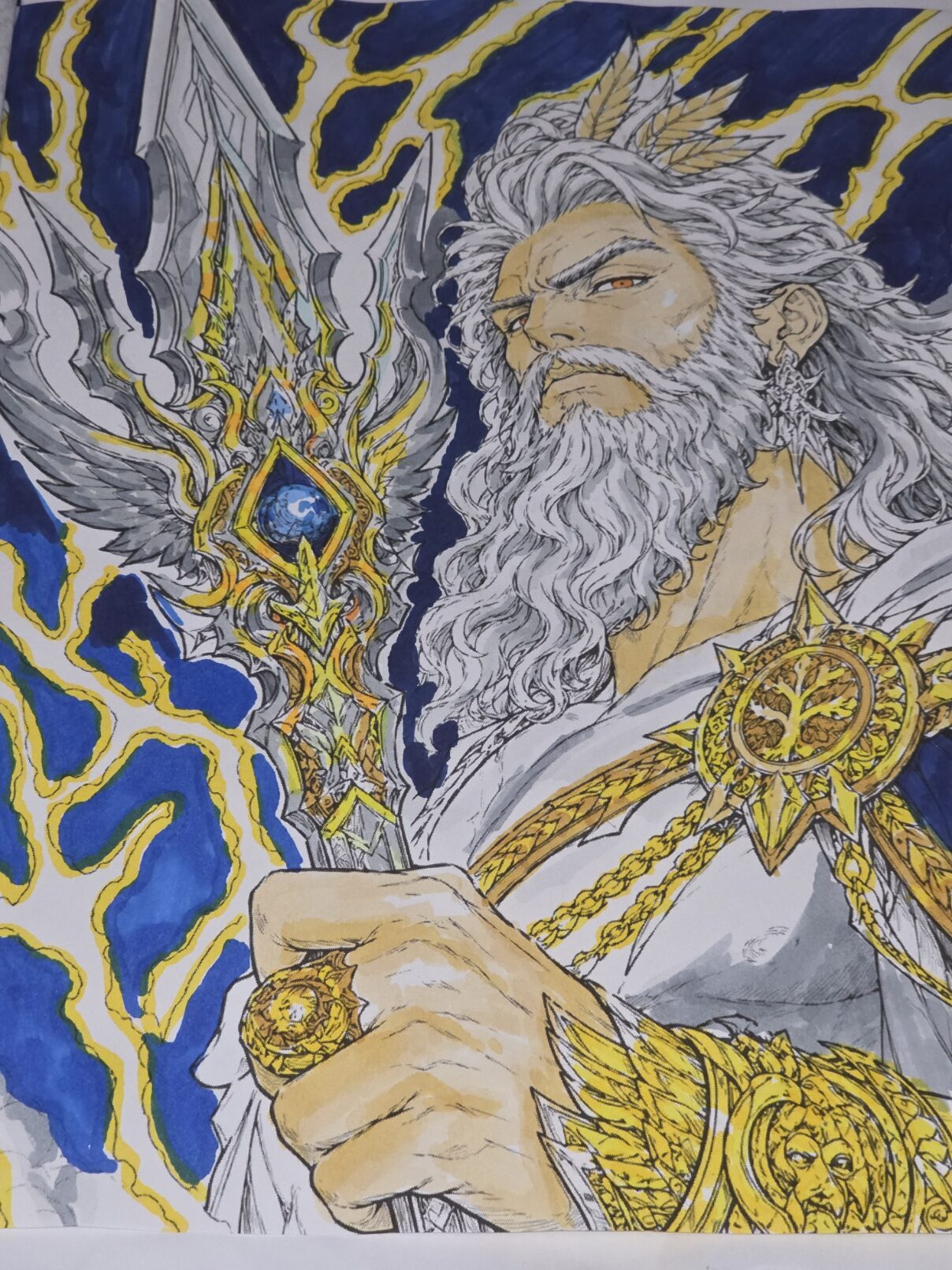
This page was colored by a beginner colorist, carefully using the sample coloring as a guide.
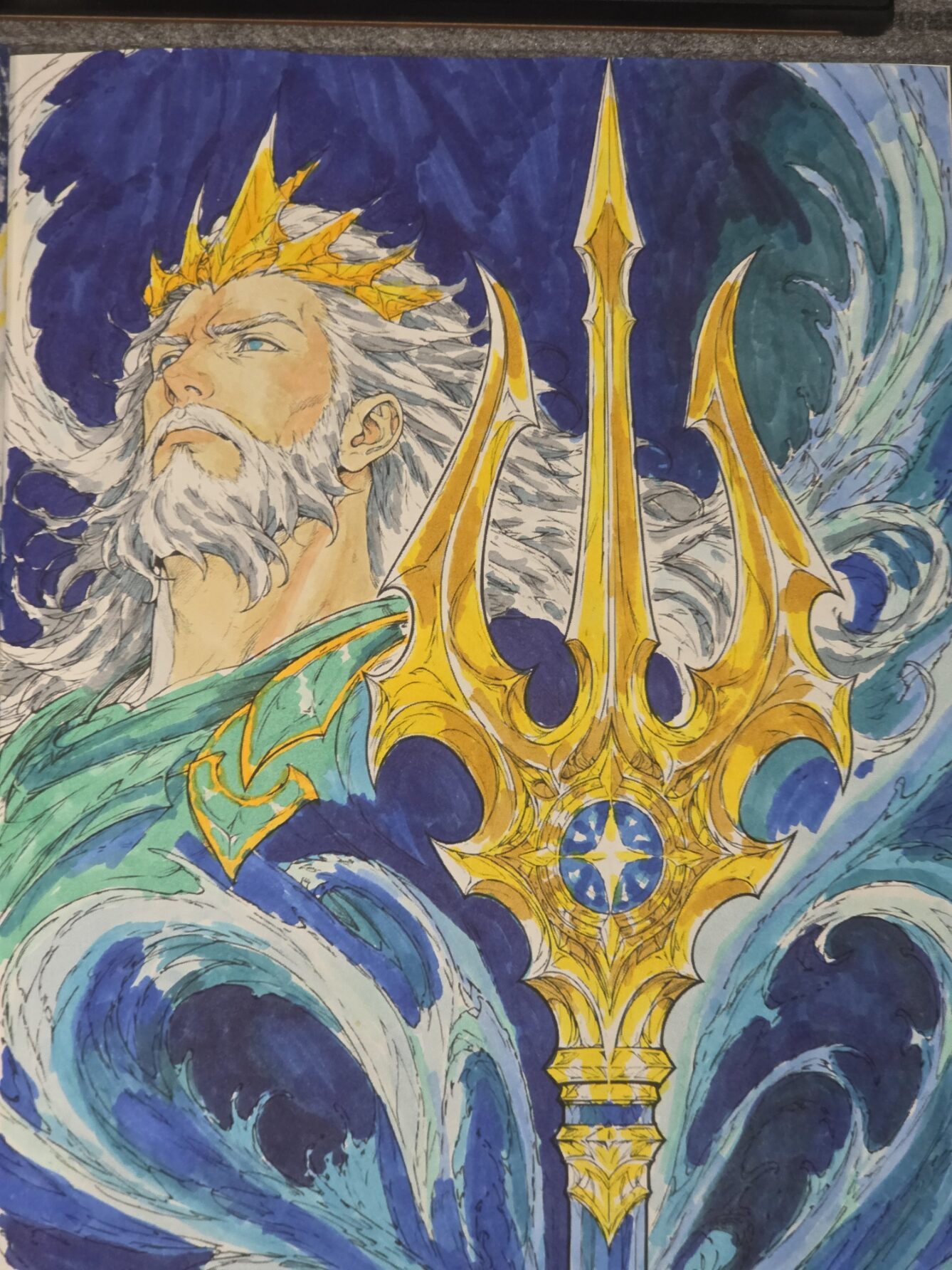
The sky and water effects were difficult to color.
I also felt that many of the lines were not fully closed, which made some areas harder to fill in neatly.
I will keep working on improving these points.
I also have to admit that I got a little tired partway through and became less careful in some areas, so that is something I want to reflect on and improve next time.
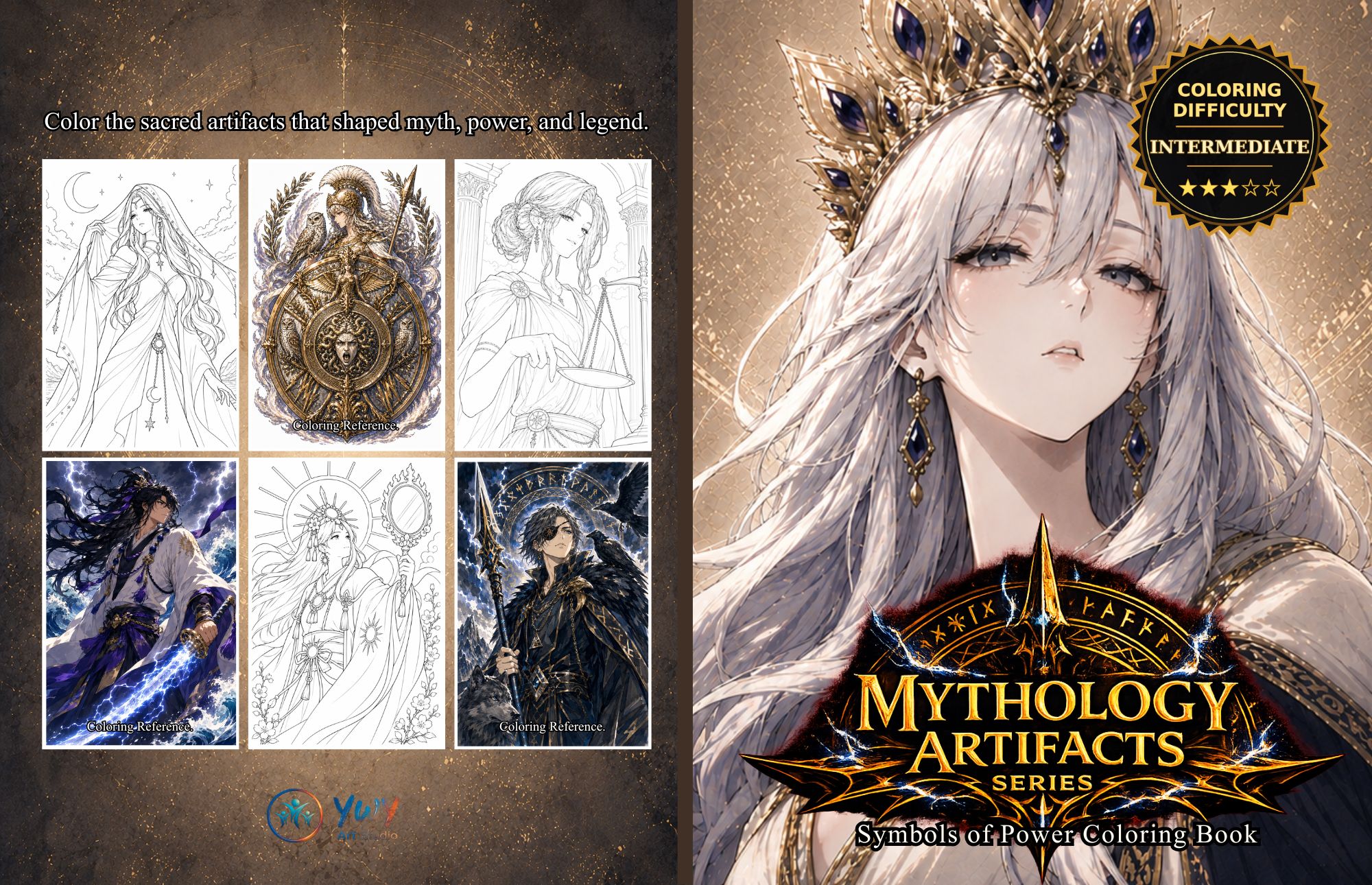
Step into the world of mythology..
Available on Amazon Mythology Artifacts Series: Symbols of Power Coloring Book Open in a new tab

コメント