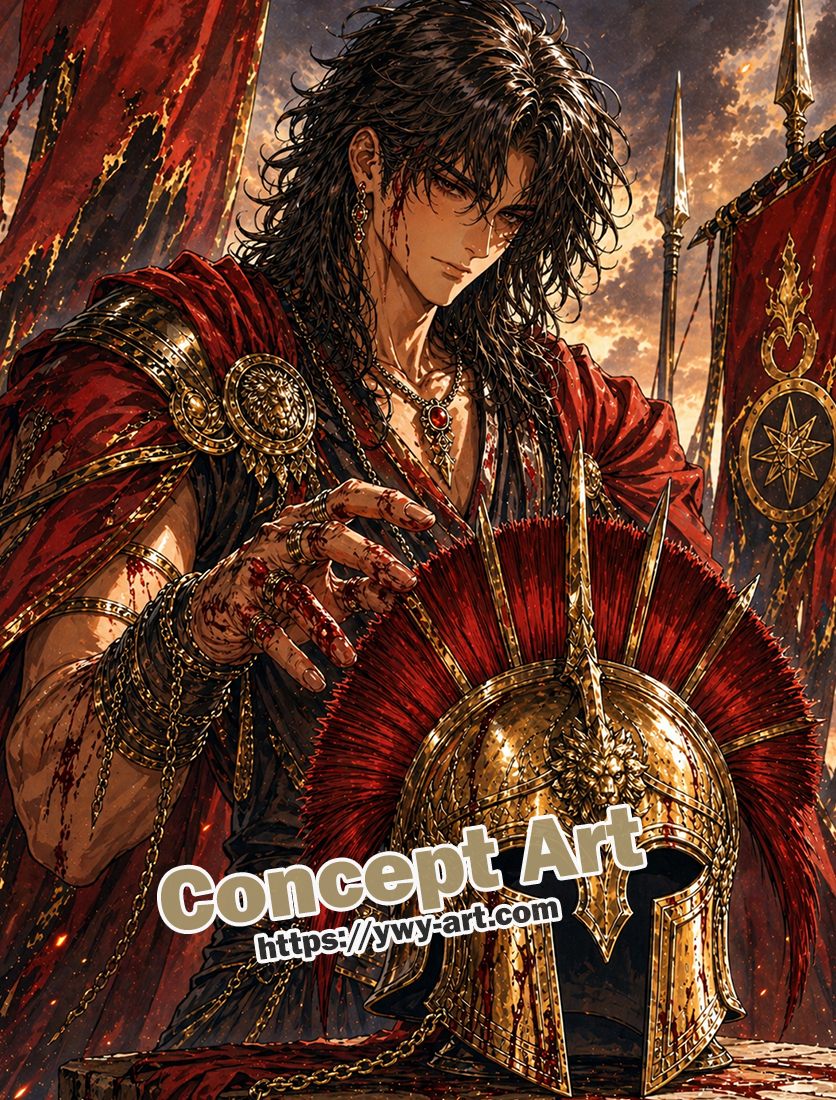
Ares Blood War Helm
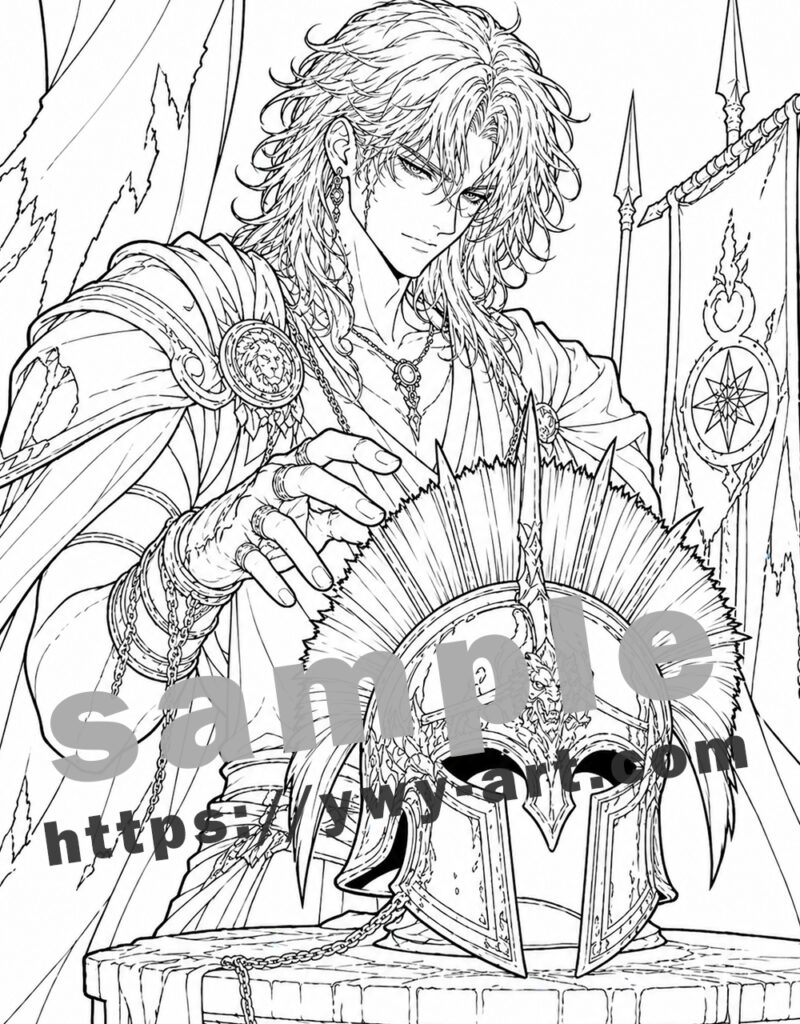
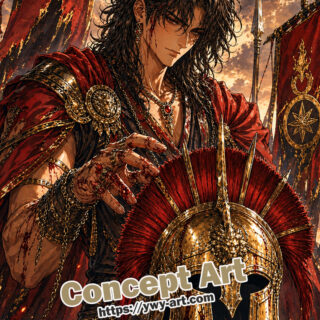
Ares is not a gentle god of heroic victory. He is the heat of battle, the noise of weapons, the rush of blood, and the part of war that people cannot fully control once it begins. In this illustration, the Blood War Helm sits at the center like a sacred object taken from a battlefield that is still burning. Red banners, gold metal, blood marks, and a tense warrior presence surround it. Honestly, this one feels dangerous in a very direct way. It does not try to hide what Ares represents.
Basic Profile
| Name | Ares |
|---|---|
| Mythology | Greek Mythology |
| Gender | Male |
| Region | Ancient Greece, especially in myths of battle, warriors, and violent conflict |
| Era | Ancient Greek mythic age |
| Domain | War, bloodshed, violence, courage, battle frenzy, martial force |
| Symbol | Helmet, spear, shield, sword, vulture, dog, blood-red imagery |
| Culture / Religion | Ancient Greek religion |
| Main Role | God of war in its brutal, physical, and chaotic form |
| Associated Deity | Aphrodite, Athena, Zeus, Hera, Phobos, Deimos, Eris |
| Common Depiction | A fierce armored warrior carrying weapons, often surrounded by symbols of battle |
| Alignment | Aggressive, passionate, violent, impulsive, courageous, and feared |
Overview
Ares is one of the most intense figures in Greek mythology. He is the son of Zeus and Hera, and he represents war in its rawest form. Not strategy. Not noble defense. Not wise leadership. Ares is the battlefield after the first strike has already happened. He is shouting, wounds, dust, rage, fear, and the moment when reason begins to break apart.
This makes him very different from Athena. Both are connected to war, but they show completely different sides of it. Athena represents strategy, discipline, protection, and intelligent action. Ares represents the violent pulse of combat itself. He is not always admired by the other gods, and in some myths he is even treated with suspicion or contempt. But that does not make him weak. It makes him uncomfortable — and that is exactly why he matters.
Ancient people understood that war was not only glory and victory. It was also panic, blood, loss, and uncontrollable momentum. Ares embodies that part. He is the god who reminds us that once violence begins, it can become larger than the people who started it. That is a darker idea, but it gives him a powerful mythological weight.
In this artwork, the Blood War Helm becomes the main artifact rather than just a piece of armor. It sits in front of Ares like a relic of battle. The red crest rises sharply, the gold surface catches fire-like light, and the dark eye openings feel empty but threatening. The helmet does not need to be worn to feel alive. It already carries the presence of war.
The Artifact: Blood War Helm
The Blood War Helm is a creative artifact based on Ares’ identity as the god of violent battle. Helmets are strongly connected to ancient warfare because they protect the head, hide the face, and transform a person into a warrior. Once a helmet is lowered, the human expression disappears. What remains is armor, intention, and threat.
For Ares, a helmet is more than defense. It becomes a symbol of entering the state of war. The Blood War Helm suggests the moment when hesitation is gone. It is not a ceremonial crown, even if it looks magnificent. It is a threshold object. Put it on, and the world changes into enemies, weapons, and survival.
The red crest is especially important. Red naturally points to blood, anger, passion, and danger. In this image, the crest almost feels like a flame or a wound rising from the helmet. It gives the artifact movement even while it sits still. That works beautifully for Ares, because his power is restless. Even at rest, it feels ready to explode.
The gold metal adds another layer. Gold can suggest glory, kingship, and divine power, but here it is stained and battle-worn. That contrast matters. War promises honor, but it also leaves marks. The Blood War Helm carries both ideas at once: heroic shine and brutal consequence.
Mythological Background
Ares appears in many Greek myths as a force of violence, desire, and conflict. He is often accompanied by Phobos and Deimos, whose names mean Fear and Terror. That alone tells us what kind of atmosphere surrounds him. Ares is not just the one who fights. He brings the emotional storm of battle with him.
His relationship with Aphrodite is one of the most famous parts of his mythology. At first, it may seem surprising that the god of war and the goddess of love are connected, but symbolically it makes sense. Passion and violence can both overwhelm reason. They are different forces, but both can pull people beyond control. Their union also produces figures such as Harmonia in some traditions, which adds a strange and fascinating tension: from war and love, harmony can still emerge.
In the Trojan War tradition, Ares is strongly associated with the violence of combat. He does not bring the calm tactical intelligence of Athena. Instead, he represents the terrifying physical reality of the battlefield. When Ares enters a conflict, the story usually becomes louder, bloodier, and more unstable.
One important point is that Ares was not always honored in the same way as more admired Olympian gods. Greek literature often presents him as dangerous, impulsive, and difficult to control. But that makes him more honest as a war god. He is not a polished statue of victory. He is the part of war that victory speeches try to cover up afterward.
Symbolism and Meaning
The Blood War Helm represents the transformation from person to warrior. Before battle, a face still belongs to an individual. Behind a helmet, that face becomes hidden. The warrior becomes part of something larger: an army, a cause, a rage, or a disaster. That loss of individuality is one of the darker meanings behind the artifact.
The blood marks on the hand and armor add a very human discomfort to the scene. They remind us that war is not abstract. It touches skin. It leaves evidence. Even when the helmet is beautiful, the blood makes it impossible to pretend that battle is clean.
The red banners in the background suggest military power, but also instability. They look like symbols of command, yet the torn and burning atmosphere makes everything feel close to collapse. That is fitting for Ares. His world is not calm victory after order has been restored. It is the moment while everything is still burning.
The helm can also be read as a symbol of courage without comfort. Ares is not wise in the same way Athena is wise, but courage does not always appear in perfect form. Sometimes courage is rough, angry, wounded, and flawed. The Blood War Helm carries that feeling. It is not a peaceful artifact, but it is powerful because it refuses to soften its meaning.
Coloring Notes
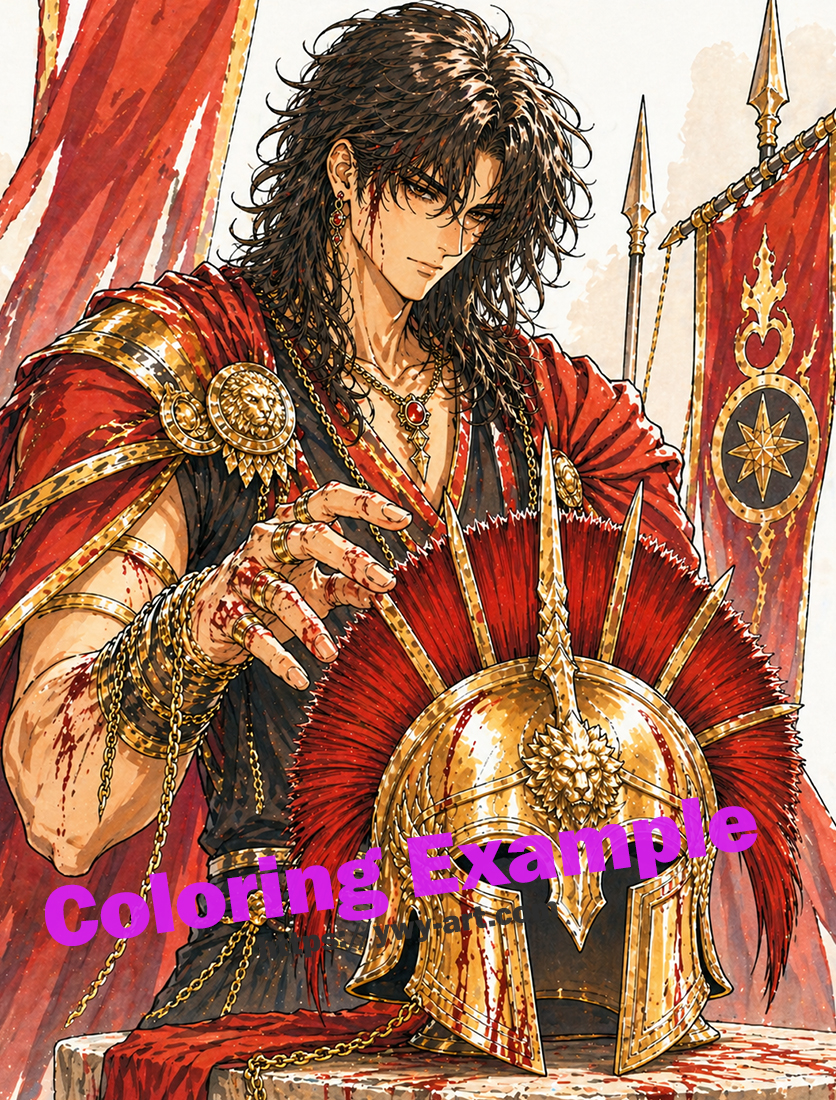
This page works well with a strong and dramatic palette. Deep red, dark crimson, antique gold, black, bronze, burnt orange, and smoky gray can create a heavy battlefield atmosphere. The helmet should remain the main focus, so the brightest gold highlights and strongest red accents should gather around it.
For the helmet, antique gold is a strong base. Adding darker bronze shadows near the lower edges and inside the eye openings will make the shape feel solid. The red crest can be colored with several tones, from dark crimson at the base to brighter red or orange-red near the tips. That will make it look intense without becoming flat.
The blood details should be handled carefully. Too much bright red everywhere can make the whole page feel messy. A few controlled blood-red accents on the hand, armor, and helmet surface will be stronger than covering the entire scene. Let the red guide the eye rather than overwhelm it.
Ares’ clothing can use black, deep wine red, and dark brown shadows. Metallic accessories may be colored gold or bronze to connect him visually with the helm. If the skin tones are too bright, they may fight against the battlefield mood, so slightly warm and shadowed skin can work better here.
The background banners can stay dark red and muted black, while the sky behind them can lean smoky gray or burnt orange. This will keep the scene heated and dangerous. The key is contrast: let the helmet shine, let the red crest burn, and keep the surrounding battlefield slightly rough.
Quick Creative Reference
| Element | Creative Direction |
|---|---|
| Best For | War mythology, dark heroic scenes, battlefield relics, intense masculine energy |
| Visual Keywords | Blood war helm, Ares, red crest, gold armor, banners, spear, battlefield |
| Mood | Violent, heated, proud, dangerous, dramatic, battle-worn |
| Recommended Colors | Crimson, antique gold, bronze, black, smoky gray, burnt orange, dark brown |
| Main Focus | The helmet as a symbol of war, courage, violence, and battlefield transformation |
| Coloring Tip | Keep the strongest red accents around the crest and blood marks, while using darker tones around the background to make the helm stand out. |
Compare with Similar Deities
| Name | Mythology | Main Domains | Overall Image |
|---|---|---|---|
| Ares | Greek | War, violence, bloodshed, battle frenzy | A fierce and impulsive god who embodies the brutal physical reality of combat |
| Mars | Roman | War, military power, agriculture, Roman state protection | A more respected and civic version of the war god, tied to Rome’s strength and identity |
| Athena | Greek | Strategy, wisdom, warfare, protection | A disciplined goddess of intelligent warfare, planning, and protective strength |
| Tyr | Norse | War, law, courage, sacrifice | A Norse god of brave conflict and justice, often associated with honor and self-sacrifice |
Closing
Ares Blood War Helm is a strong artifact piece because it does not clean up the idea of war. The helmet is beautiful, yes, but it is stained, heavy, and surrounded by heat. It carries glory and violence in the same shape. That is what makes the image work. Ares is not shown as a calm protector or a noble strategist. He is the god of the moment when battle has already begun, and there is no easy way back.
Step into the world of mythology..
Available on Amazon Mythology Artifacts Series: Symbols of Power Coloring Book Open in a new tab









コメント