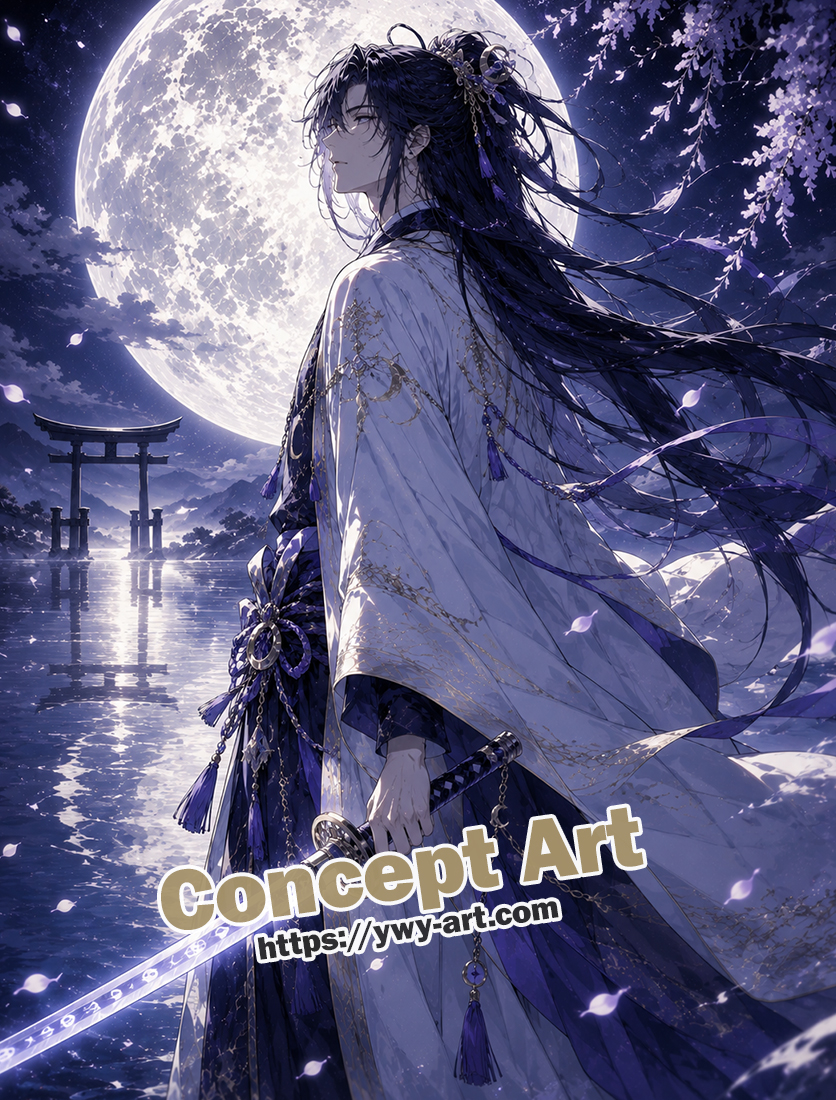
Tsukuyomi Moon Blade
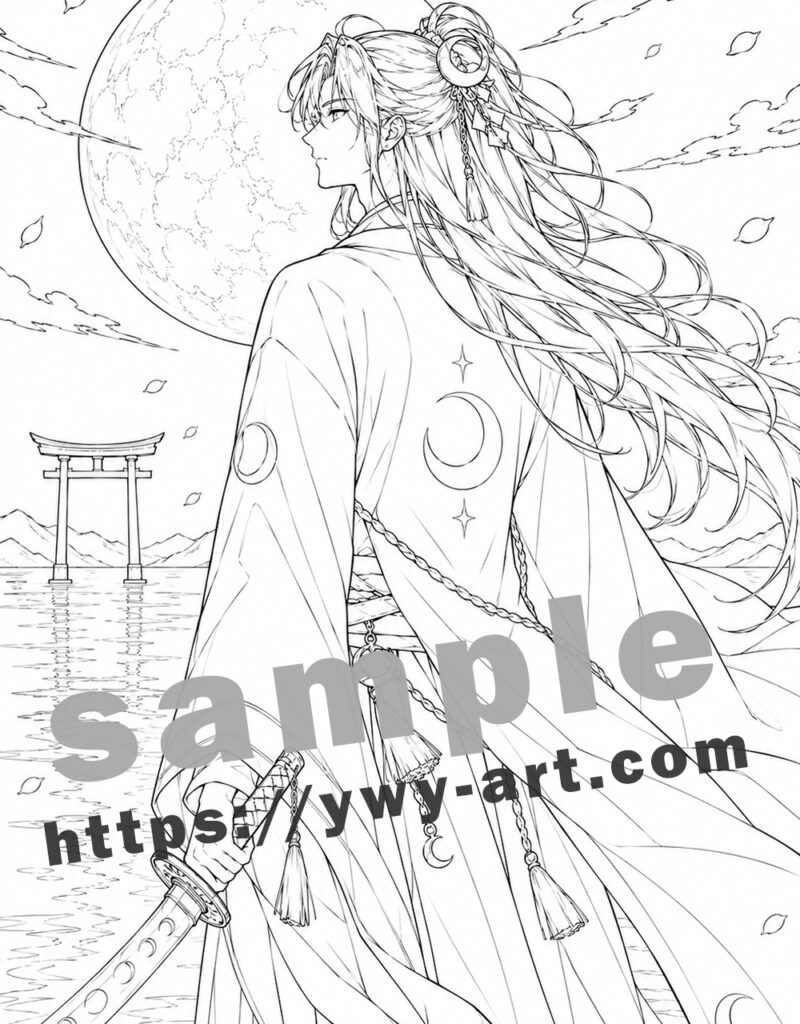
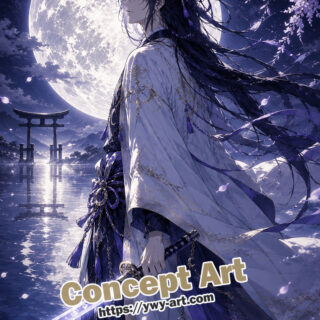
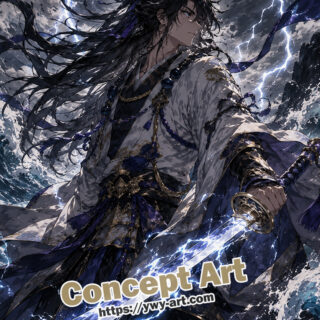
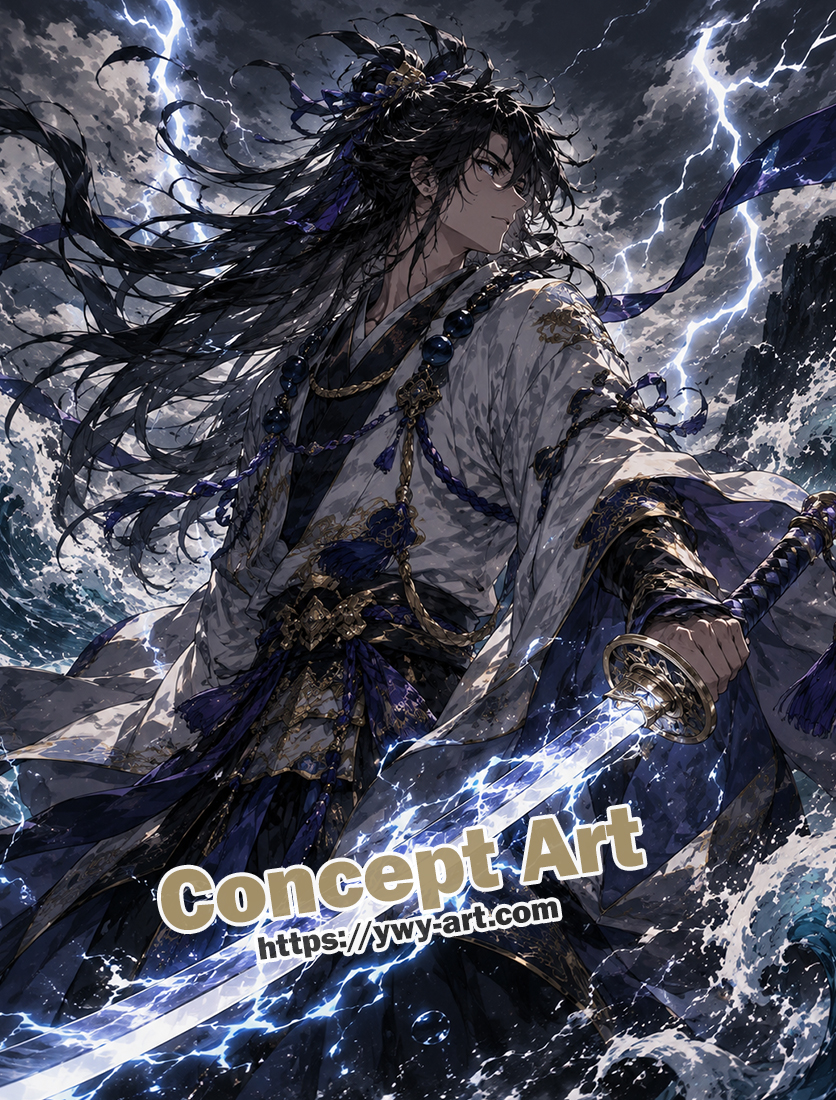
Tsukuyomi is a quiet figure compared with Amaterasu and Susanoo, but that quietness is exactly what makes him interesting. He is moonlight, distance, cold reflection, and the kind of divine presence that feels beautiful but never fully warm. In this illustration, the Moon Blade becomes the central artifact, glowing beneath a huge full moon while water, petals, and night wind move around him. It feels elegant, but honestly, there is a lonely sharpness in it that really works. Tsukuyomi’s power is not loud. It cuts through silence.
Basic Profile
| Name | Tsukuyomi |
|---|---|
| Mythology | Japanese Mythology / Shinto Tradition |
| Gender | Male |
| Region | Japan, especially the heavenly realm, night sky, moonlit waters, and mythic spaces tied to celestial order |
| Era | Ancient Japanese mythic tradition recorded in texts such as the Kojiki and Nihon Shoki |
| Domain | Moon, night, reflection, distance, order, cool light, celestial separation |
| Symbol | Moon, blade, night water, white robe, silver light, lunar reflection, quiet sky |
| Culture / Religion | Shinto and Japanese mythological tradition |
| Main Role | Moon deity and sibling of Amaterasu and Susanoo |
| Associated Deity | Amaterasu, Susanoo, Izanagi, Uke Mochi |
| Common Depiction | A calm and distant lunar deity associated with moonlight, night, stillness, and celestial separation |
| Alignment | Silent, cold, refined, distant, orderly, mysterious, and emotionally restrained |
Overview
Tsukuyomi is one of the three major deities born during Izanagi’s purification after his return from Yomi. Amaterasu is born from Izanagi’s left eye, Tsukuyomi from his right eye, and Susanoo from his nose. This birth places Tsukuyomi inside one of the most important divine families in Japanese mythology, but his presence is much quieter than his siblings.
Amaterasu becomes the radiant sun goddess, central to light, order, and imperial ancestry. Susanoo becomes the storm god, wild and destructive, later heroic through the defeat of Yamata no Orochi. Tsukuyomi, by contrast, remains distant and less frequently described. That absence gives him a special atmosphere. He feels like a god defined by silence, separation, and the cold beauty of the night.
The moon is not merely a softer version of the sun. Moonlight changes the world differently. It reflects rather than burns. It reveals outlines, not full colors. It creates distance, shadow, and quiet. Tsukuyomi’s mythic identity fits that feeling very well. He does not overwhelm the world with brightness. He stands apart and lets things appear in silver.
In this artwork, the Moon Blade turns that quiet lunar power into a sharp artifact. The blade glows with pale light, almost as if the moon itself has been drawn into steel. The water below reflects the night sky, and the distant torii suggests sacred separation. The whole scene feels like a threshold between human space and divine silence.
The Artifact: Moon Blade
The Moon Blade is a creative artifact built from Tsukuyomi’s lunar identity. Unlike Susanoo’s Storm Sword, which cuts through waves and lightning with violent force, Tsukuyomi’s blade feels colder and more precise. It does not look like a weapon made for rage. It feels like a blade of reflection, judgment, and separation.
A moon blade naturally suggests reflected light. The moon does not produce sunlight in the same way the sun does; it reflects it. Symbolically, that makes the artifact very interesting. The blade does not need to blaze. It gathers light from elsewhere, refines it, and sends it back as something colder and sharper.
The sword also fits the idea of division. Tsukuyomi is strongly connected to the mythic separation between sun and moon. After the killing of Uke Mochi, Amaterasu distances herself from Tsukuyomi, and this separation is sometimes used to explain why the sun and moon do not appear together in the same way. The Moon Blade can therefore be read as the artifact of that division: beautiful, clean, and irreversible.
In this illustration, the sword is held low and angled forward, glowing against water and darkness. That pose gives the artifact a calm but dangerous presence. It is not being raised in triumph. It is being carried like something already accepted. The blade becomes the quiet line between before and after.
Mythological Background
Tsukuyomi’s most famous myth involves Uke Mochi, a food goddess. In one version, Amaterasu sends Tsukuyomi to visit Uke Mochi. The goddess prepares a feast, but she produces the food from her body in a way Tsukuyomi finds impure or offensive. In anger or disgust, he kills her.
When Amaterasu hears what happened, she is horrified and rejects Tsukuyomi. From that point, the sun and moon are separated. This story gives Tsukuyomi a severe and complicated character. He is not chaotic like Susanoo, but his sense of purity and order becomes deadly. That makes him frightening in a very different way.
The myth of Uke Mochi also connects moonlight with judgment. Tsukuyomi reacts not from wild emotion alone, but from a strict perception of what is proper or improper. Whether the act is justified is another matter. Myth does not always give us clean moral comfort. Here, divine order becomes cold enough to kill.
There is also an interesting contrast with Amaterasu. She is the sun, life-giving and central. Tsukuyomi is the moon, distant and reflective. Their separation creates the rhythm of day and night. The world continues, but it continues through distance. Light and reflected light no longer share the same path.
Compared with Amaterasu and Susanoo, Tsukuyomi has fewer surviving major myths. But that scarcity can be useful creatively. It allows the visual interpretation to lean into mood: silence, moonlit water, sacred solitude, and the cold beauty of a god who remains difficult to approach.
Symbolism and Meaning
The Moon Blade represents separation through clarity. That is the core idea. Sunlight can flood the world, but moonlight draws edges. It makes shapes appear as silhouettes. It turns distance into atmosphere. A blade made from that light naturally becomes a symbol of clean division.
The sword also suggests restrained violence. Tsukuyomi is not shown as a raging storm. He feels controlled, almost too controlled. That is what makes him unsettling. The danger is not explosion. It is a decision made in cold stillness.
The full moon behind him gives the piece a strong emotional center. A full moon feels complete, but also lonely. It dominates the night sky without touching the earth. That works beautifully for Tsukuyomi, whose mythology carries the feeling of distance after a divine rupture.
The water reflection adds another layer. Reflection can reveal, but it can also distort. Moonlight on water is beautiful, yet unstable. The surface moves, the image breaks, and the light becomes a trembling path. This makes the scene feel spiritual rather than simply scenic.
The torii gate in the distance strengthens the sacred atmosphere. It suggests a boundary between ordinary space and divine space. Tsukuyomi stands near that boundary, blade in hand, as if guarding the quiet road into night.
Coloring Notes
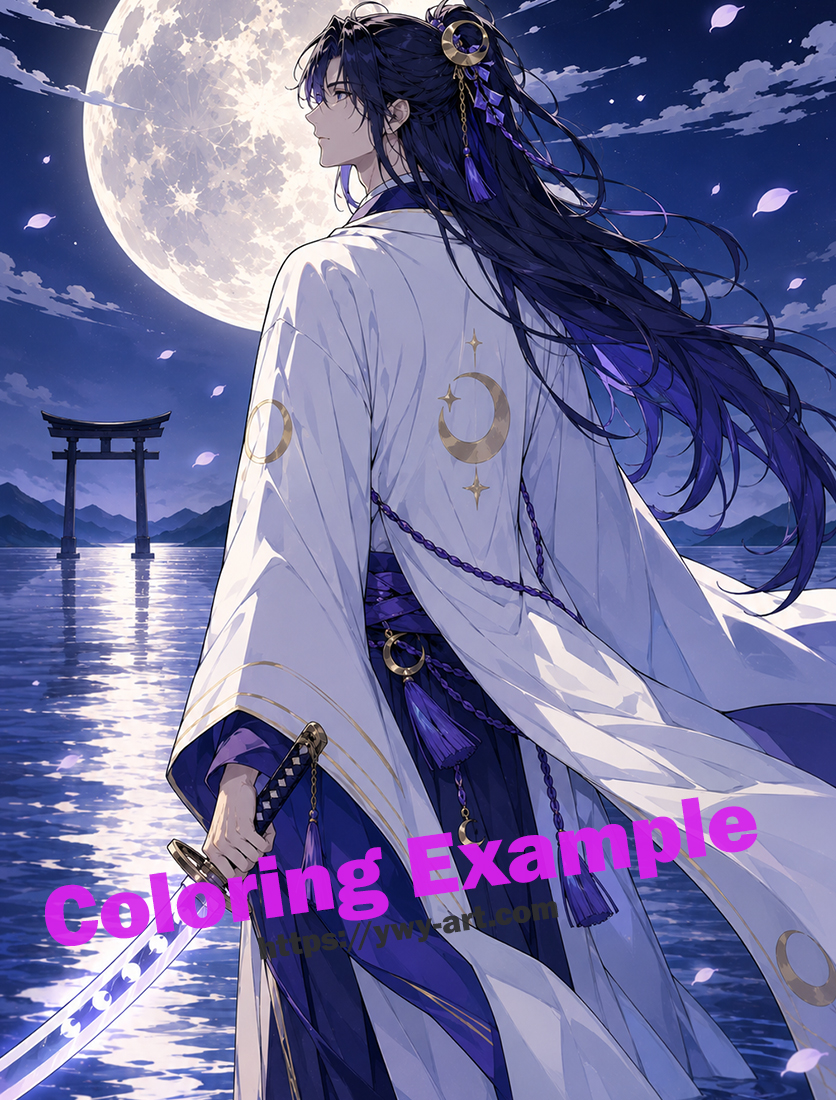
This page works beautifully with a cool lunar palette. Deep indigo, violet, blue-gray, silver, white, soft lavender, and muted black can create a strong moonlit atmosphere. The Moon Blade should remain the brightest artifact focus, so the blade edge and reflected glow need clean contrast.
For the blade, use pale silver, white, and very light blue. A thin bright highlight along the edge will make it feel sharp and luminous. If the blade includes markings, they can be colored in soft blue-white or pale violet so they appear like moonlit inscriptions.
Tsukuyomi’s robe can use white, ivory, deep violet, and dark navy. The white outer layer should catch moonlight, while the darker inner layers can hold the night atmosphere. Gold details can be used lightly, but too much warm gold may reduce the cold lunar mood.
The hair can be black, blue-black, or deep purple-black with cool highlights. Since the moon is behind the figure, adding silver edges to the hair and shoulders will help create a strong backlit effect. This will also separate the figure from the dark sky.
The water can be layered with dark blue, lavender-gray, and white reflections. Keep the brightest reflection close to the moon and the blade path. The petals can use pale pink or lavender, but softly, so they feel like drifting accents rather than the main focus.
Quick Creative Reference
| Element | Creative Direction |
|---|---|
| Best For | Japanese moon mythology, quiet sword scenes, night water, sacred solitude, reflective symbolism |
| Visual Keywords | Tsukuyomi, Moon Blade, full moon, torii, night water, silver sword, petals, lunar reflection |
| Mood | Silent, elegant, lonely, cold, sacred, mysterious |
| Recommended Colors | Deep indigo, silver, white, blue-gray, violet, soft lavender, muted black, pale moon blue |
| Main Focus | The blade as a symbol of moonlight, separation, reflection, and cold divine judgment |
| Coloring Tip | Keep the blade and moon reflection brighter than the robe details so the artifact feels like concentrated lunar light. |
Compare with Similar Deities
| Name | Mythology | Main Domains | Overall Image |
|---|---|---|---|
| Tsukuyomi | Japanese | Moon, night, reflection, separation, celestial order | A distant lunar deity whose quiet beauty carries cold judgment and sacred separation |
| Amaterasu | Japanese | Sun, light, purity, order, sacred kingship | A radiant sun goddess whose light restores order and stands in contrast to Tsukuyomi’s moonlit distance |
| Selene | Greek | Moon, night sky, lunar cycles | A luminous moon goddess who personifies the moon more directly and gently than Tsukuyomi |
| Khonsu | Egyptian | Moon, time, healing, night travel | An Egyptian lunar god connected with time, protection, healing, and the movement of the moon through the night |
Closing
Tsukuyomi Moon Blade is a strong artifact piece because it turns moonlight into something sharp. The blade is beautiful, but it is not warm. It reflects, divides, and carries the silence of a god who stands apart from the sun. Tsukuyomi’s power does not roar like a storm or blaze like daylight. It waits beneath the full moon, cold enough to cut through the night.
Step into the world of mythology..
Available on Amazon Mythology Artifacts Series: Symbols of Power Coloring Book Open in a new tab
コメント