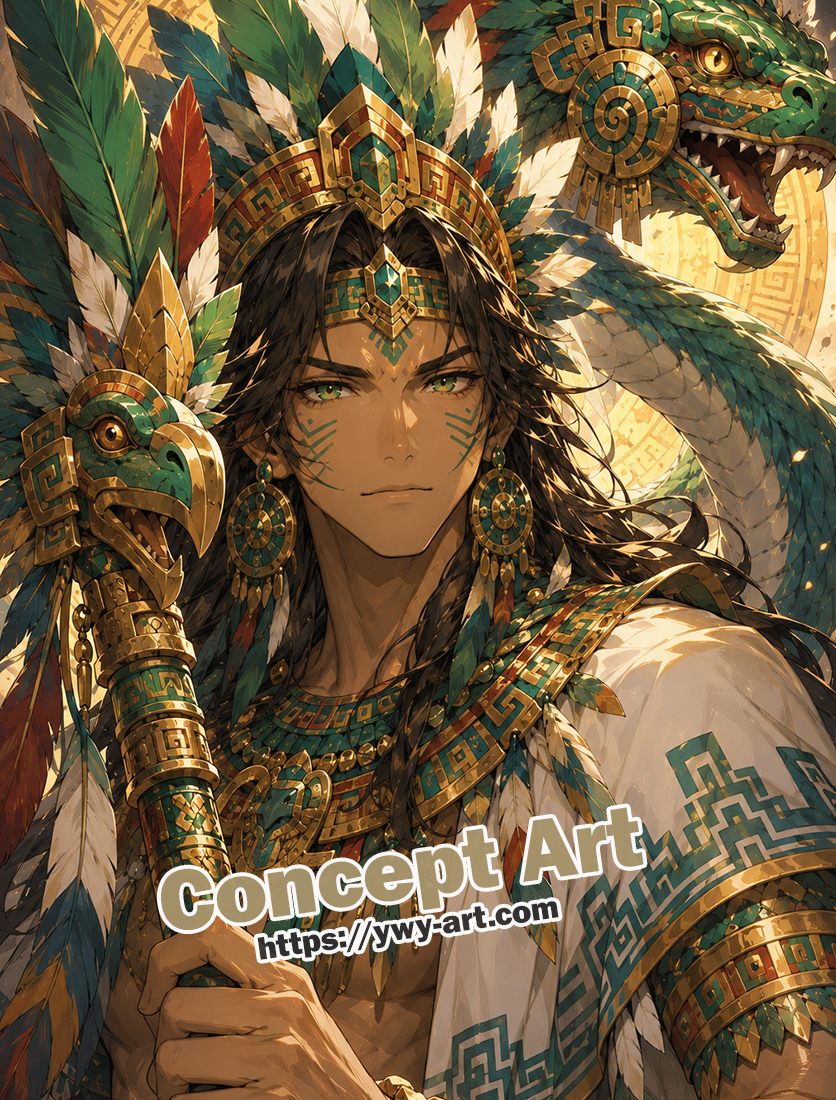
Quetzalcoatl Feathered Serpent Staff
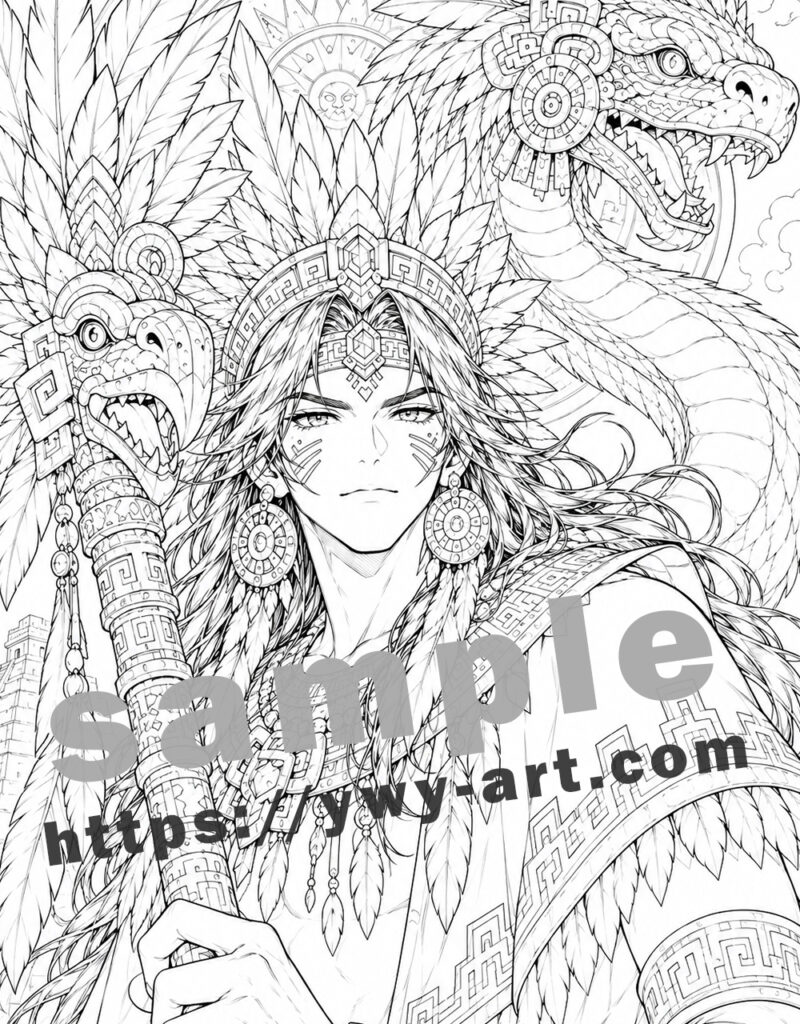
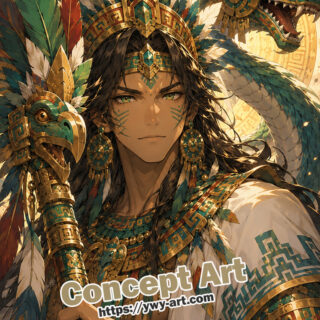
Quetzalcoatl stands in this artwork with a calm, almost royal presence, surrounded by feathers, gold, and the watchful form of the feathered serpent. The staff in his hand feels less like a simple weapon and more like a ceremonial object, something carried by a god of wind, knowledge, creation, and sacred order. It has power, yes, but not the loud kind. This is the kind of power that feels ancient before it even speaks.
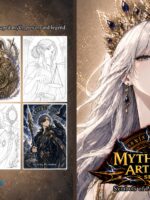
This piece belongs to the Mythology Artifacts Series, a coloring book collection focused on divine weapons, sacred relics, and symbolic objects from world mythology. Here, the central artifact is the Feathered Serpent Staff, inspired by Quetzalcoatl’s identity as the feathered serpent deity of Mesoamerican tradition. The staff becomes a visual bridge between sky, earth, priestly authority, and the living breath of the divine serpent.
Basic Profile
| Name | Quetzalcoatl |
|---|---|
| Mythology | Aztec and broader Mesoamerican mythology |
| Gender | Male deity, though the feathered serpent symbol carries broader cosmic meanings |
| Region | Mesoamerica, especially Central Mexico |
| Domain | Wind, knowledge, creation, priesthood, learning, culture, and sacred breath |
| Artifact | Feathered Serpent Staff |
| Associated Symbol | Feathered serpent, wind, jade, feathers, sky, priestly ornaments, sacred movement |
| Main Role | A creator and culture-bringing deity connected with wisdom, life, and divine order |
| Common Depiction | A feathered serpent, a priestly figure, or a divine being wearing elaborate feathered and jeweled ornaments |
| Overall Image | Ancient, wise, ceremonial, sky-connected, and deeply sacred |
Overview
Quetzalcoatl is one of the most important and visually striking figures in Mesoamerican mythology. His name is often understood as “Feathered Serpent,” combining the image of the serpent with the beauty and upward movement of feathers. That combination is already fascinating. A serpent usually belongs to the earth, while feathers belong to the sky. Quetzalcoatl brings both together.
In Aztec tradition, Quetzalcoatl is associated with wind, learning, priesthood, creation, and civilized arts. He is not just a monster-like serpent figure. He is a god of breath, movement, knowledge, and sacred culture. Depending on the story, he appears as a creator, a teacher, a priestly figure, and a force that helps shape the world humans live in.
That is why this artwork works so well as a coloring page. The image does not show Quetzalcoatl as a chaotic beast. Instead, he appears composed, frontal, and ceremonial. The feathered serpent coils behind him like a living symbol, while the staff in his hand turns the whole scene into something ritualistic and powerful.
The Artifact: Feathered Serpent Staff
The Feathered Serpent Staff is the central artifact of this illustration. It is not a standard mythological item with one single fixed form, but it fits naturally within Quetzalcoatl’s symbolic world. Staffs, scepters, and ceremonial objects often represent authority, sacred duty, and the right to stand between human society and divine forces.
Here, the staff feels like an object of priestly power. Its feathered details, gold ornaments, and serpent-like design connect it directly to Quetzalcoatl’s identity. It is not only something he holds. It tells us who he is: a god linked to wisdom, ritual, breath, and the sacred movement between earth and sky.
The serpent head beside the figure gives the artifact even more weight. The staff and serpent almost echo each other. One is held in the hand, shaped by human ceremony. The other is alive, divine, and untamed. Together, they create a strong visual idea: sacred authority is not separate from nature. It comes from understanding its hidden rhythm.
Mythological Background
Quetzalcoatl’s mythology is layered and complex. In many traditions, he is connected to creation and the ordering of the world. He is sometimes linked with the wind god Ehecatl, whose breath moves life and clears the path for change. Wind is invisible, but it can be felt everywhere. That makes it a perfect domain for a deity like Quetzalcoatl.
He is also associated with knowledge and culture. In some stories, Quetzalcoatl is a benefactor of humanity, bringing or protecting important aspects of civilized life. This makes him different from gods who are mainly defined by conquest or battle. His power is more constructive, more instructive, and honestly, that makes him really interesting as a subject for art.
The feathered serpent itself is one of the strongest symbolic images in Mesoamerican art. A serpent can represent earth, fertility, power, and the underworld. Feathers suggest birds, sky, nobility, and divine elevation. When these two elements are fused, the result is not just a fantasy creature. It becomes a symbol of connection between different layers of existence.
This is why Quetzalcoatl often feels both grounded and celestial. He is not only above the world, and he is not only beneath it. He moves between levels: earth and sky, body and spirit, human ritual and cosmic order.
Symbolism and Meaning
The strongest theme in this artwork is sacred connection. The staff, feathers, serpent, gold patterns, and jade-like colors all point toward a god who joins different realms together. There is sky in the feathers, earth in the serpent, breath in the wind, and authority in the staff.
The staff can be read as a symbol of guidance. It does not look like an object made only to attack. It feels more like a ritual tool, something used to lead, bless, command, or open a path. That gives the image a very different mood from a battle scene.
The feathered serpent behind Quetzalcoatl adds movement and life. It makes the scene feel watched over by a divine presence that is both beautiful and dangerous. The open mouth and sharp teeth keep the image from becoming too gentle, while the feathers and gold ornaments keep it elegant.
The result is a nice tension: Quetzalcoatl looks calm, but the power around him is not soft. It is ceremonial, intelligent, and old. Very old.
Coloring Notes
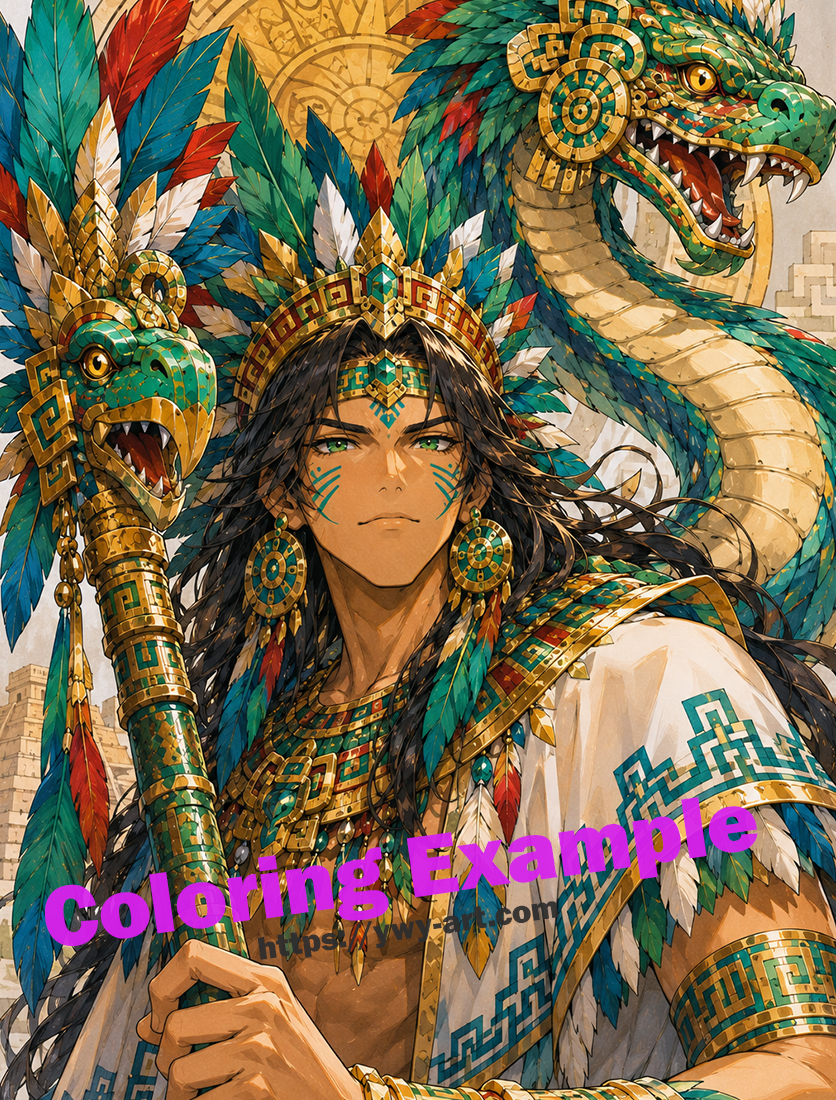
This page is a great opportunity to work with rich green, gold, jade, turquoise, and warm earth tones. Quetzalcoatl’s world naturally invites colors that feel ancient, ceremonial, and connected to stone, feathers, and sunlight.
The feathered serpent can become the visual highlight of the piece. Deep green, emerald, teal, jade, and darker blue-green shadows will work well for the body. The feathers can use green, white, red-brown, gold, or muted turquoise to create variety without losing the overall unity.
For the staff, gold and jade are especially strong choices. A gold base with green stone accents can make it feel like a sacred artifact. The handle can be slightly darker, with brighter highlights near the top to pull attention toward the serpent and ceremonial details.
The headdress and ornaments should probably stay connected to the same palette. Gold, jade green, turquoise, white feathers, and small red accents can make the design feel rich but controlled. If every detail becomes a different bright color, the image may get noisy, so it is better to repeat a few key colors across the page.
The background can use warm yellow, ochre, sand, or muted gold to suggest sunlight and ancient stone. This will help the green serpent and feathered ornaments stand out clearly. A darker background could also work, but a warm ceremonial glow may fit this piece especially well.
Quick Creative Reference
| Element | Creative Direction |
|---|---|
| Feathered Serpent | Use emerald, jade, teal, and dark green shadows to create a sacred living presence. |
| Staff | Gold with jade or turquoise accents can make the artifact feel ceremonial and divine. |
| Feathers | Mix green, white, red-brown, and muted gold for a rich but natural rhythm. |
| Ornaments | Repeat gold, jade, and turquoise to keep the design unified. |
| Background | Warm ochre, sand, and golden light can suggest ancient stone and sacred sunlight. |
| Overall Mood | Wise, ceremonial, ancient, vibrant, and sky-connected. |
Compare with Similar Deities
| Name | Mythology | Main Domains | Overall Image |
|---|---|---|---|
| Quetzalcoatl | Aztec and Mesoamerican mythology | Wind, knowledge, creation, priesthood, culture | A feathered serpent deity who connects earth, sky, wisdom, and sacred order. |
| Kukulkan | Maya mythology | Feathered serpent, wind, rulership, divine authority | A serpent deity associated with sky power, sacred kingship, and cosmic movement. |
| Thoth | Egyptian mythology | Wisdom, writing, knowledge, measurement, magic | A divine scribe and keeper of sacred knowledge, often calm and intellectual. |
| Hermes | Greek mythology | Travel, messages, boundaries, cleverness, guidance | A swift divine messenger who moves between worlds and carries symbolic authority. |
Coloring Variations
- Jade Temple Version: Use jade green, turquoise, gold, and warm stone colors for a classic sacred atmosphere.
- Sunlit Feathered Serpent: Add strong golden light behind the figure and keep the serpent bright emerald-green.
- Ancient Priest Version: Use muted greens, bronze, dark gold, and weathered earth tones for a more historical mood.
- Vibrant Mythic Version: Add red, white, teal, and gold feathers to make the design feel bold and ceremonial.
Closing
Quetzalcoatl Feathered Serpent Staff is a coloring page about wisdom, sacred authority, and the connection between earth and sky. The staff is not just a decorative object. It acts like a ceremonial key, linking the god’s human-like presence with the living feathered serpent behind him.
For colorists, this artwork offers a beautiful mix of feathers, gold ornaments, serpent scales, jade accents, and warm ancient light. The best approach may be to choose a clear main palette first: green, gold, turquoise, and warm stone tones. From there, small accents can bring the details to life without making the page feel too crowded.
In the end, this piece shows Quetzalcoatl not as a distant myth, but as a presence that feels alive, intelligent, and deeply rooted in sacred tradition. The staff becomes a symbol of guidance, breath, and divine knowledge — held by the feathered serpent god who moves between the world below and the sky above.
Step into the world of mythology..
Available on Amazon Mythology Artifacts Series: Symbols of Power Coloring Book Open in a new tab


コメント